 Golden Retriever
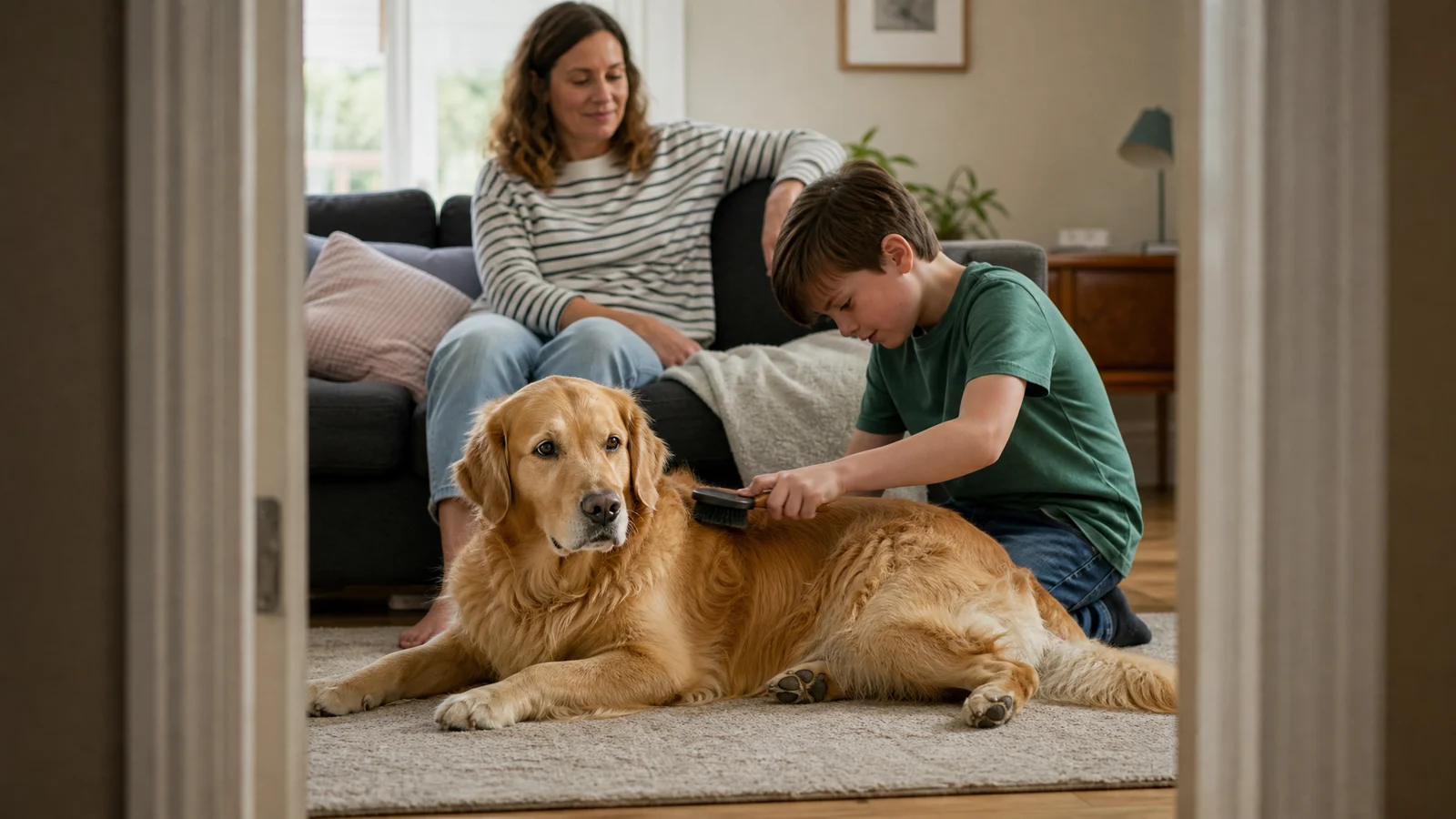
Some Golden Retrievers meet a toddler by keeping their feet low, taking a treat gently and drifting off once the fuss is over. Others flatten the same toddler on the way in, wash their face and treat small hands as something to carry. A smaller group does neither and seems wary, uneasy with fast movement or with a child who leans in too close.
The difference matters because Goldens are big, friendly and slow to mature, so a young child often shares a home with a 60–70 lb dog who still has puppy manners. We have trained this breed for many years, and families who plan ahead mostly get the first dog, not the second. Read on for the stages in order, from preparing the house and the first weeks to jumping and mouthing, year one, cats and the settled adult.
Before Your Golden Retriever Comes Home to Kids
The honest forecast is mostly yes. The parent club says Goldens have a reputation as excellent with children, and many owners describe dogs drawn to kids like magnets, patient while little ones lie on them. That result depends on adults, though. A puppy arriving at 8 weeks is closer to a two-year-old toddler in abilities and needs than to a pet who knows the house rules, and how well puppy and child get along rests almost entirely on parental supervision.
Because the puppy cannot manage themselves, the preparation is mostly about controlling space and settling rules before the excitement starts. Families credit these steps:
- Install baby gates to make a dog-free zone for toddler snacks and play, since large-breed puppies can reach counters at 9–12 weeks, earlier than most owners expect.
- Set up a crate or bed in a quiet corner that children agree never to enter, so the puppy always has somewhere to retreat.
- Write the children's rules before pickup: calm voices, no chasing, nothing pulled from the dog's mouth, and an adult is asked for help.
- Choose one greeting that everyone uses, because a dog cannot learn a rule that only some people follow.
- Stock tiny treats and soft toys so that children become the source of good things.
Also allow for a dog who is not the cuddly type. A sizeable minority of owners describe a Golden who is wary of children, whether from fast movement, babies, strangers' children or one particular child at home, and reactions run from mild unease to growling. Early exposure does not reliably predict the outcome. Some dogs raised around kids end up fearful, and some never raised with kids adore them.
Our overview of Golden temperament covers what the breed is meant to be. Timidity and hostility toward people are out of character for Goldens, so a dog who shows them needs a training plan and a vet check, not acceptance as personality. Regular vet visits are part of any family dog's plan anyway.
The First Weeks With Kids
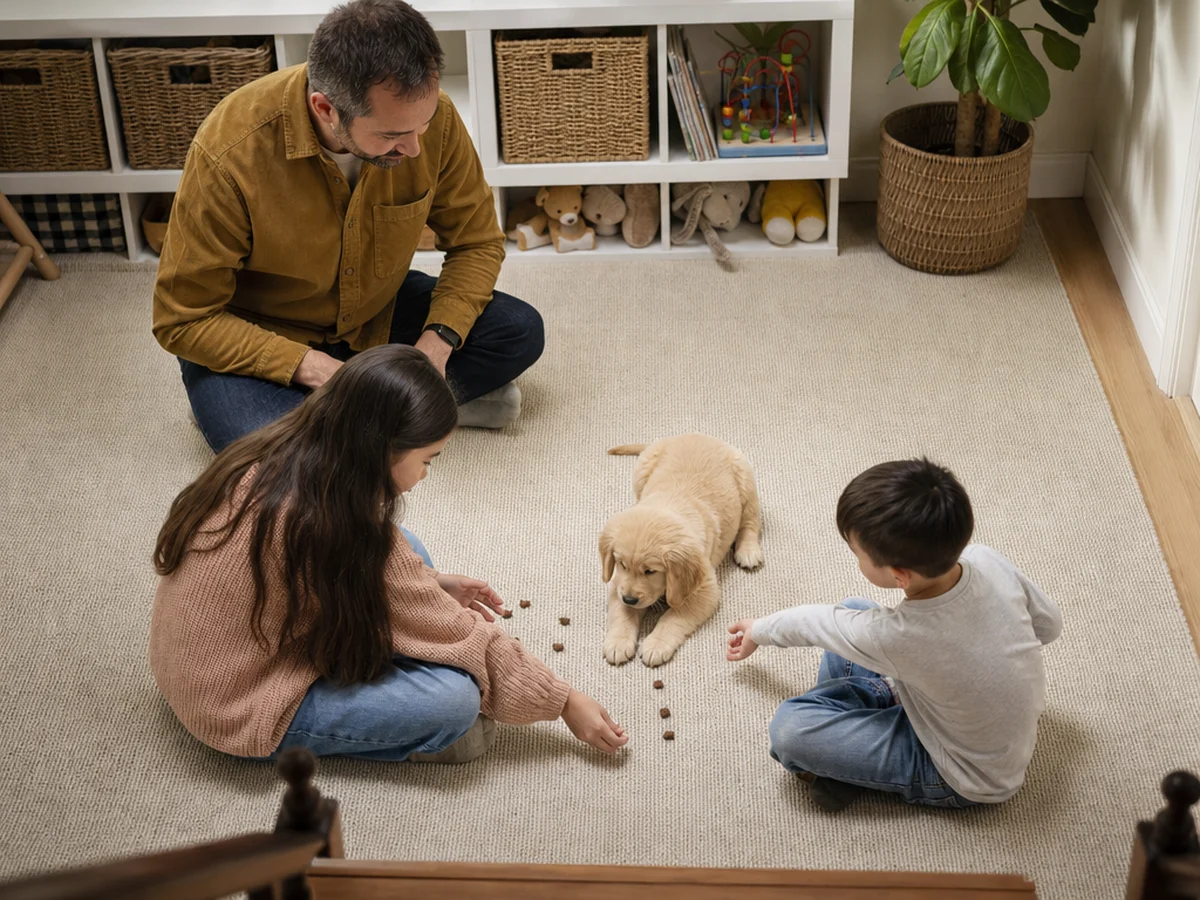
A new puppy treats children as littermates, and that is the root of most early trouble. Puppies naturally chase, jump and bite, and the shrieks and sudden movements of kids can set off exactly that normal but rough play. So the first introductions should be calm and short, with an adult beside each child and the puppy on a leash or behind a gate.
Familiarity does not make a dog safe. The RSPCA notes that young children are bitten more often than any other group, and that adults too tend to get bitten more by their household's own dog than by an unfamiliar one. Supervision therefore stays on even after the puppy seems settled.
Structured Sessions With the Puppy
Keep sessions brief and structured, one child at a time, each with a clear job. A child sits on the floor and tosses a treat, or asks for a sit using a hand signal the adult has taught. When the session ends, the puppy goes to the crate for a nap. Free-for-all time is where mishaps happen, because an overtired puppy mouths harder and an overtired child squals, and each feeds the other.
Many owners find that making the child the source of treats, meals and training, from a distance at first, works far better than forced cuddles. If your puppy growls during play, read the whole body. Goldens are talkative and play growling is common, but a stiff, still posture with a hard stare means the game stops. Our guide to socializing a Golden with kids covers the wider groundwork.
Jumping and Mouthing Around Kids
The two real risks to small children are physical, not emotional. A friendly Golden rarely means harm, but a greeting from a dog this size can topple a toddler, and a mouth built for carrying things will happily try a sleeve or a hand. The causes differ, so each needs its own plan.
The 60–70 Lb Jumper
Jumping is greeting-driven. The dog wants the face, and every touch, laugh or push-away pays them with attention, so one visitor who pets a jumping dog can keep the habit alive. Counter-surfing is a separate habit, driven by food, which this breed loves, so it needs its own plan such as a gate at snack time. A friendly 60–70 lb jumper is a real risk to children and older people. Training holds only when every family member follows the program every time.
The Mouthy Puppy
Mouthing is the breed's job. Goldens were created to carry waterfowl, and a retriever needs a mouth soft enough to hold a bird without damaging it. That is why bite inhibition (learning to control mouth pressure) and gentle delivery are trainable strengths, and why the goal is to redirect the mouth to carrying, not to eliminate it.
Teething makes mouthiness worse at 2–6 months, and owners often hear that it all stops once the teeth are in. For this breed that is wrong, because the need to hold something outlasts teething and is still there after 6 months.
What to Train for Each
Aim for a sit that comes before any greeting and a toy that arrives before any mouth finds a hand.
- Lure a sit with a treat at nose level, mark the moment the rear lands with a word like yes, and deliver the treat low between the front paws.
- Let the child approach only while the dog stays down, and if the dog pops up, the child turns away and the greeting pauses.
- Keep soft toys by the door and in pockets so the puppy greets people carrying one.
- When teeth touch skin, the child freezes, play stops and the puppy takes a short calm break.
- Trade a toy for a treat to teach letting go, and teach wait before each throw, since the retrieve is instinct but steadiness is trained.
Year One With Kids
The first year brings the biggest setbacks because the body grows faster than the mind. Goldens mature at roughly one month of puppy life to one year of a child's life for the first 24 months, so a 12-month dog behaves like an unreliable 12-year-old.
Many owners see manners slip in adolescence, and the 18–24 month stretch is when the head catches up with the body. Plan for years of maintenance, not months, and see our complete Golden Retriever training guide for how it fits the bigger plan.
Toddlers and Preschoolers
With the youngest children, management does the heavy lifting. Never leave a dog and a young child alone, however sweet the dog seems, and many families keep that rule for years. Gate the dog away during snacks, teach the child to stay back when the dog is eating or chewing, and let the dog leave whenever they like. Hugs split dogs, with some leaning away and some growling, so a pat on the shoulder is the safer habit.
School-Age Children
Older children can take real roles. They can ask for sits, hold the treat bag and run short trick sessions while an adult watches. Supervised tug works for many families if the child holds the toy low and ends the game when teeth touch skin. Some owners report snaps when a child reached into the middle of tug, so the adult sets the rules.
Expect Setbacks
Attitudes can shift during this year. Some owners see a dog who happily jumped on visiting friends later retreat and growl, with wariness appearing around 6 months in some dogs and 9 months in others. Because shyness and hostility are out of character for the breed, a dog who growls at a child needs a vet check and a trainer experienced with fear, not a shrug.
Cats and the Golden Retriever
Cats are the lighter concern. Most households with a cat say it works out, often after weeks or months of hissing, and owners describe cats and Goldens sleeping together and grooming each other. Cats set the limits, since a hiss or swipe ends the game and a cat tires of play before the puppy does. The recurring problem is chasing, because a running cat is the most exciting toy a puppy meets.
Start with separation. Keep the new dog and resident cat completely apart for two to three weeks before careful introductions, and expect the full process to take longer. Owners credit these habits:
- Cat-only rooms, raised or behind a gate with a gap the cat can duck under.
- Litter box and cat food out of reach, since both tempt a food-driven dog.
- Scent swaps with bedding before the animals meet.
- Rewarding a puppy who fixates on the cat for looking away, so chasing never starts.
- A leash for a chaser, and leave it for a dog who grabs at the cat.
A soft mouth has left some grabbed cats unhurt, but that is luck, not a plan. One hard chase can send a cat away for good, and children chasing the cat teach the dog the same game, so give the cat escape routes that work for the whole family.
The Adult Golden Retriever and Kids
The adult Golden usually settles into the companion families hoped for, greeting children at the door and then leaving them alone unless called. Some seem to know toddlers are too small for rough play, while a minority are simply indifferent and would rather sleep in the crate. What stays the same is the puppyish streak, since Goldens keep a playful outlook into adulthood, so no-jumping and calm greetings need maintaining for years.
Guests at the Door
Friendliness to strangers shows up as over-excited greeting, so the door is the hardest place to keep manners. Teach the dog to greet from a mat or behind a gate, ask visitors to follow the same sit-first steps and keep treats in a bowl nearby. Visitors who pet a jumping dog undo weeks of work, so state the rule before they step inside.
Visiting Children
Visiting kids are the group most likely to be knocked over or frightened. Some owners report visiting friends begging to have an exuberant dog taken off them, and small children shying away from a wagging adolescent on walks. Keep greetings calm and give the dog a gated break when play gets wild. Never assume a child knows how to meet a dog, and ask visitors to stay back from the dog's food and toys.
Reading Stress Signals
Even the calmest dog can reach a limit. Leaning away from a hug, retreating to the crate, a stiff and still body, a lip curl or a growl all say the same thing: more distance, now. Respond by calmly separating dog and child, and respect the growl, since it is the warning you want the dog to keep giving. Owners who manage space and let the dog retreat describe fewer problems than those who force contact.
One Kid Rule to Set Today
The breed is said to have few equals as a family pet, but that reputation is earned in small moments, and the riskiest one for a small child is the first second of a greeting. Your Golden's goodwill is rarely the problem. The size, the speed and the mouth are, and a trained greeting answers all three at once, because a dog who is sitting is not jumping and a dog holding a toy is not grabbing a sleeve.
So set one rule today: the dog sits before anyone says hello. Before bedtime, gather the family, hand everyone a few small treats and have each person approach in turn. The dog sits, the person marks it and rewards low, and the greeting happens only while the dog stays down. Keep it short and cheerful, with an adult beside any child taking a turn. Repeat tomorrow and the day after, until the whole house does it the same way.
 Exercise and jobsHow Much Exercise Does a Golden Retriever Need? Plus Brain Games
 Training basicsHow to Stop a Golden Retriever Pulling on Leash
 BehaviorWhen Do Golden Retrievers Calm Down?