 Golden Retriever
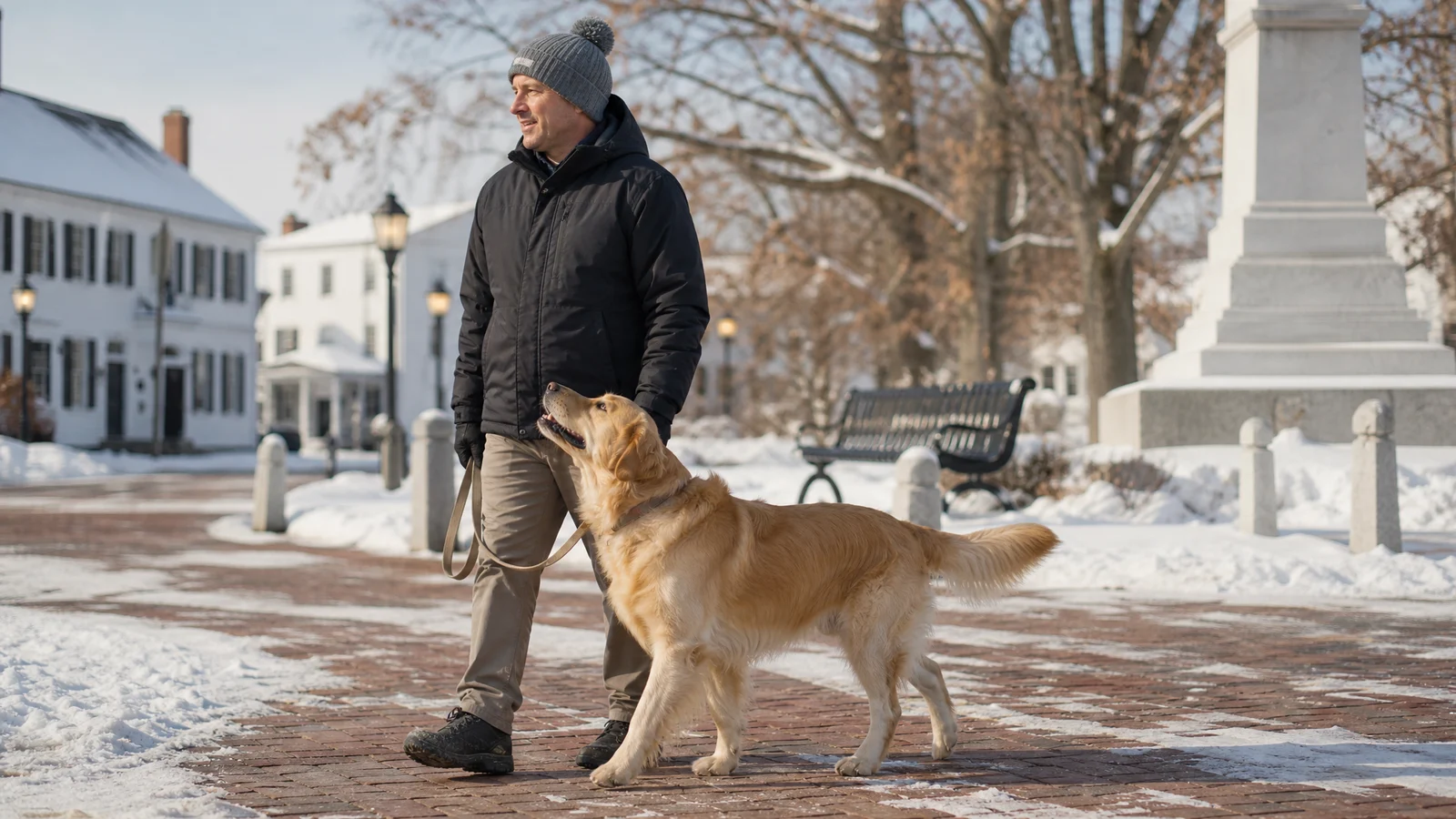
Teach a Golden Retriever to heel by rewarding a short, precise position beside one chosen leg, adding one step at a time and releasing the dog before the position breaks down. Heel is a focused behavior for brief moments, not the standard your Golden must hold through every ordinary walk.
Begin on comfortable footing with a reward the dog already values and enough room for both of you to turn without crowding. We look for a repeatable reward zone rather than a competitive pose. This guide covers where that zone sits, how stillness becomes movement, what drifting reveals and how to end heel cleanly. Keep routine veterinary visits, and pause if your dog shows discomfort or an unusual change in movement.
Where Is the Golden Retriever Heel Position?
Choose the side before you add the cue. Your Golden's shoulder should be generally beside your leg, with enough space that neither of you bumps the other. The exact picture can suit your body and the dog's comfort, as long as the place where rewards arrive stays consistent.
Heel and loose-leash walking solve different jobs. Heel asks for a narrow handler-relative position and attention for a short stretch. Ordinary walking asks for a relaxed line while the dog has more freedom to look, sniff and change position.
| Feature | Heel | Ordinary Slack Walking |
|---|---|---|
| Dog's location | Beside one selected leg | Anywhere the leash remains safely loose |
| Attention | Available for a brief precise task | Free to gather information from the route |
| Useful duration | A short planned stretch | Most of an everyday walk |
| Finish | An explicit release from position | A pause, direction change or end of the walk |
Decide how you will mark the correct spot and where your hand will deliver the reward. If the food arrives in front of your knees, the dog may move ahead. If it crosses your body, the dog may cross too. Placement is part of the information, not an afterthought.
The General Heel Method Starts Still
Teach the position before expecting the dog to follow it in motion. Begin with your Golden near the chosen side and reward voluntary orientation toward the zone. The cue can be added after the dog is reliably finding the place, so the word predicts a behavior the dog already understands.
- Stand quietly with the dog free to move. Mark when the shoulder arrives beside your chosen leg, then reward from the hand nearest that side.
- Reset by tossing or placing a reward a short distance away. Let the dog return, mark the same position again and deliver at the same seam of your leg.
- When the stationary picture is easy, cue heel and take one smooth step. Mark while the dog remains in the zone, stop and reward before asking for more movement.
- Add a few steps only after the first step stays clear. Use a release word, let the dog leave position and reset before the next short repetition.
Keep the leash as safety equipment rather than using it to place the dog. If the dog lags, crosses or surges forward, shorten the next repetition and return to the last easy picture. More distance does not repair uncertainty about where the reward zone is.
Heel Reward Placement as the Handler Moves
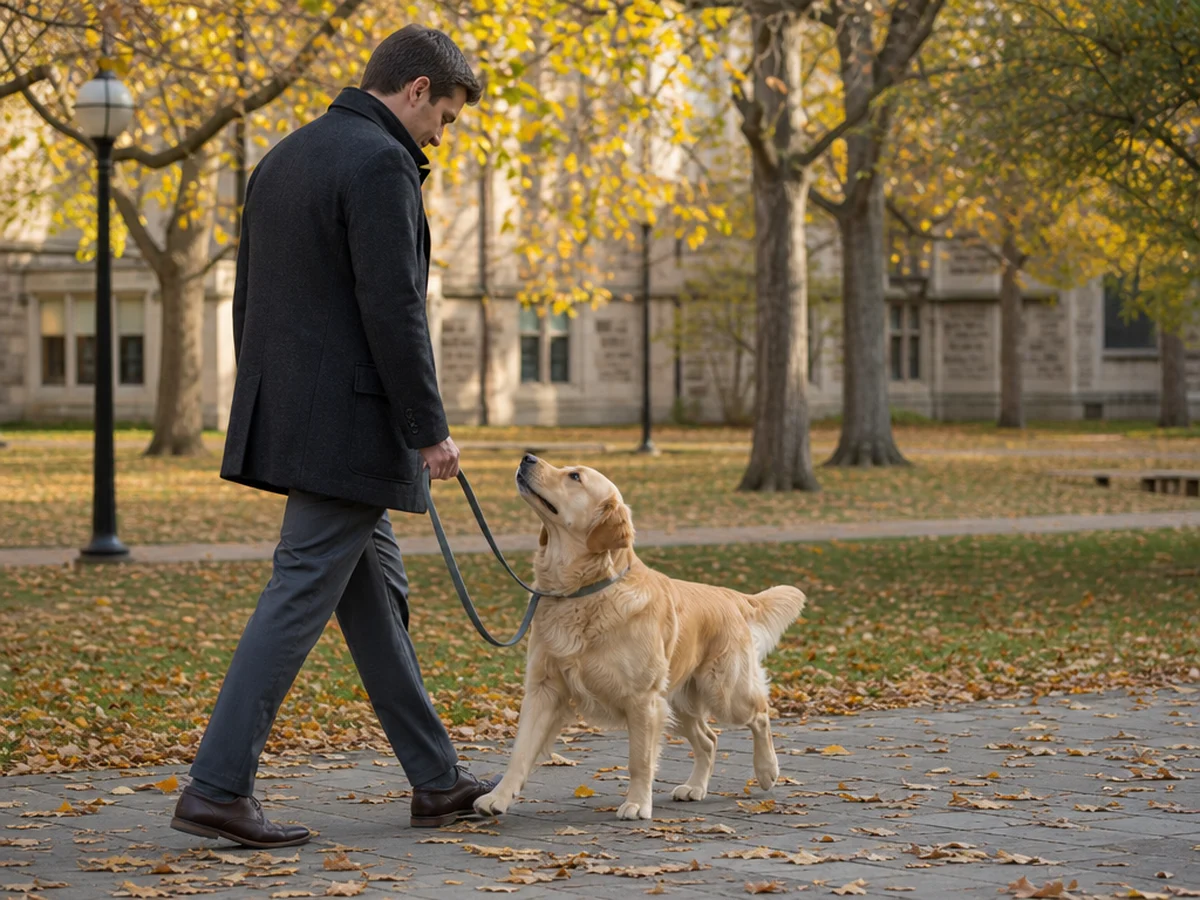
Once straight steps are steady, vary movement in small pieces. The American Veterinary Society of Animal Behavior describes reward-based training as cueing a behavior, marking it and following with an appropriate reinforcer. In heel work, the mark identifies the instant of position, while delivery at your side helps preserve the position after the mark.
A Clear Side
Keep rewards on the chosen side for the whole repetition. If your Golden wraps in front of you, check whether your hand traveled across your body or too far forward. Bring the next delivery closer to the outer seam of your leg, take fewer steps and release before the dog searches for a new place.
Turning Without Pulling
Signal the turn with your shoulders and first step rather than steering through the leash. Start with a wide arc that gives the dog time to follow your new line. Mark the first balanced step after the turn, reward at the side and stop there. A tight turn or sudden pace change can wait until the wider version is comfortable.
Use drift as feedback. Moving ahead may mean rewards are arriving too far forward or the repetition is too long. Falling behind may mean the pace is difficult, the footing is uncomfortable or the task has lasted past the dog's attention. Change the setup instead of dragging the dog back into place.
Side, Markers and Tension in Golden Retriever Heel
These questions cover choices that do not change the central lesson. A heel cue should still predict the same side, reward zone and release, even when different handlers use it or the surrounding route changes.
Must a Golden Retriever heel on the left? No. The American Kennel Club's heel guide allows the handler to select a side and emphasizes rewarding beside that side. Pick the side that fits your practical use, and teach the opposite side later under a different cue if you need both.
Can a marker word be used for heel training? Yes. Blue Cross explains that a marker helps identify the behavior that earned a valued reward. Use one familiar marker at the instant the position is right, then deliver beside the selected leg.
What should happen if the dog pulls during a heel repetition? Stop moving and make the next attempt shorter instead of letting tension carry the pair ahead. Best Friends Animal Society explains that inconsistent stopping can allow pulling to pay. Reset outside heel, regain an easy starting picture and release after a smaller success. If tension continues on the ordinary walk, use the Golden Retriever leash pulling guide for that separate problem.
Release the Heel Back to an Ordinary Walk
Say the release word, relax your precision cue and allow the dog to move out of the narrow reward zone. The release should be part of every repetition, not something the dog has to guess after attention fades. Clear endings make it possible to use heel briefly without turning the whole route into one long formal exercise.
For the larger portion of the outing, return to a relaxed walking standard and reward a comfortably slack line. Heel has done its job when your Golden can enter the chosen position, move with you for the planned moment and leave it on cue.
 Training basicsHow to Teach a Golden Retriever to Stay
 Training basicsTraining an Older or Adopted Golden Retriever
 Puppy trainingHow to House Train a Golden Retriever Puppy