 Golden Retriever
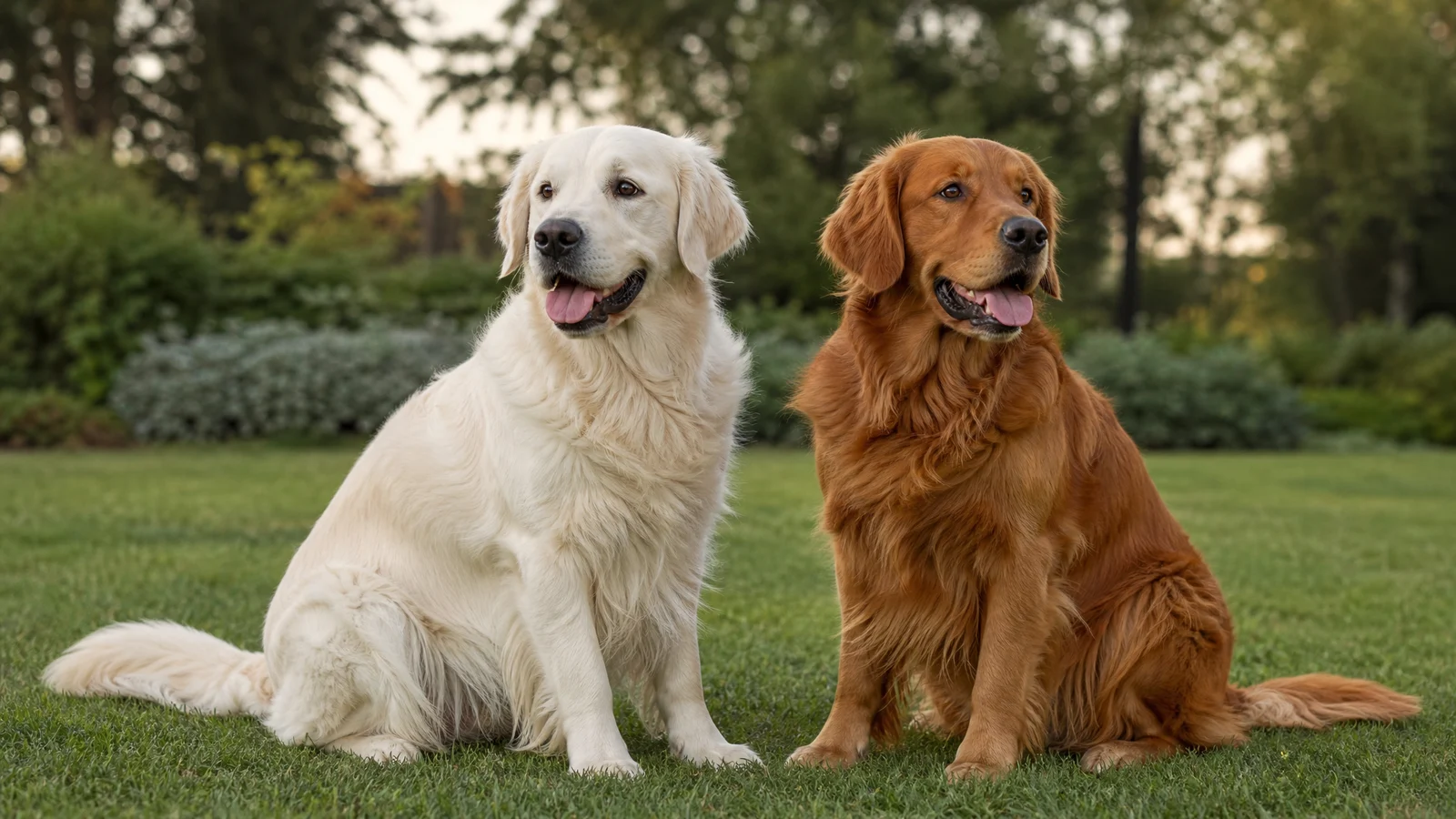
Most dog advice ties looks to behavior: this shade means that energy, that coat means a different training plan. With Goldens, that link doesn't exist. A red dog, a dark gold dog, a pale gold dog and a cream dog get the same training, the same socialization and the same exercise. Only what shows differs, such as how visible the hair and dirt are, because the grooming itself is essentially the same.
This matters because shopping by shade pushes people to choose for the wrong reasons, and assuming a pale coat means a mellow dog sets you up for a surprise. Owners of show-bred Goldens often describe dogs that swim and fetch for hours, while others find a small or inconsistent energy gap between types. Color predicts none of it.
In this article, we'll go through where the standard draws the color line, what dark, red, light and cream coats look like, how brushing and shedding compare by shade, and what age and weather do to each. You'll finish with a two-week plan.
Where the Breed Standard Draws the Color Line
Run your hand through a Golden's coat before you judge the color, because the standard cares about what you feel as much as what you see. It asks for a rich, lustrous golden of various shades, and the breed's study guide reads that as a broad range of cream to coppery gold, with feathering allowed to run lighter than the body. Extremes of very pale or very dark in the main body color are undesirable, so the ideal sits in the middle.
We judge each factor in this article the same way: does it change your daily life with the dog, and if so, how much? Here is the first verdict. The color range is part of the breed, and every shade in it is a Golden with the same friendly, reliable baseline described in our Golden Retriever temperament guide.
Wording differs from country to country. Canada's standard calls the acceptable range broad, from cream to a darker coppery gold, with medium gold always correct. In the UK, the breed standard colors are Cream, Gold and Golden, and the UK, Australian and FCI standards read "any shade of gold or cream, neither red nor mahogany." So a dark red dog may be judged differently depending on where the ring is. None of that changes the dog on your couch.
A few coats fall outside the American standard's wording. Dogs who are predominantly off-white, or a dark setter red, are judged accordingly in the ring, and the judging is the whole of it. At home they're Goldens, and every plan below applies to them.
Verdict: color should not drive your training choices. Show-line owners often describe dogs that are calm indoors and tireless outdoors, and others find their dogs busier than their families expected. Line, individual temperament and your daily routine decide that, not pigment.
What Dark or Red Golden Retriever Color Looks Like
Picture a coat that looks almost burnished in direct light: deep reddish gold on the body, with feathering that can run a shade lighter. That is the dark end of the standard, which the study guide describes as pale gold through deep reddish gold.
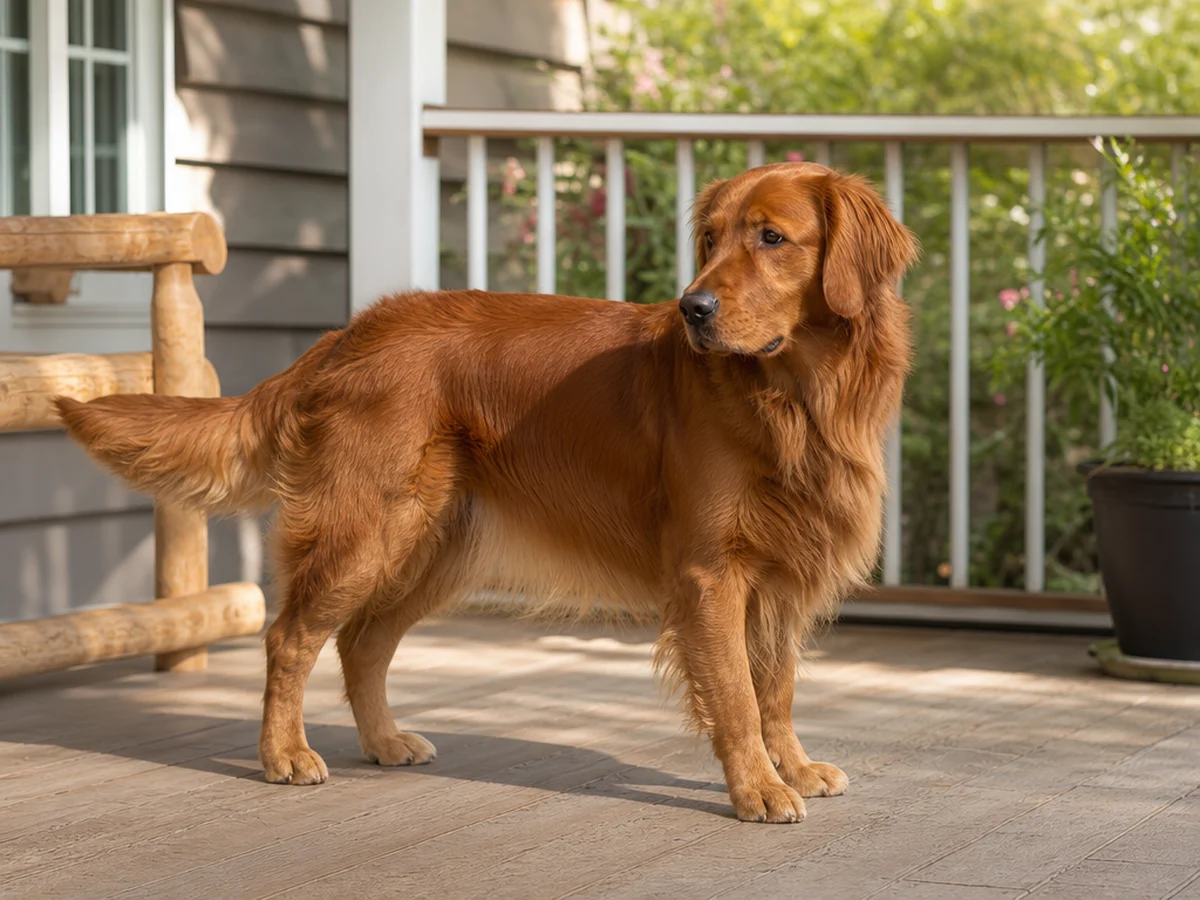
One national grooming guide puts the coat's range at liquid amber to a light red. Plenty of owners go looking for this look on purpose, and some have a soft spot for reds after living with one. Others, after losing a Golden, choose a different shade so the new dog doesn't feel like a replacement.
Dark coats age in recognizable ways. Many puppy coats deepen as the dog matures, and young dogs can keep darkening well past puppyhood. Later, a silver or pale muzzle stands out more against a deep coat than against a pale one. Age graying is not penalized, so it's a normal part of the picture.
Pale hair on dark furniture and dark hair on a light couch are the real cost, and your brush and vacuum handle it. The coat is the same dense, water-repellent double coat as any other shade, so the care is the same too.
Color-led searches sometimes land buyers in a line they didn't plan on. A handsome red dam draws them to a litter, and the pedigree turns out to be working or field-bred. Field-line owners often describe more drive and a bigger exercise appetite. Others find their field-bred dogs terrific family pets, so the real lesson is to ask about the line before you fall for the shade.
Verdict: choose a dark or red Golden for the look and nothing else. Coat upkeep is a wash, and temperament does not come with the shade. Train and exercise these dogs exactly as you would any Golden.
Light Golden Retriever Color and the Cream Question
Light Goldens run from pale gold to cream, and they sit inside the same range as everything else. Cream has always been part of the breed's full spectrum, and shades from very light to rich gold can turn up in the same litter, even among full siblings. Some owners report the whole range of color inside one litter, with shades usually following the parents.
The question buyers ask is whether cream means white. Not in this breed. The standard describes shades of gold, allows lighter feathering, and says allowable light shadings are not to be confused with white markings.
Another standard even allows some latitude for a lighter-colored puppy whose coat shows promise of darkening with age. A light puppy with good color on the ears will generally keep that shade at maturity, so look at the ears and feathering, not the overall first impression.
Be careful with names. Light dogs are sold as 'English Cream', 'Rare White European' and 'Exquisite Platinum Imported', but there is only one Golden Retriever breed. Most of these dogs are not even from England, and the claims that they're healthier, calmer or longer lived are simply incorrect. Color never determines temperament, working ability, health or lifespan.
Owners of cream, light and European-line dogs describe a dog who lives like any other Golden: no smarter, no easier to train, with differences mostly cosmetic, such as a jowlier face or darker eyes. Our guide on how easy Goldens are to train applies to them unchanged. Many owners simply answer the question "English cream?" by calling their dog a light-colored Golden, and you can too.
If you're searching for a pale puppy, protect yourself. Some buyers who went hunting specifically for cream describe health clearances completed only just before pickup, missing or outdated paperwork, and pressure to pay extra deposits or buy breeding rights. A breeder who focuses mainly on color deserves your skepticism. Ask for health clearances early and ask about the parents' temperament.
Verdict: pale coats are lovely and fully Golden, and the extra care is minimal. The risk lies in the sales pitch and the paperwork, not in the dog.
Does Coat Color Change How Much You Brush?
Start with the tools: a slicker brush and a metal comb will do for any shade. The coat that matters is the firm, resilient outer coat and the dense undercoat beneath it. Your job is to keep both healthy, and that job does not change with pigment.
The study guide says texture matters much more than color in assessing the coat, and that is how you should plan your brushing. The standard wants an outer coat that is firm and resilient, straight or wavy, with moderate feathering on the back of the forelegs and underbody, and heavier feathering on the front of the neck, the back of the thighs and the underside of the tail.
Those feathered zones tangle first on every dog, so comb them first. Some purebred Goldens have very curly coats, and they need more patience at the comb regardless of shade. Owners also describe leaner field and working dogs with a coarser coat.
The table lays out where shade changes what you see, which is not the same as what you do. It is general reasoning rather than anything measured.
| Shade | What shows most | Brushing and bathing verdict |
|---|---|---|
| Cream or pale gold | Mud, stains and dirt on feathering and feet | Same routine as any shade |
| Medium gold | Little in particular | Same routine |
| Dark gold | Pale hair, dander and sand | Same routine |
| Red or deep reddish gold | Pale hair, silver muzzle | Same routine |
Verdict: color barely changes how much you brush. Size matters more, because a male at 65 to 75 pounds has more coat to cover than a female at 55 to 65, as our guide to male and female Goldens shows. Trim stray hair and neaten the feet, and leave the rest of the outline alone. Skip shaving or clipping to cool a Golden down, since the coat is their working gear.
Shedding and Seasonal Coat Blowouts by Color
Expect hair, and expect it every day. The standard asks for a dense, water-repellent coat with a good undercoat, and that undercoat is what drops in heavy seasonal waves. During a blowout, brush daily and work down to the skin with the comb until the loose undercoat stops coming out in clumps. Shade does not change when a Golden blows coat.
What differs is how visible the hair is. Pale hair fades into light floors and sofas, while dark hair shows plainly on them, and the reverse is true on dark furniture. Plan around your own house: put a washable throw where your dog naps, and keep a brush by the door so a quick pass becomes part of coming inside.
Individual dogs vary more than shades do. A thick-coated dog sheds more than a thin-coated one, and a coat that is open, limp or soft is not what the standard wants. If you notice patchy loss or a sudden change in coat quality, mention it at your next regular vet visit.
Verdict: set your vacuum expectations by the breed, not the shade. Plan on cleaning regularly with every color, and be ready for the heavy seasons.
Sun, Fading, and Graying in Golden Retriever Coats
Your puppy's coat is not the final color, so hold off on a verdict. Owners report very pale puppies darkening toward tan, and some young dogs keep getting deeper for a long time. The reverse is also true: a light puppy with good color on the ears will generally keep that shade. Photograph your puppy at regular intervals so you can see what is really changing.
Once your dog is grown, two things change the picture:
- Cold weather can lighten the nose. Fading to a lighter shade in cold weather is not serious, though a pink nose, or one seriously lacking pigment, is a fault in the ring.
- Many Goldens begin to gray from four to five years old, and age graying is not penalized.
What each color shows first is a matter of contrast, and this is general reasoning rather than anything measured. Gray at the muzzle will likely stand out soonest against a deep red or dark gold coat, while on a pale or cream dog a whitening muzzle is easy to overlook until you compare photos side by side.
Verdict: none of these changes is a problem, and all of them are signs of an ordinary healthy coat. Keep up your brushing, give shade and fresh water on hot days, and show any skin or nose changes to your vet at the regular checkup.
Choosing a Color Without Choosing a Different Dog
Here is the main point of everything above: color is cosmetic. A red, a dark gold, a pale gold and a cream Golden are the same breed, with the same friendly temperament, the same need for exercise and mental work, and the same coat jobs. Pick the shade you love, then pick the breeder, the line and the individual puppy on temperament and health. For the training itself, start with our complete Golden Retriever training guide, because it applies to every shade.
Use this plan over the next two weeks to learn your dog's coat as it actually is:
- Week one: set your brushing routine. Brush and comb the feathering daily, include the feet, front of the neck, back of the thighs and underside of the tail, and pair every session with treats so your dog welcomes it. Take photographs of the whole coat in natural daylight, plus close-ups of the ears, muzzle, nose and feathering.
- Week two: check what the coat shows. Compare your photos with the dog in front of you, and note where tangles form, how much undercoat comes out, and whether the nose or muzzle looks different. Adjust your routine to match: brush more where mats start and step up during a blowout.
Then keep the photos going at regular intervals. They'll show you how your Golden's coat changes with age, and they'll remind you that the dog under the coat stayed the same.
 Puppy trainingGolden Retriever Puppy Biting: Why It Lasts and What Helps
 Puppy trainingGolden Retriever Puppy Training Timeline: 8 Weeks to 2 Years
 Training basicsGolden Retriever Training: The Complete Guide for Owners