 Golden Retriever
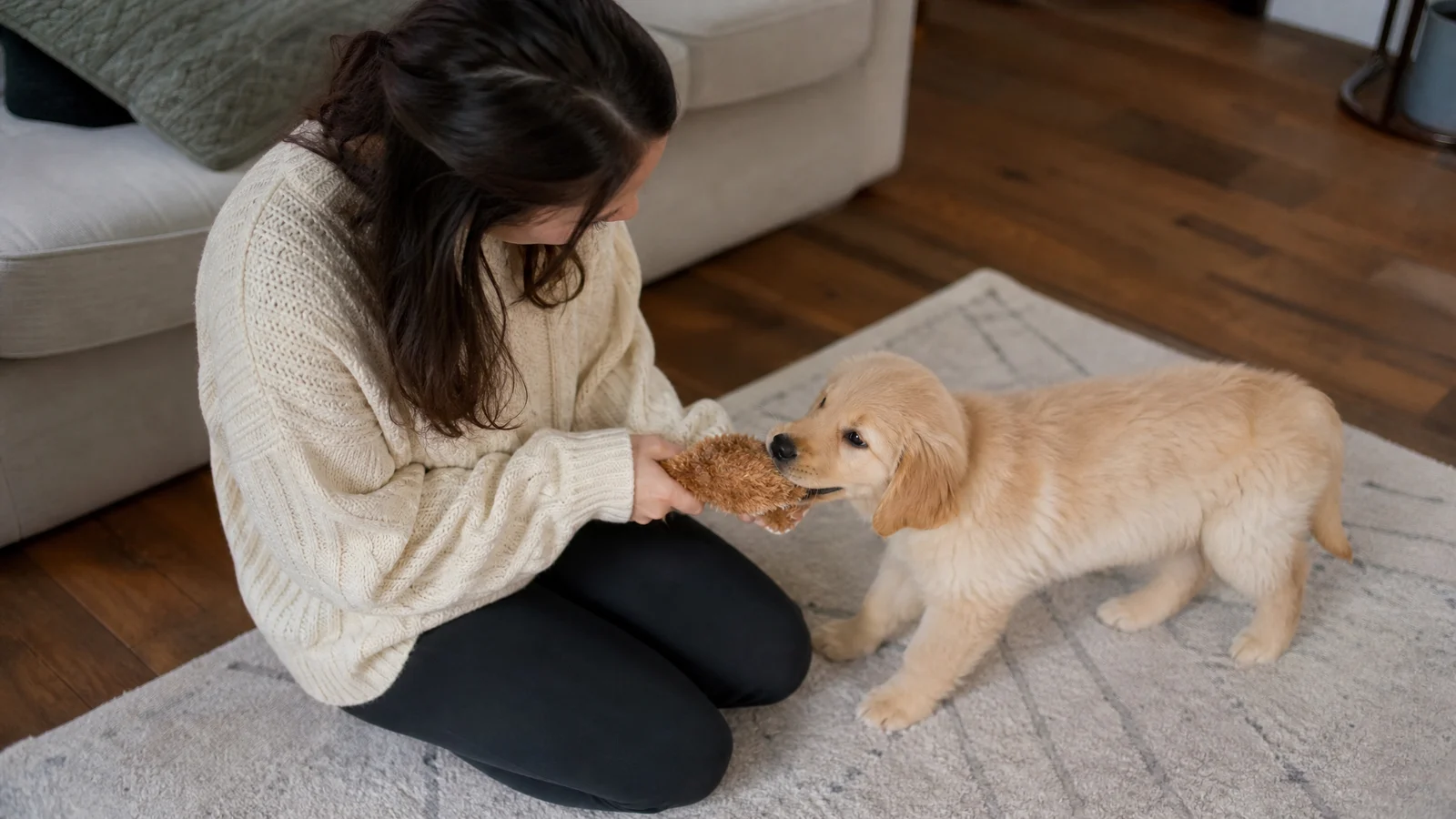
Ordinary puppy advice treats biting as a teething problem: wait for the adult teeth and the mouth goes quiet. For a Golden Retriever that plan fails, because the mouth is the breed's working tool and the need to hold something outlasts the baby teeth by many months. The aim is to redirect the mouth, not to stop it.
A Golden whose mouth is only blocked finds outlets you like less, such as sleeves, leashes and children's hands, while one whose mouth is directed grows into the gentle carrier the breed is known for. Among the 131 Golden Retriever owners we reviewed who wrote about biting and mouthing, timelines run longer than the usual advice suggests.
Read on for the stages in the order you will meet them: the first intense weeks, house setup, the toy swap, evening spells, growls, calm breaks, the teenage return and the mouth you will live with long term.
The First Weeks of Golden Retriever Puppy Biting
The first stage begins the week the puppy comes home, and it is harder than most buyers are told. Of the 131 Golden Retriever owners we reviewed who wrote about biting and mouthing, 26% described the young-puppy phase as intense, with scratched or bruised arms or torn clothes.
Many say this puppy was worse than their earlier dogs, Goldens included, and some were in tears daily, wondering whether they had made a mistake. That reaction is common and says nothing about your ability.
Behind the bites sits a job. Breeders remind owners that Goldens were created to carry things in their mouth, namely waterfowl, and a mouth soft enough to hold game without damaging the game is a breed requirement. That is why gentleness can be trained, and why the useful question is where the mouth should go rather than how to make it stop. Expect to answer that question many times a day.
Plan for the household cost as well as the bruises. Owners describe long sleeves to hide the marks, children who become afraid of the dog, neighbors who stop helping, and trouble bonding in these weeks. The arms heal quickly, but a child's fear or your own dread of walking the dog can outlast the biting. Consistent redirection early builds good habits, and it is the trade a planner should make early.
Setting Up the House Against Puppy Biting
Management does half of the work in this stage and costs far less effort than reacting to each bite. Keep an approved chew or carry toy within reach in every room, because you cannot swap for something that is across the house. Use gates and a pen to give the puppy a safe space when you cannot watch, and let a light house lead trail indoors so you can step away without a chase. Our Golden Retriever first-week guide covers the basic layout.
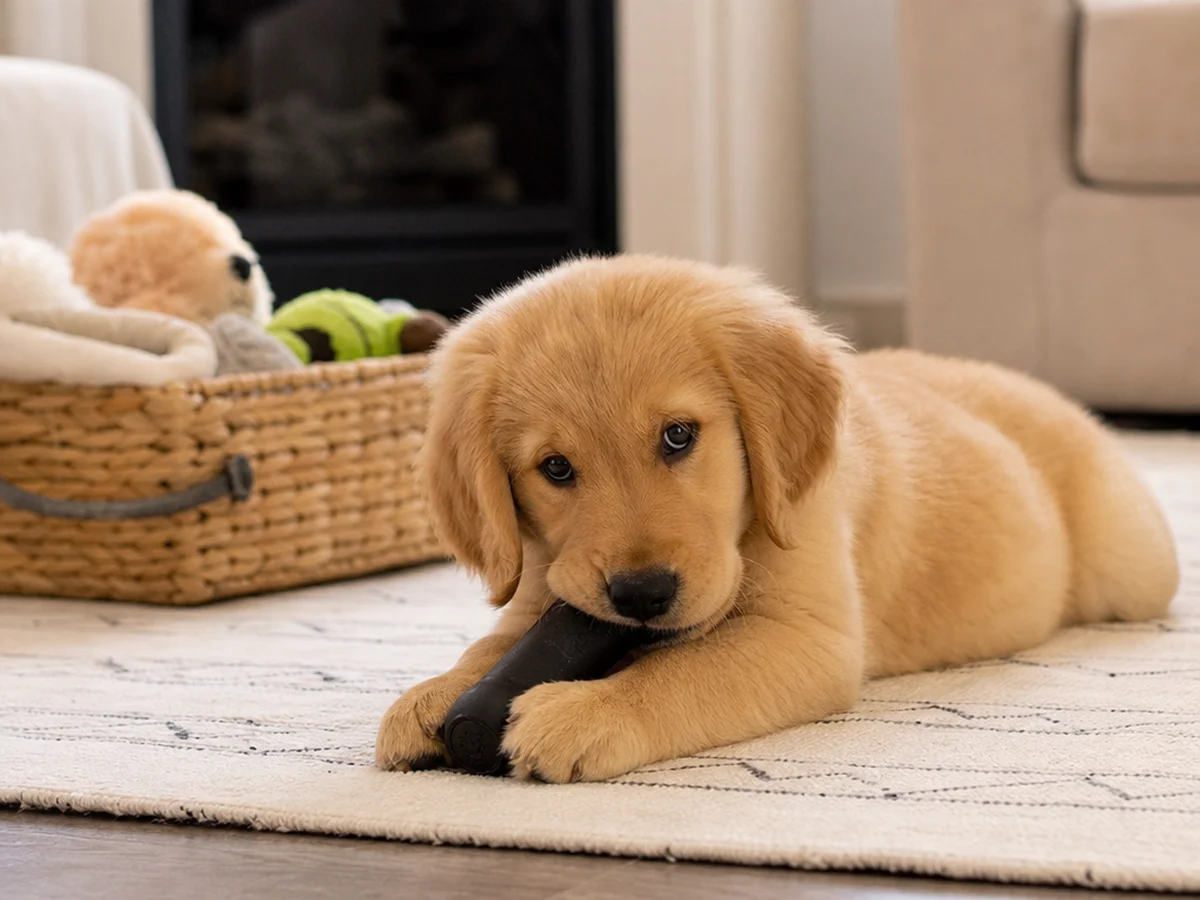
Agree on one response before the puppy learns that rules change by person. Everyone in the house should respond the same way to mouthing, with no allowing it for some people and not others. Owners say the biting often singles out the parent doing most of the care, and that a partner frequently stops it faster. That usually reflects a calmer, steadier response, and you can copy it.
Redirecting Golden Retriever Puppy Biting to Toys
Redirection is the central skill for a breed built to carry, and owners back it up: 21% of the owners we reviewed who wrote about biting and mouthing said giving the mouth something else to hold or chew worked. The pattern behind those reports is timing.
The swap happens the instant teeth touch skin, so the puppy learns that hands are not for holding and a toy is. Some puppies drop the toy and go back to hands, which usually means the toy is dull or the puppy is too wound up for any toy.
Use the routine below and expect many rounds before the puppy chooses the toy unprompted.
- When teeth touch skin, go still and end the game without a big reaction.
- Offer a toy and praise the moment the mouth closes around it.
- Keep the toy moving so your hands stay out of the game.
- If the puppy returns to hands, ask for a sit, touch or down and reward it with a tiny treat or praise.
- If the puppy is too wild to respond to anything, move to a calm break instead of repeating the request.
Rotate what you offer, since owners report success with chew toys, bones, frozen washcloths and frozen carrots, and puppies have strong opinions. When the puppy grabs something forbidden, trade instead of pulling. Pulling things away can lead to guarding or running off when you need something back, and in a breed that loves to carry things you want every handover to feel like a good deal.
Owners split on yelping or saying ouch. Some find it works, especially alongside turning away, while others say the puppy bit harder or grew more excited. Treat it as optional and drop it if your reaction feeds the game. A drawn-out, playful scolding tone tends to turn the moment into a game.
Give the Carrying Urge a Job
Goldens are likely to carry something around everywhere they go, so hand the puppy a carry toy at the door and on walks. In fetch, reward a gentle hold and a calm delivery to your hand, and wait three or four seconds after the toy lands before releasing, which builds impulse control into play. If the puppy starts chewing the toy roughly, end that round, since a soft mouth is what you are building.
Food is a strong reward for this breed, so break treats very small and count them against the day's meals. Stop sessions while the puppy is still keen, because drilling until interest fades teaches the wrong lesson.
Evening Puppy Biting, Naps, and Potty Trips
Biting that arrives on a schedule is often a scheduling problem. Owners tie the wildest spells, meaning zoomies, biting and jumping, to the evening and to being overtired, and some found that a biting spell meant the puppy needed a nap or a potty trip. The times repeat: after dinner, at dusk, coming back inside at night and first thing out of the crate. This fits the wider picture, since many puppies mouth more when tired, over-stimulated or struggling to cope.
Evenings split owners. Some describe a nightly burst before the puppy crashes, while others say their Golden is finished by about 8 to 9pm and puts themselves to bed. Watch your own puppy for a week and plan around that curve, offering rest ahead of the usual flare-up rather than after it. A potty trip after waking, eating and play also catches the full bladder behind some bitey spells, and our Golden Retriever potty training guide lays out the routine.
Exercise helps less reliably than people hope. Some owners say more walks, fetch on a long line and new tricks reduced the biting, while others report that plenty of exercise changed nothing, and a few find their dogs get nippier the more tired they are. Rough tug, wrestling, boisterous children and play with other dogs can also set off the next round. Add short mental work and count sleep as part of the plan.
Growls and Snarls in Golden Retriever Play
Many owners of young puppies are frightened the first time the biting comes with a growl, a snarl or a scrunched nose, and they wonder whether they have an aggressive dog. Most of these accounts end with noisy play or frustration in a tail-wagging puppy, and the phase passed within weeks or months. In other cases the snarling settled into harmless adult play-snarls. Breeders also describe Goldens as talkers, and puppies can be real motor mouths.
The training job is reading the whole body. Loose, bouncy movement, a wagging tail and a puppy who comes back for more is play. A stiff body, a hard stare or a freeze is a different message, so end the interaction and give space. Let the growl be information rather than trying to silence it, since it tells you what the puppy is feeling.
Handling is a common trigger, and owners say petting, picking up, carrying or restraint can set off growling and rapid biting. Pair handling with small treats and keep sessions short, since shorter, sweeter handling sessions beat pushing through a growl.
The breed's temperament description names friendliness and reliability as the norm, with hostility or nervousness out of character. A Golden who shows those needs a training and socialization plan, not acceptance as personality.
Calm Breaks When Redirecting Puppy Biting Fails
Redirection fails once the puppy is past the point of choosing, and that is when a calm break does the work. Use a crate, a gated kitchen or a pen for 30 seconds to a few minutes, then return and ask for a sit. Several owners say the puppy simply falls asleep, and for some it is the only thing that ends an episode. Our Golden Retriever crate training guide covers making that space somewhere the puppy likes.
Be honest about the limits. A minority report that the puppy came straight back nipping, climbed the gate or resumed the moment the door opened. If that describes your puppy, shorten the gap between the first bite and the break, and start the break before the wild spell peaks.
Standing still gets mixed results as well. Some owners say turning away, covering the face or leaving the room worked after many repetitions, while others found the puppy kept going for calves, heels and clothing, and the freeze only offered a still target. If heels are the target, leaving the room beats standing there.
Adolescent Puppy Biting Returns in the Teen Months
Plan for a longer arc than most advice allows. Of the owners we reviewed who wrote about biting and mouthing, 19% said puppy biting eased, mostly between about 3 and 6 months, often as the adult teeth came in. Yet 14% said mouthing started, came back or peaked in adolescence, with calm puppies who began around 7 months, relapses after a month of improvement and 10 months as the worst stretch. Some puppies were mild from the start.
The reason is that teething is usually finishing during the 6 to 18 month phase, but Goldens still need something in their mouth. So the belief that biting ends when the teeth are in is wrong for this breed. The table shows how the tools shift by stage, and our full Golden Retriever training timeline shows where this sits in the larger plan.
| Stage | What owners and breeders describe | Main tool |
|---|---|---|
| First weeks home | Intense biting, the mouth on everything | Toys in every room, swaps, short breaks |
| 2–6 months | Teething keeps mouthiness front and center, and biting eases for many | Keep swapping, start fetch with holds and deliveries |
| 7–12 months | Nipping returns around greetings, excitement and being told to stop | Carry toys at greetings, scheduled rest |
| 12–24 months | Easing near the first birthday for many, later for some | Keep rewarding soft mouths and calm greetings |
Greetings, Walks, and Children
Goldens are friendly to nearly everyone, and in adolescence that shows up as an over-excited greeting. Owners report the mouthing returning when visitors arrive, when the dog is led away from something or when told to stop. Hand the dog a toy before the door opens so the mouth is already busy, and ask for a sit before anyone says hello.
Walks are another flashpoint. Owners describe dogs biting or tugging the leash at the start, on the way home, after meeting a person or dog, or after a walk that felt too short. Carry a toy from the door and trade it for a treat before any hard moment, such as turning for home.
Children need extra planning. Puppies naturally chase, jump and bite, and children's sounds and movements can set that off, so owners describe puppies and adolescents nipping kids who run or scream. Success depends almost entirely on adult supervision, so run short, structured sessions with toys and simple cues, and gate or crate the puppy the rest of the time.
What a Grown Golden Retriever Mouth Looks Like
A slow finish is normal for this breed, and a planner should budget for it. Breeders say the rebellious adolescent behavior diminishes nearing 18 months and close to 24 months, and exuberant puppy behavior tends to last longer in Goldens than in other breeds because they mature slowly. Owners whose adolescent biting passed say it eased around the first birthday, for some only between 14 months and 3 years, and a few say it still returns now and then.
Grown Goldens often keep some mouthiness in play, at walk time or when overstimulated, mostly softer than in puppyhood. Several owners describe former terrors that grew into dogs with remarkably gentle mouths, which suits a breed said to carry a raw egg without cracking the shell.
Keep regular vet visits on the calendar through these years, and mention it if a dog who loved retrieving suddenly hesitates to pick up a ball, since that is a question for the vet rather than a training problem.
Long term, expect a mouth that never fully switches off and does not need to. Keep a toy within reach, reward gentle holds and calm deliveries, and protect the evenings with rest. Hold those habits steady through the teen months, and the effort you spend now returns as the soft-mouthed carrier the breed was built to be.
 Puppy trainingGolden Retriever Puppy Training Timeline: 8 Weeks to 2 Years
 Training basicsGolden Retriever Training: The Complete Guide for Owners
 Training basicsGolden Retrievers and Kids: What to Expect and What to Train