 Golden Retriever
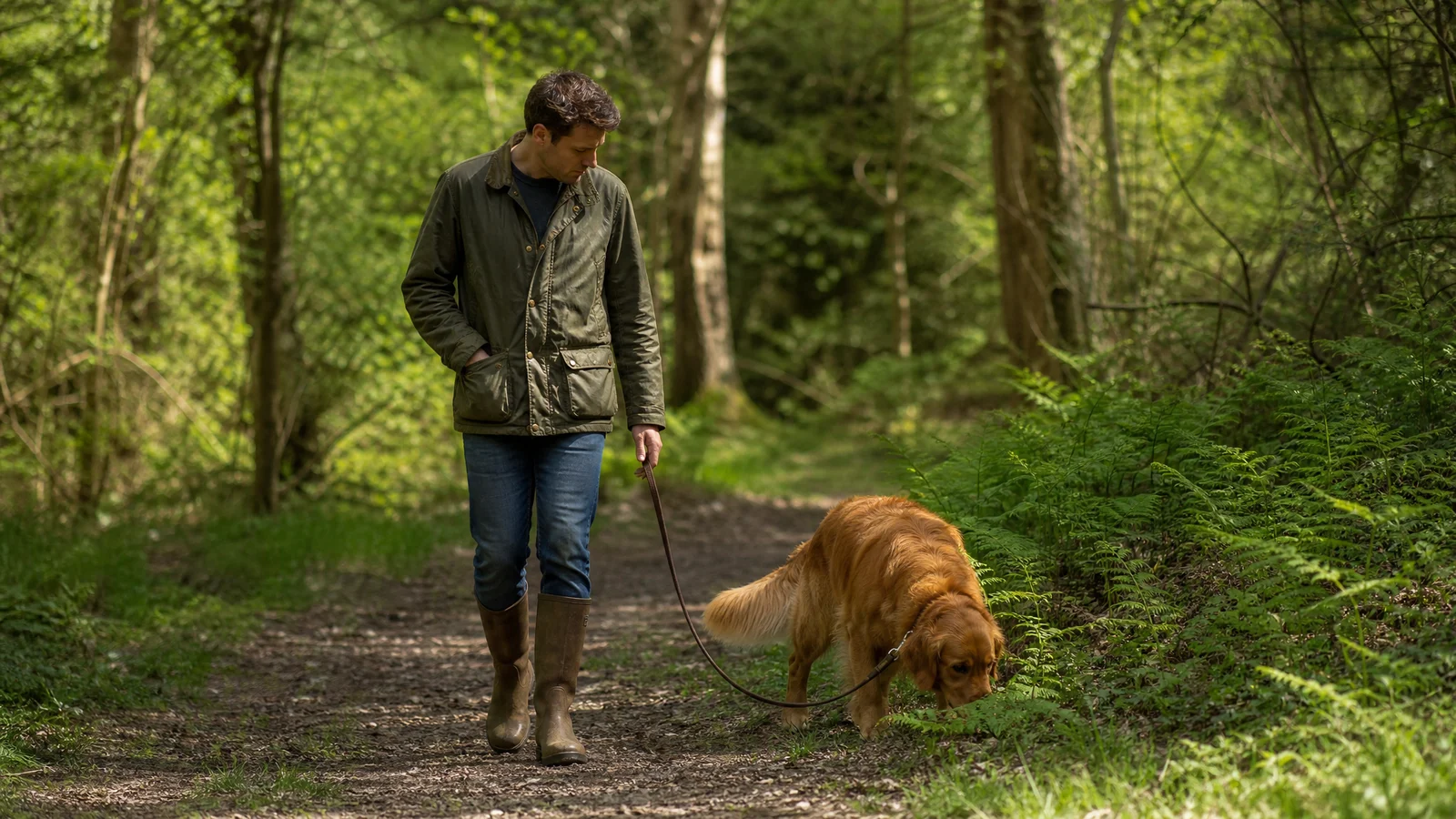
Loose leash walking with a Golden Retriever means rewarding a hanging leash, pausing when tension appears and letting forward movement or sniffing resume when slack returns. It is ordinary walking with room to explore, not the precise position expected in heel work.
The lesson begins before the dog reaches full speed. Choose a quiet starting point, carry rewards the dog already values and hold the leash so your arm can stay relaxed. We treat visible slack as the decision point, rather than asking the dog to remain beside one knee for the entire route.
This guide covers the first slack steps, useful sniff breaks, changes for quiet and busy stretches and the practical questions that affect everyday walks. Keep routine veterinary visits, and pause the lesson if your Golden shows discomfort, a sudden gait change or unusual reluctance to move.
Begin Loose Leash Walking With Slack
Start in a low-distraction place where one step is easy. According to Blue Cross, a marker can tell a dog which behavior earned the reward. Use one short word or sound when a soft curve appears, then deliver a valued reward. Mark the loose line itself, not a perfect head position or constant eye contact.
- Stand still with enough leash for a soft curve. When your Golden turns toward you or releases pressure, mark that instant and deliver the reward near your walking side.
- Take one or two easy steps. If the leash remains loose, mark again, reward near you and continue before the dog has time to rush to the end.
- When tension appears, stop moving without pulling the dog backward. Wait for the line to soften, mark the slack and resume in the direction you were already going.
- After a short successful stretch, use a release phrase and allow access to a safe sniffing area. Begin another walking stretch only after both of you are ready.
Keep the first route short enough that you can apply the same rule every time. Best Friends Animal Society notes that inconsistent stopping can teach a dog that pulling still works sometimes. If you cannot keep the lesson clear in the current setting, move to an easier stretch instead of repeating a pattern that alternates between tension and progress.
Golden Retriever Sniffing on a Loose Leash
A dog can explore scents without abandoning a slack-line rule. A young Golden can stop, sniff and investigate while learning about the leash. For an adult Golden too, a clear release to explore can make the difference between a flexible walk and an uninterrupted march.
Use forward motion as information. The RSPCA's loose-leash guidance centers the lesson on showing the dog that not pulling is the quickest route toward what they want. Pause when the line tightens, then let a slack line reopen access to the path or a safe sniffing spot.
A sniff release is not permission to drag you to every scent. Walk to a chosen area on slack, say the release phrase and give the dog room to investigate. When it is time to move on, use the ordinary walking cue and reward the first few slack steps. For a route already dominated by tension, use the separate Golden Retriever leash pulling guide rather than turning this page into a pulling-repair plan.
Loose Leash Changes on a Busy Route
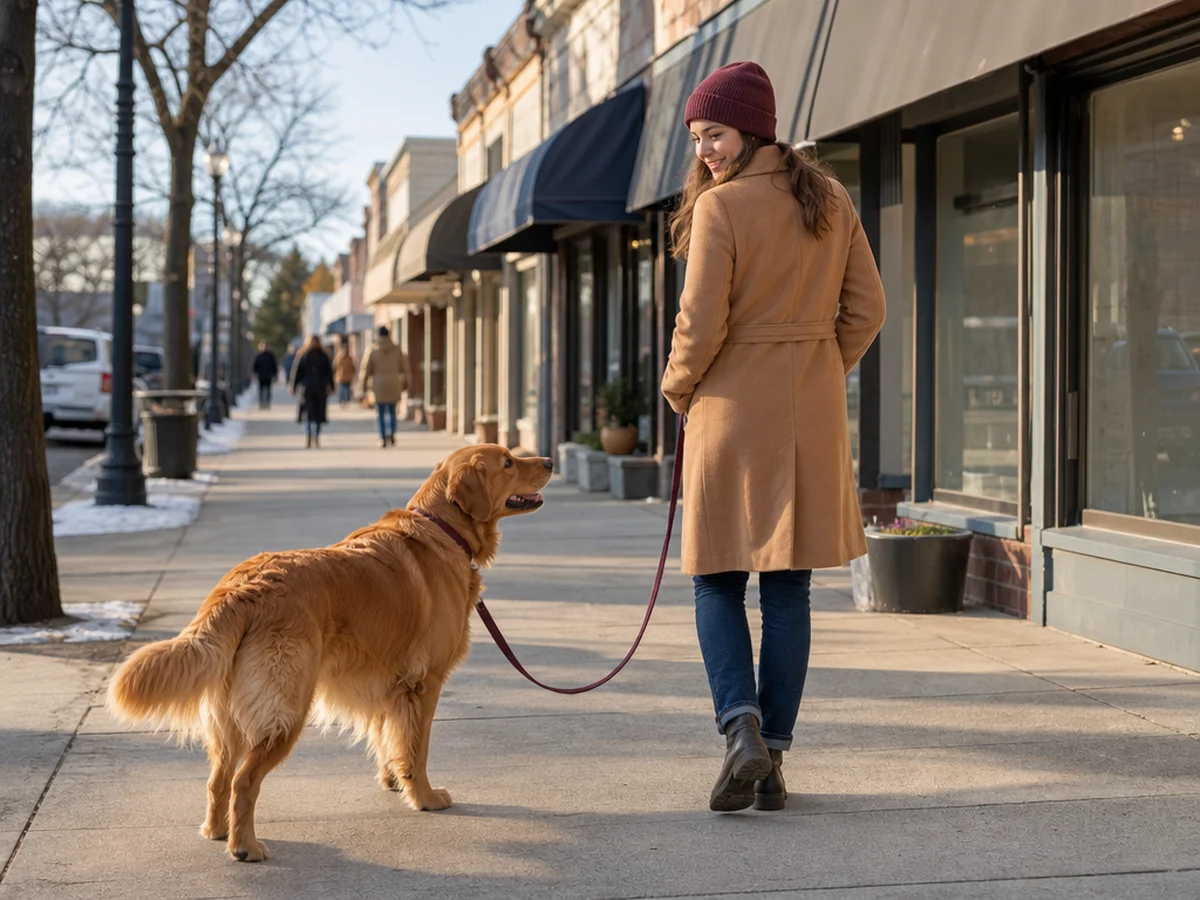
Difficulty rises when space narrows, people pass or the environment changes faster than the dog can process it. Adjust the setup before the leash is tight. A busy context may need more distance, a shorter walking segment and quicker reinforcement, while a strong emotional response to a trigger needs a plan beyond ordinary loose-leash practice.
A Quiet Stretch
On a quiet path, lengthen the time between rewards gradually and use safe sniff access as part of the walk. Increase either the distance walked or the distraction level, while leaving the other unchanged. If slack disappears repeatedly, shorten the next segment and make the next success easier to recognize.
A Difficult Passing Point
Create space before another dog, a group of people or a narrow corner becomes unavoidable. Turn onto a wider line, wait at a comfortable distance or cross where it is safe. The American Veterinary Society of Animal Behavior describes reward-based training as cueing, marking and reinforcing wanted behavior, so mark the slack response you can actually see rather than correcting the dog for a setup that is too difficult.
| Context | When slack is lost | Useful setup change |
|---|---|---|
| Quiet familiar path | The dog reaches the end gradually | Shorten the walking segment and reward earlier |
| Interesting sniffing area | The dog surges toward one scent | Pause, regain slack and release from closer range |
| Narrow passing point | The line tightens as traffic approaches | Add distance or wait in a wider safe space |
| Sudden intense reaction | The dog cannot reorient or take part | Leave the situation and seek qualified help for the trigger response |
Do not use the table as a reason to remain in an unsafe spot. Leave when you need to, then choose a calmer place for the next practice. Loose-leash walking can improve movement through an ordinary setting, but it is not a substitute for behavior support when fear, frustration or overarousal drives the response.
Loose Leash Walking Questions
Equipment, location and household consistency can change how easily the rule makes sense. These answers cover gaps outside the main walking progression, while keeping the same standard that slack reopens access and tension pauses it.
- Can a longer leash help on a quiet sniffing walk?
- It can provide more room in an open, safe area when the handler can manage it without tangles. Begin with a familiar length and clear slack rule, then add room gradually. A longer line does not make an unsuitable roadside, crowded path or uncontrolled area safe.
- Should different family members use the same walking cue?
- Yes. Agree on the walking cue, release phrase, reward position and response to tension before changing handlers. The dog receives a clearer lesson when forward movement follows the same visible slack standard with each person.
- Can loose leash practice begin indoors?
- Yes, a hallway or cleared room can make the first mark-and-reward repetitions easier to notice. Use non-slip flooring and remove obstacles, then move outdoors before treating indoor success as proof that a busy route is ready. The environment is part of the difficulty.
Keep the Golden Retriever Walk Flexible
A workable walk can include slack movement, brief pauses, sniff releases and moments when you change direction or add space. Judge the outing by whether the leash can return to a soft curve and both partners can move safely, not by whether the dog holds one position for the whole route.
End after a clear stretch rather than waiting for the hardest moment of the walk. Note where slack was easy, where tension returned and which setup change helped. That small record gives the next Golden Retriever walk a useful starting point without turning ordinary exploration into a precision exercise.
 Training basicsHow to Teach a Golden Retriever to Heel
 Training basicsHow to Teach a Golden Retriever to Stay
 Training basicsTraining an Older or Adopted Golden Retriever