 Golden Retriever

At 3 to 4 months, teach your Golden Retriever puppy one easy behavior at a time, redirect mouth use to an appropriate object, and stop when rest is the better choice. This age gives useful context, but it is not a deadline for polished cues or calm behavior in every setting.
Think in awake windows instead of daily quotas. In each one, decide whether your puppy is ready to learn, needs something suitable to carry or chew, or has run out of capacity. This guide explains how to make that choice during lessons, mouthy moments and new-place outings without turning age into a test. The goal is a repeatable choice, not a crowded schedule.
A General Method for One Puppy Awake Window
Development at this age varies by individual. Texas A&M School of Veterinary Medicine describes 3 to 6 months as the general juvenile stage, not a breed-specific learning schedule. Use that broad window to observe your puppy rather than predict what they should already know.
The general method is deliberately flexible. It keeps one small lesson separate from a Golden Retriever's need for an appropriate mouth outlet, and it treats a timely stop as a useful training decision.
- Notice readiness. Begin only if your puppy can orient to you and take a reward without frantic grabbing or wandering away.
- Choose one easy behavior. Practice something familiar in a low-distraction place instead of adding several new demands at once.
- Reward the useful choice. Mark the behavior with calm praise and deliver a reward your puppy values.
- End or redirect. Finish while the behavior is still easy, or offer a suitable carrying or chewing option when the mouth is taking over.
A session may end after a small success, and the next awake window may be entirely management. The Golden Retriever Club of America describes this age as a time to balance behaviors that can be trained with those that should be managed. That distinction keeps expectations tied to the puppy in front of you.
A Golden Retriever Mouth Changes the Choice
Golden Retrievers were developed to carry, and mouth use is part of the breed rather than a puppy flaw. The practical aim is not to suppress every attempt to hold something. It is to make appropriate objects easy to choose, keep hands and clothing out of the game, and preserve calm delivery as the puppy matures.
In general, puppies around 12 to 16 weeks may be shedding baby teeth while adult teeth emerge, although timing varies by individual. That temporary tooth change does not explain every mouthy moment or replace the Golden Retriever's continuing tendency to carry objects.
The ASPCA identifies playful mouthing as normal puppy and young-dog behavior. Normal does not mean harmless or something a household must simply endure. It means the first question is whether the puppy needs training in that moment or a safer outlet and a change of activity.
When Carrying Is the Better Answer
Choose redirection when the puppy keeps returning to sleeves, hands or furniture despite an easy cue and a reward. Offer an object that suits the situation, then give the puppy room to hold or chew it without turning the exchange into a chase. The full response belongs in our Golden Retriever puppy biting guide, so this stage page does not duplicate that method.
Owner patterns describe mouthy spells that can feel much more intense than expected and can flare when a puppy is overtired. Those reports do not prove a cause or set a timeline. They are a reason to check rest, access and the immediate environment before assuming the puppy needs a harder lesson.
When the Lesson Can Continue
Continue only when your puppy can release attention from the tempting object, take a reward softly enough for the session to stay orderly, and return to the easy behavior. Lower the difficulty if success depends on repeated interruptions. Start with a well-known cue where distractions are minimal instead of testing it amid every household distraction.
We recommend regular veterinary visits throughout this stage, and training should pause if a sudden change makes ordinary carrying, chewing or eating look uncomfortable. A veterinarian can assess a physical concern. The training decision is simply to stop asking for more until that concern has been evaluated.
Puppy Questions to Settle Before the Next Practice
The useful questions at this stage are about coordination and context, not whether the puppy is ahead or behind. Settle these gaps before the next awake window so that people do not accidentally turn one easy behavior into several different assignments.
- Household Response
What should everyone in the household do when the puppy mouths? Agree that skin and clothing end the interaction, while an appropriate object keeps mouth use in a safe channel. Each person should follow the same simple response, then note whether the puppy could settle or needed a rest opportunity.
- Class Context
What information helps a puppy-class instructor adjust the lesson? Describe the setting in which the cue is easy, what reward holds attention, and what happens just before the puppy disengages or mouths. That information is more actionable than calling the puppy stubborn or reporting only the number of successful repetitions.
- Away From Home
Why can a familiar cue look different away from home? A new place changes the sounds, surfaces, movement and distance from distractions around the cue. Treat the behavior there as a fresh, easier practice instead of evidence that the puppy forgot what they learned at home.
New Places for a Golden Retriever Puppy
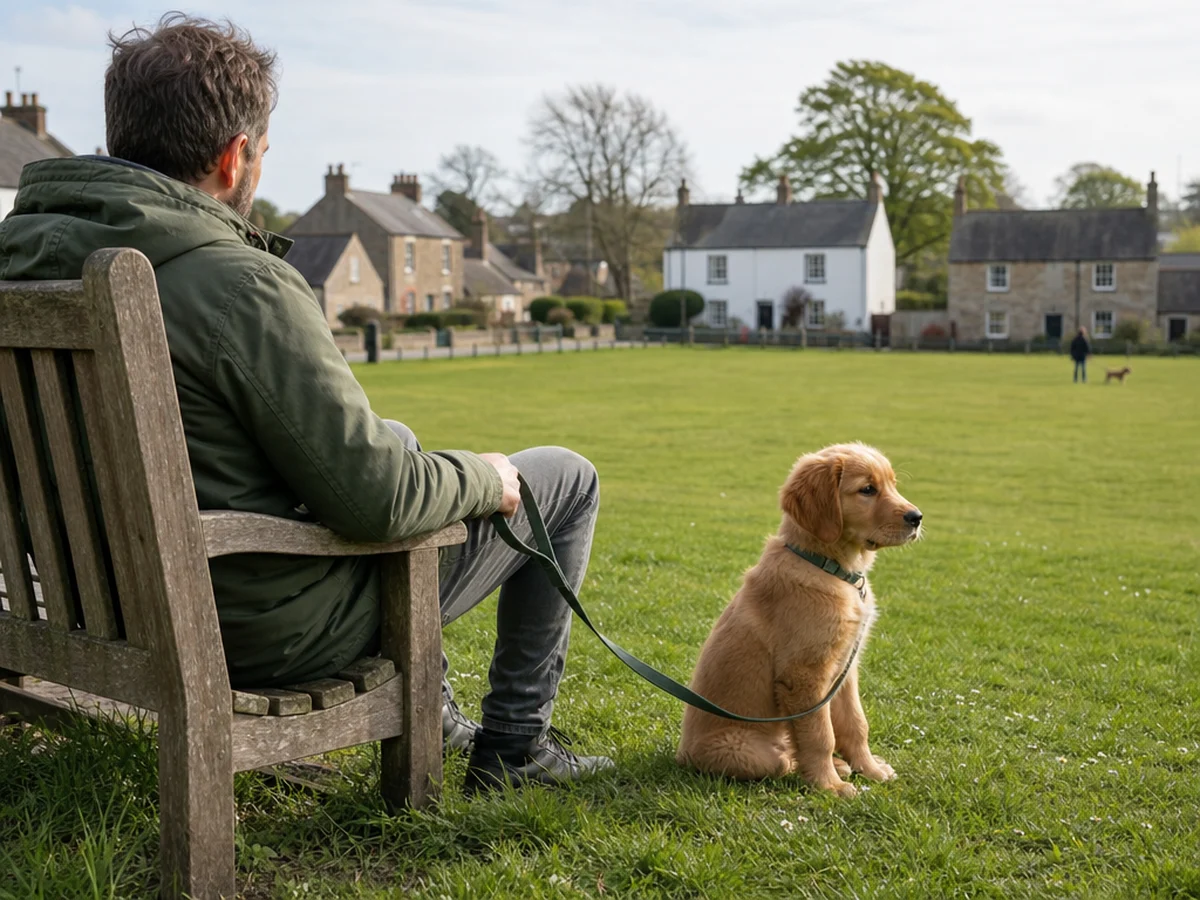
An outing can be a short observation rather than a checklist of contacts. Choose enough distance for your puppy to notice the setting without being pulled toward every person, dog or sound. Reward neutral or positive engagement, and allow withdrawal instead of holding the puppy in place.
The American Veterinary Medical Association advises rewarding positive or neutral engagement and letting an uncomfortable puppy withdraw at their own pace. That makes recovery part of the outing. It also prevents a friendly-looking Golden Retriever from being required to greet simply because someone is available.
Leave While the Puppy Can Recover
Watch what happens after the puppy notices something new. If they can turn back, take a reward and move with you, the observation may be enough for that visit. If they stay fixed on the event or stop engaging, add distance or leave rather than waiting for the environment to become even harder.
Keep the outing narrower than the separate socialization plan. The Golden Retriever training timeline places this window among the other stages, but it does not turn age into permission to rush. Use your veterinarian's guidance for vaccination, local disease risk and safe access.
End the Puppy Window With the Easiest Reliable Choice
At the end of an awake window, identify the easiest choice your puppy made reliably. It might be orienting to you in the kitchen, carrying an appropriate object instead of a sleeve, or watching a distant sound and then disengaging. Keep that context as the next starting point rather than adding several new challenges.
For the next practice, change only one condition, such as location, distance or duration, and leave the other supports in place. If the behavior becomes difficult, return to the last workable context without treating the month as a countdown. A steady choice between teaching, redirecting and resting is the real plan for this stage.
 Puppy trainingHow to Socialize a Golden Retriever Puppy
 Puppy trainingHow to Crate Train a Golden Retriever Puppy
 BehaviorHow to Stop a Golden Retriever Barking