 Golden Retriever
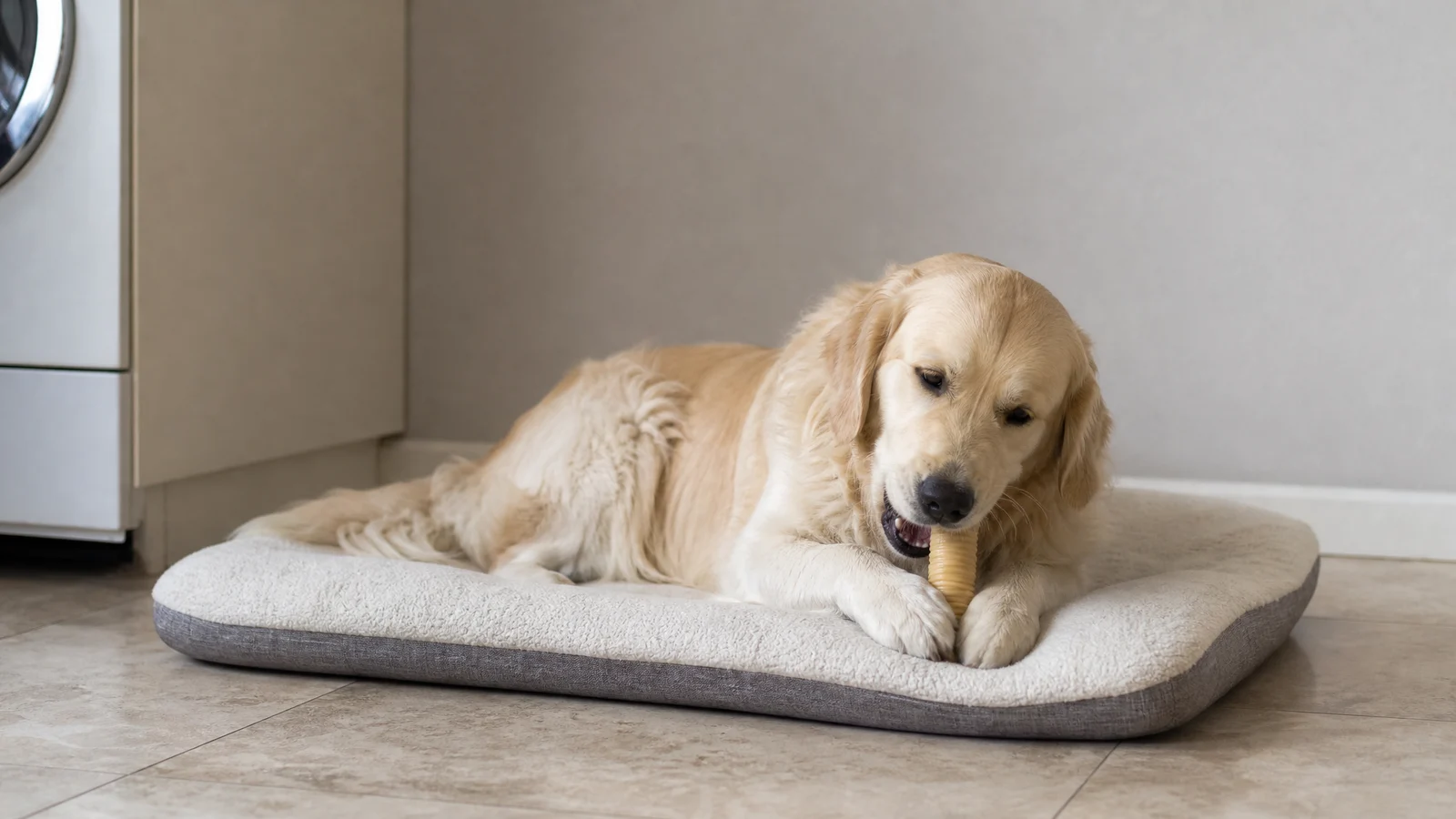
If a Golden Retriever guards food, a chew or a found object, stop approaching and give them space. Do not reach into the guarded area, chase the dog or ask a child to recover the item. When there is bite risk or the household cannot manage access safely, separate people and animals from the situation and seek qualified help.
Immediate management prevents another confrontation. A voluntary trade is a limited option for a calm, low-risk moment, while individualized behavior care belongs with a veterinarian and a qualified behavior professional. These are different jobs, and a trade should never become a test of whether the dog will tolerate a hand nearby.
Below, we identify resources and warning signals, make access predictable and set clear points for professional support. Golden Retrievers may enjoy carrying objects, but carrying does not prove that taking an object is welcome or safe. The individual dog's movement and recovery guide the response.
Resource Guarding Calls for Space First
Resource guarding can involve anxiety about losing access, according to Humane World guarding guidance. That evidence does not explain an individual dog's behavior or make guarding a Golden Retriever trait. It supports a cautious first response: reduce pressure and observe from a safe distance instead of forcing a surrender.
Look at the sequence around the resource. A dog may become still, change how they hold the item, position their body over it or watch an approaching person closely. Treat an early change as useful communication. Waiting for a louder warning before creating space adds risk without teaching a safer response.
What Counts as a Resource
A resource can be food, a bowl, a chew, a toy or an object found around the home. Access to a resting place or the space around a valued item can matter too. The relevant question is not whether the item seems valuable to a person, but whether the dog's behavior changes when someone approaches.
Keep possession separate from the pre-pickup skill owned by the Golden Retriever leave it guide. That page covers disengaging before an item is taken. Once a dog has possession and shows tension, this safety plan owns distance, access control and referral rather than repeating the complete cue lesson.
A Golden who carries a sock or toy is not automatically guarding it. Equally, a familiar breed description cannot establish that taking the item is harmless. Observe whether the dog stays loose and can move away voluntarily, without turning that observation into a reach or a test.
Keep resource categories separate in the record. A dog who is comfortable around ordinary toys may respond differently around a found object, meal or resting place. That contrast helps the household choose the right boundary, but it does not justify approaching the more difficult setting to confirm it.
Why Testing the Dog Is Unsafe
The ASPCA guarding-sign list describes stiff posture, faster eating, becoming motionless, growling, a fixed stare, snapping and efforts to send people away. These signals differ in intensity, but each can be a reason to stop advancing. Do not recreate them to decide how serious the problem is.
Taking a bowl, touching a chew or repeatedly walking closer can make the person part of the threat around the resource. It can also hide the earliest signs if the dog learns that subtle communication never creates distance. A safe record describes what already occurred, where people were and how the dog recovered.
Testing is especially unsafe around children, visitors or anyone who may not recognize a change in posture. Use a door, gate or separate area before a valuable resource appears. If the dog has snapped, bitten or pursued someone away, skip home practice and arrange individualized support.
When an incident has already occurred, preserve the ordinary details instead of reenacting it. Note who entered the area, which route was open and what ended the encounter. A professional can use that sequence to plan safer information gathering without asking the dog to face the same pressure again.
Make Golden Retriever Meals and Chews Predictable
Predictability begins before food or a valued chew is available. Choose a quiet place, decide who controls access and prevent interruptions. Best Friends food-bowl guidance warns that putting a hand into the dish or repeatedly taking food away can create guarding, so those actions are not socialization exercises.
- Feed the dog in an area where household traffic will not pass close to the bowl, and wait until the dog has left before clearing the space.
- Give special chews only behind a reliable boundary, with children and visitors excluded from the area for the entire session.
- Separate animals before meals or long-lasting items appear, and do not rely on supervision at close range to settle competition.
- Store likely found objects before the dog can collect them, and use doors or gates to stop repeated access to high-risk rooms.
Resting areas also need a household rule. Do not send someone to move the dog by touch when food, a chew or a collected object is nearby. Clear the route, remove other people and animals from the area, and wait for voluntary movement or professional direction.
Management does not prove that the concern is resolved. It reduces opportunities for another unsafe encounter while assessment or a broader plan is arranged. Keep the boundary even after a quiet meal rather than using one calm event as permission to begin testing.
Make cleanup as predictable as access. Put away spare food and loose items before opening the boundary, check that other animals remain separated and let the dog leave without being followed. If the dog stays near the empty area, wait rather than using a person to dislodge them.
The Difference Between a Trade and a Confrontation
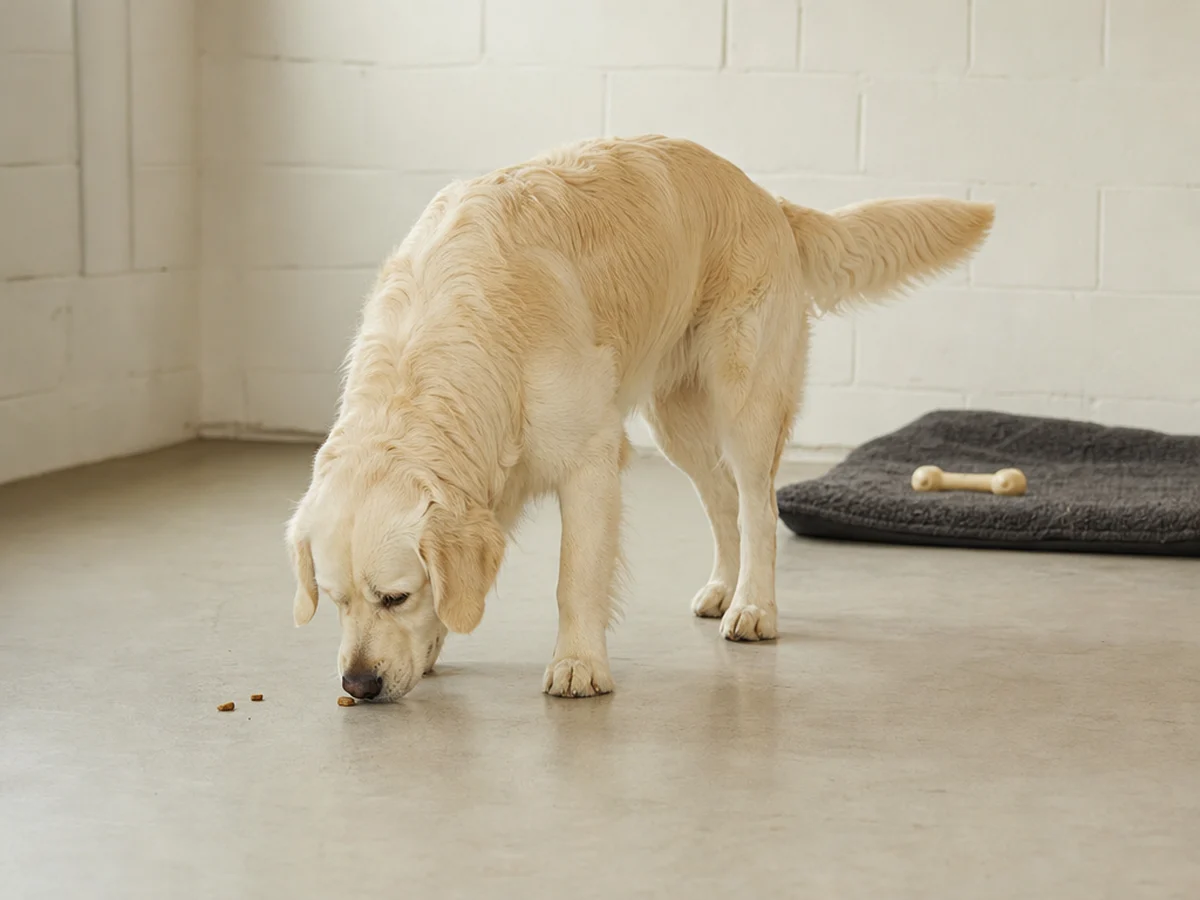
A trade is voluntary. A confrontation uses proximity, hands, blocking or repeated cues to make the dog release an item. If the dog is frozen, growling, snapping, guarding a dangerous object or unable to move away comfortably, do not attempt a home exchange.
For a calm, low-risk situation, prepare a valued food reward away from the guarded area. Place it at enough distance for the dog to choose whether to leave the item, then stay back. Only after the dog has moved away and access can be controlled safely should an adult collect the object.
Do not advance while presenting the reward, hold food beside the object or reach as the dog begins to move. Those choices collapse the distance that makes the exchange voluntary. If the dog returns immediately, blocks access or stops moving loosely, restore separation rather than repeating the offer.
This is a narrow recovery option, not a progressive behavior plan. Do not rehearse with increasingly valuable items, reduce distance to test progress or turn every possession into a trade. A veterinarian or qualified behavior professional should design any systematic work for a dog who has guarded resources.
After a low-risk exchange, end the situation and change the environment that allowed access. The useful outcome is safe separation from the item, not proof that a person can take things. Record the resource, the distance available, the dog's movement and whether ordinary behavior returned.
Golden Retriever Resource Guarding Is Not a DIY Challenge
Professional support is appropriate when warnings intensify, the dog follows or corners a person, management repeatedly fails or anyone could be bitten. Keep children entirely outside assessment and practice. A general article cannot determine risk or provide an individualized behavior sequence.
Do not punish or suppress a growl. PDSA communication guidance explains that punishing growling can remove a warning before a snap or bite. Create distance, preserve the information and share the sequence with the professional.
Veterinary Check
Arrange a veterinary assessment when guarding appears suddenly, changes in intensity or occurs alongside changes in movement, appetite, sleep or comfort with touch. Pause trade practice while a possible health concern is unresolved. The veterinarian can assess health factors without requiring the dog to repeat a guarded encounter.
Maintain regular veterinary visits even when the pattern seems stable. Bring a factual record of the item, location, approach, body changes and recovery. Do not assign a cause from a single sign or use a quiet clinic visit to dismiss behavior that occurs in a different setting.
Include the timing of any new pattern and changes that happened near it. Mention whether the concern appears only with food, with carried objects or across resting areas as well. This context lets the veterinarian decide what assessment is appropriate without a household member provoking another response.
Qualified Behavior Support
Seek a qualified reward-based behavior professional for bite risk, repeated freezing or growling, guarding across resources, or a household that cannot maintain separation. Explain who lives in the home, where resources appear and which barriers are practical. Ask for a plan that protects warnings and avoids forced surrender.
Describe the household's normal routines as well as the hardest event. A plan must work when meals are prepared, deliveries arrive and shared spaces are busy. Tell the professional which adults can manage barriers consistently and where the current setup breaks down, without overstating what anyone can safely do.
While help is being arranged, keep the safest known boundary and stop informal demonstrations. The response route depends on what has already happened and what the household can manage without approaching the dog. Use the table to organize that information, not to rank the dog or test a threshold.
| Observed Situation | Immediate Boundary | Help Route |
|---|---|---|
| New guarding or a sudden change | Pause practice and prevent access | Veterinary assessment |
| Freezing or growling around a resource | Increase distance and end approach | Qualified behavior support |
| Snap, bite or pursuit away from the item | Separate people and animals | Urgent individualized safety plan |
| Household cannot maintain the boundary | Remove the resource from the routine | Professional management planning |
Choose the more protective route when details are uncertain. Existing notes are enough to start a conversation, and no one needs to stage another incident for evidence. If immediate safety cannot be maintained, contact the veterinary or behavior provider for urgent direction.
Questions About Objects and Guarding
These questions cover decisions left outside the body plan. They do not replace the distance rule, veterinary assessment or individualized behavior support when warnings or bite risk are present.
- What if guarding appears only around one household member?
- Treat that as a context to record, not proof that another person can approach safely. Humane World's guidance that the psychology can vary supports preserving the individual pattern rather than testing it with another household member. Keep the same distance boundary and share who was present with the veterinarian or qualified behavior professional.
- What should a pet sitter know before caring for this Golden Retriever?
- Give the sitter the written meal location, unavailable items, boundary, cleanup rule and stop points before care begins. Best Friends' food-bowl guidance supports keeping hands out of the dish and not taking food during eating, so the sitter should not practice a trade or retrieve a resource. If the sitter cannot maintain the established separation, leave optional chews out of the routine and arrange professional guidance for essential access.
- Who should contact the veterinarian or behavior professional?
- Name one adult to contact the veterinarian or behavior professional, with a backup identified in the written plan. The ASPCA warning-sign guidance supports sending the observed posture and movement rather than a label. The caller should include the item, location, approach and recovery, then share the provider's management directions with every adult who controls access.
A Safer Household Agreement Around Resources
Write down who prepares meals, who closes the boundary and who clears the area only after the dog has moved away. Include the plan for found objects, visitors and other animals. Children do not deliver food, collect items, approach resting spaces or participate in any assessment.
Agree on the stop points as well as the routine. New-onset behavior goes to the veterinarian, warnings or failed management go to qualified behavior support, and any bite risk ends home practice. No one reaches, tests tolerance or tries to prove that a calm event solved the concern.
The aim is predictable access and fewer confrontations, not silent warnings or forced surrender. A Golden Retriever who has space to leave and a household that follows the same boundaries provides clearer information for the professionals responsible for the next step.
 Training basicsHow to Choose a Golden Retriever Trainer
 Exercise and jobsIndoor Activities and Brain Games for a Golden Retriever
 Puppy trainingGolden Retriever Puppy: What to Expect and How to Start Training