 Golden Retriever
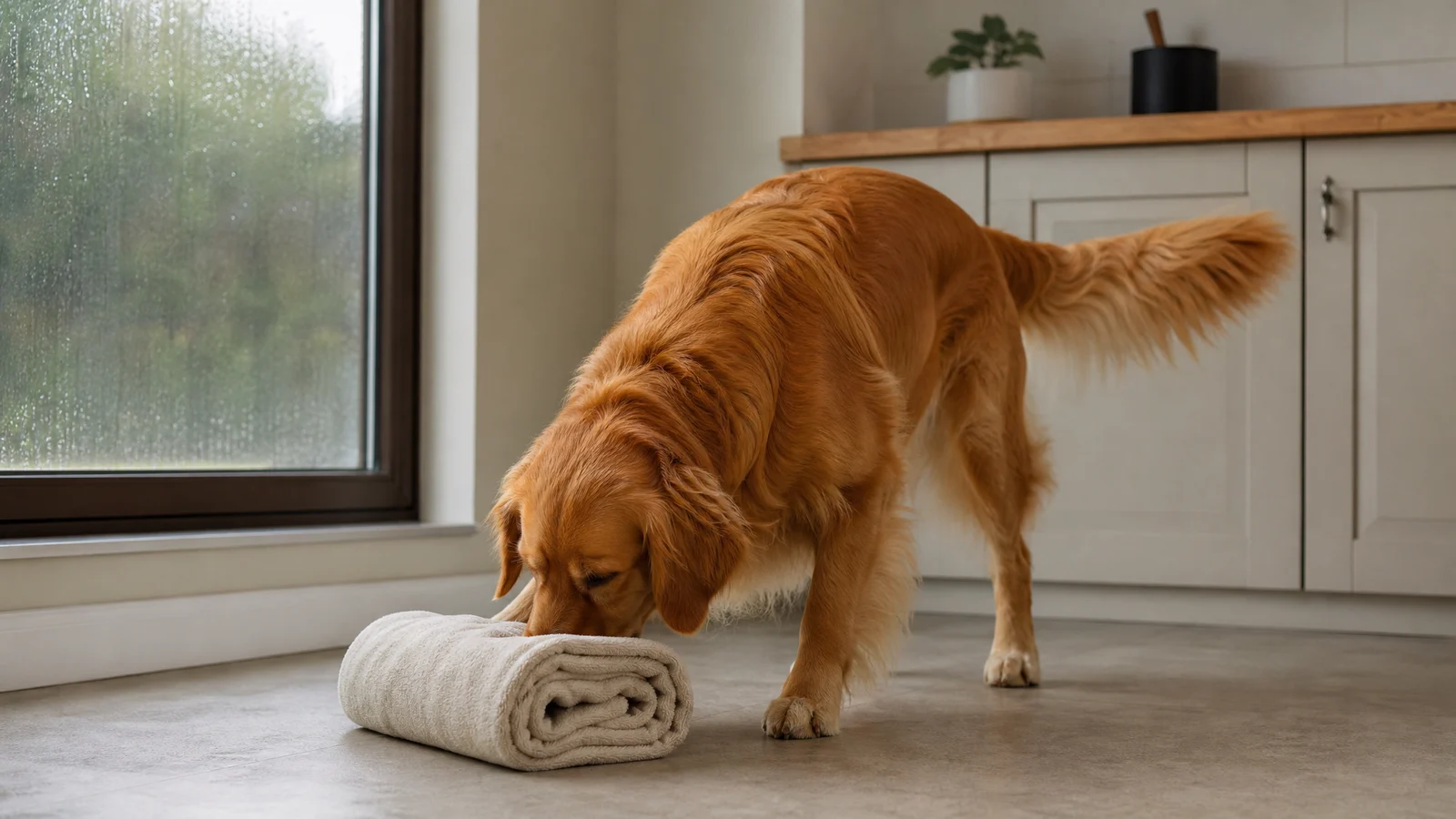
The best indoor activities for a Golden Retriever begin with sniffing, simple searches and calm skill practice rather than fast games in a tight room. Choose one job that suits the space and the dog's current energy, make success easy to find and stop while the dog can still settle. We favor one clear job over a rapid sequence of games.
Indoor work adds variety, but it does not replace outdoor movement, rest or an individual health plan. Goldens are active dogs, while age, training history and the day in front of them change what is useful.
This guide covers how to read the dog's current state, build one easy search, compare quiet choices and finish with a recovery check. Keep routine veterinary visits, pause if movement looks uncomfortable and use the Golden Retriever exercise guide for the larger activity balance.
What Does the Golden Retriever Need Indoors Today?
Look at what happened before reaching for food or toys. A dog who has just returned from a busy outing may need water and undisturbed rest. A dog who has slept, stretched comfortably and is seeking contact may be ready for a short thinking job. Restlessness alone does not prove that more activity is the answer.
| What you observe | Useful first choice | What to avoid |
|---|---|---|
| Calm, alert and interested | An easy scent search or familiar cue | Making the first round difficult |
| Fast movement after excitement | Lower stimulation and allow recovery | Indoor chasing or repeated throwing |
| Yawning, disengaging or leaving | End the setup and offer rest | Following the dog with another task |
| Stiffness or unusual reluctance | Pause and seek veterinary guidance | Testing jumps, turns or slippery movement |
Set up on non-slip flooring and remove cords, small objects and anything the dog could swallow. Separate other dogs before food appears. The aim is a clear, supervised job with an obvious finish, not a room full of hidden hazards that remains active after the session ends.
A General Indoor Find-It Method
Start where your Golden can understand the game without guessing. Blue Cross indoor-game guidance recommends beginning with an easy visible find before increasing concealment, while also choosing suitable space and secure footing. Reserve a few pieces from the dog's measured meal, or choose a reward already known to agree with them.
- With the dog watching, place one piece of food on clear floor a short distance away. Say your chosen search cue once, then allow the dog to find it.
- Repeat with the food beside a chair leg or at the edge of an open box. Keep it visible enough that scent and sight can work together.
- Move the dog out of view briefly, place two or three easy finds in the cleared area and release the dog to search. Do not point to every piece.
- Finish with a consistent phrase, check that every item is collected and remove the search setup before the dog starts hunting for leftovers.
For the next round, adjust either the distance or the amount of concealment, not both together. If the dog circles rapidly, scratches at furniture or looks to you repeatedly, make the next find easier. A search that ends in frustration is not improved by adding more hiding places.
Quiet Indoor Work for a Golden Retriever
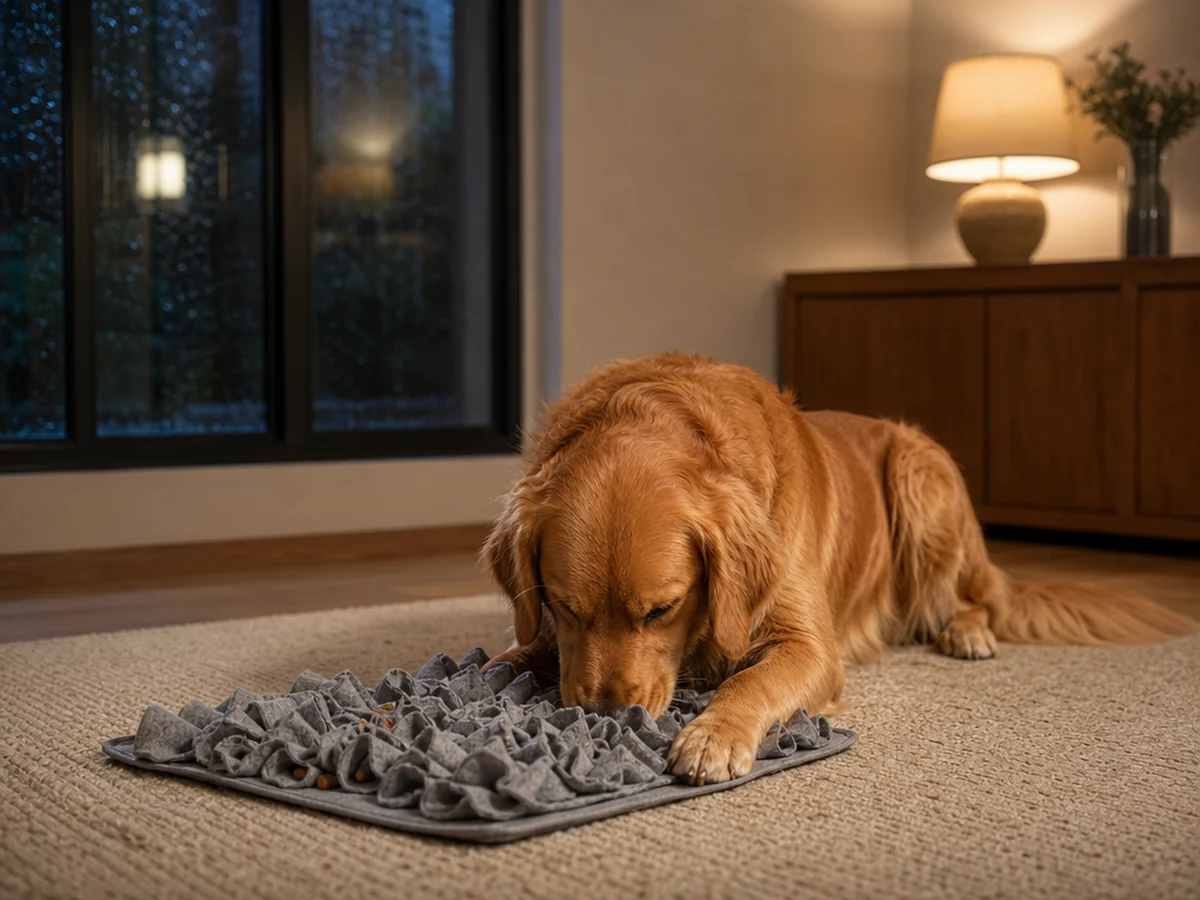
A useful indoor menu has different kinds of thinking, not five versions of throwing an object. Sniffing can be both stimulating and calming according to the ASPCA's enrichment guidance. Familiar cue work can provide another quiet option when the room is too small for a search.
Scent Choices
Scatter a few pieces across a clean snuffle mat, place food in open cardboard boxes or set a well-known toy behind a partly open doorway. Boxes must be empty of staples, tape and packing material, and the dog should not tear or eat them. Supervise the whole search and remove the materials at the end.
Best Friends Animal Society describes an introductory nose-work setup using open boxes with accessible scented food so finding the target rewards the dog. At home, keep that principle simple. Easy access builds the search pattern before closed containers or harder hides are considered.
Run separate searches in a multi-dog home. Even dogs who usually share space calmly can feel pressure when both are seeking the same food or object. One dog can rest behind a closed door while the other searches, then the floor and boxes can be cleared before roles change.
Familiar Skills
Choose two or three cues the dog already understands, such as touching a hand target, settling on a mat or moving around a cone at a walk. Reward clean responses, add a short pause and end before repetition makes the dog faster or sloppier. This is practice, not a test of how many behaviors fit into one session.
According to PDSA, regular training keeps a dog's mind active, reinforces known cues and helps prevent boredom. If you want to teach a new performance behavior instead, choose one lesson from the Golden Retriever tricks guide rather than compressing several unfinished skills into this activity menu.
Indoor Activity Questions
These questions cover the boundaries that change an otherwise simple game. The safest answer depends on the individual dog's diet, household and recovery, so make the setup easier or stop when those conditions are unclear.
Can a Golden Retriever's normal food be used for indoor games? Yes, food from the dog's measured daily amount can be reserved for a search when that suits the dog's feeding plan. Count every piece, avoid introducing rich extras without a reason and ask your veterinarian about diet needs that make food games unsuitable.
Should two dogs search for the same food at once? No. Run one dog at a time behind a real barrier, clear every reward and remove the materials before switching dogs. Separate turns protect concentration and avoid creating competition around food or a found object.
Can mental enrichment replace every outdoor walk? No. Indoor scent and skill work can add useful mental activity, especially when weather or circumstances change the day, but they do not replace the dog's broader need for movement, outdoor information and rest. Adjust the whole routine to the individual rather than using one game as a substitute for everything else.
End Before the Room Becomes a Playground
Use the finish phrase, collect food and boxes, put toys away and offer water. Then watch what happens without starting another task. A dog who sniffs once, lies down and relaxes has given you different information from a dog who scans the room for more hidden food.
If arousal rises after the activity, shorten the next session, make the search more obvious or choose a familiar settling skill instead. More rounds are not automatically better. The useful stopping point is where your Golden Retriever can leave the game and return to ordinary household life.
Keep a simple note of the setup and the recovery you observed. That record helps you choose tomorrow's activity without chasing novelty, and it keeps indoor enrichment focused on safe, understandable work rather than filling every quiet moment.
 Puppy trainingGolden Retriever Puppy: What to Expect and How to Start Training
 Puppy trainingGolden Retriever Puppy at 3 to 4 Months: Teething and Mouthing
 Puppy trainingHow to Socialize a Golden Retriever Puppy