 Golden Retriever
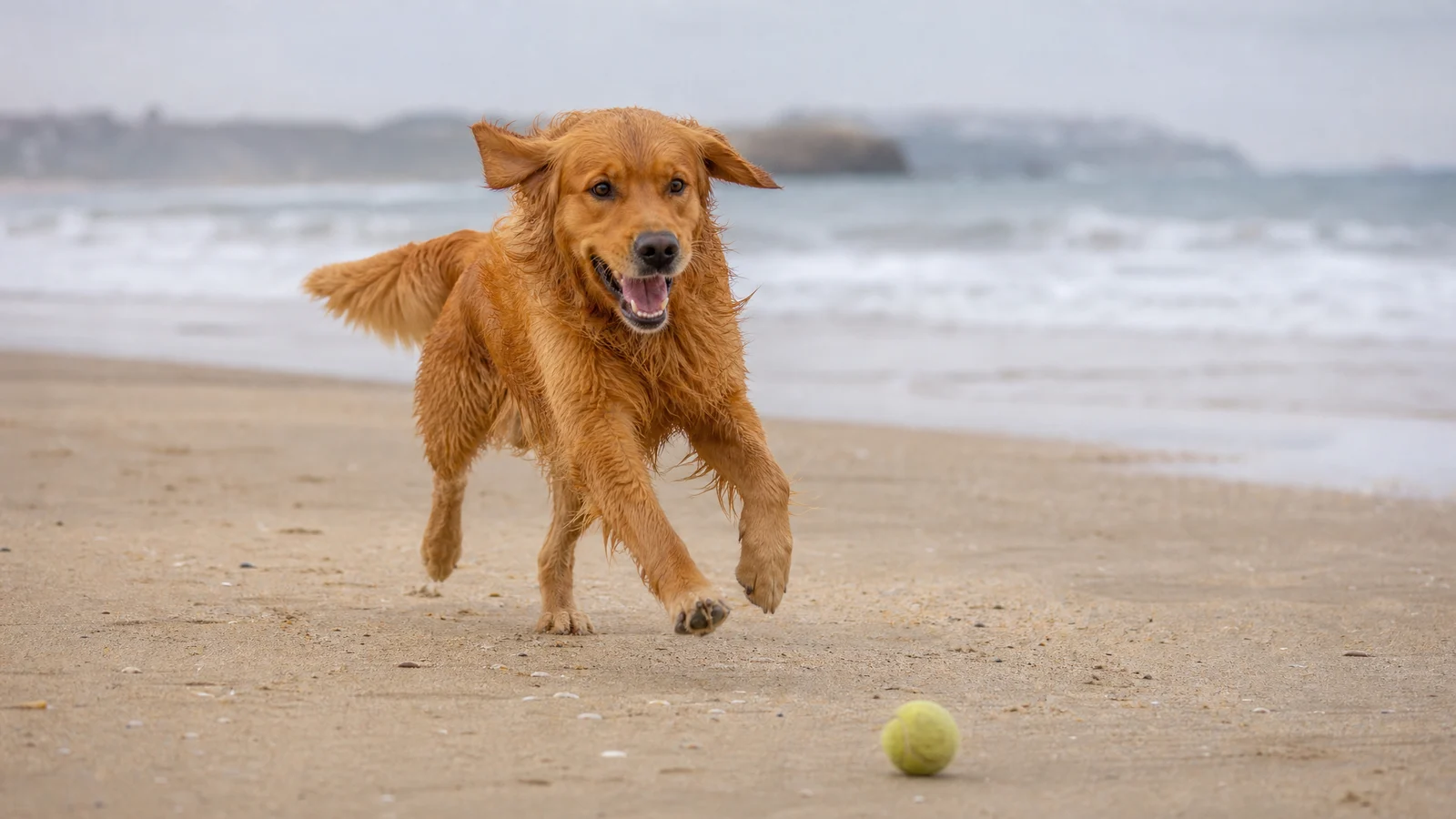
An adult Golden Retriever needs plenty of daily exercise, and the Royal Kennel Club breed page puts it at more than 2 hours a day. The reason is the job these dogs were bred for: retrieving through long working days beside a person, which left them with stamina and a strong wish to be doing something with you.
Hours do not mean miles, though. Puppies should not jog or bike before 12 months, a fenced yard does not count when nobody is in it, and mental work often tires a young Golden more than distance does. Get this wrong and the energy comes out as chewing, digging and frantic evenings. Get it right and you have a dog who drops into an easy settle beside you.
This article looks at rewards, gear, weather limits, yards, puppy brain games and a weekly routine, and answers the questions owners ask most. Read on to learn how to fill those hours safely, from the first weeks to full adulthood.
Why a Golden Retriever Needs Hours of Exercise
Goldens were bred to retrieve waterfowl for hours on end, and that working past still lives in the dog on your sofa. Adults keep benefiting from regular, vigorous activity for lean weight, fitness and longevity, and the need peaks in puppyhood and adolescence, up to about two years.
Without a proper outlet, the energy tends to appear as destruction that looks like hyperactivity. That is why we treat exercise as part of nearly every behavior answer for this breed.
The breed scores a moderate 3 out of 5 for energy but 4 out of 5 for mental stimulation needs. Read that as a dog who wants their brain used as much as their legs. Mental stimulation is a complement to physical exercise, not a replacement, yet many owners find that a short outing somewhere new, full of fresh smells and people, tires a young Golden more than the usual long walk.
Individual dogs vary far more than averages suggest. Of the owners we reviewed who wrote about energy and calming down, 14% described their young Golden as very high energy, wired or wild, yet a real group describe adults who are couch potatoes, spent after a short play session. Owners who have raised several Goldens often say each one settled at a different age, so our guide on when Golden Retrievers calm down is worth reading alongside this one.
Our position is simple. Treat plenty of daily exercise with a person as the target for a healthy adult, split across the day, and let your dog's evenings be the judge. A dog who is loose and sleeping well on less is fine, and a dog who is still pacing on more needs better exercise, not just more of it.
Rewards That Turn Walks Into Mental Exercise
A walk becomes work when your dog has to think, and rewards are how you ask for that. Pay for a check-in on a loose leash, for a sit at each curb and for a calm look at a passing dog. Each small job adds mental effort without adding a single step.
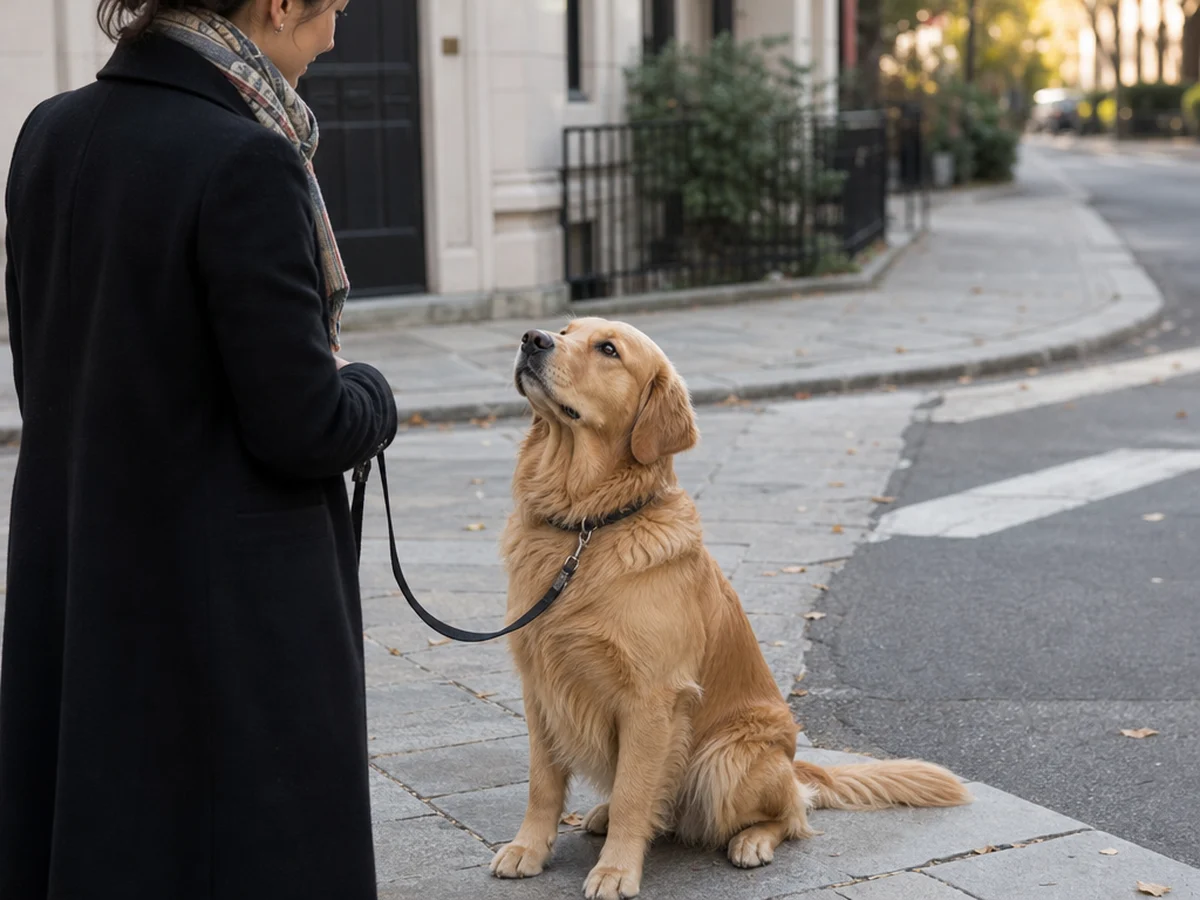
Toys add a second layer, but many Goldens chase happily and will not give the toy back. They stop short, lie down with it or turn the game into keep-away. The fix owners report most often is a trade for a second ball, a stick or a high-value treat, with a big celebration on return, and they say it can take months.
Not every Golden is a ball dog, and a sizeable minority prefer a stuffed toy, a game of chase or a retrieve paid in treats. Follow your dog's taste instead of forcing fetch. For a growing puppy, keep retrieves short, low and few, such as a toy rolled across soft ground, because repetitive ball-chasing is jarring before the joints mature.
Rewarding the choice to rest matters as much as rewarding activity. Of the owners we reviewed who wrote about energy and calming down, 7% said settling was taught and managed rather than waited for. These add-ons fit almost any outing:
- Scatter a few treats in the grass at the start so your dog sniffs before moving off.
- Hide a toy or treat along the route and send your dog to find it.
- Pay for lying down on a mat at a bench or café, and give the behavior a cue such as "relax."
- Take the treats from the daily food allowance so reward-based work never pushes a growing dog overweight.
Exercise Gear for Cold Mornings and Hot Afternoons
The right gear lets you keep the routine going when the weather turns. Think of it as a short checklist you can run before every outing, matched to what the day is doing.
- A comfortable harness and a lightweight longline, so your dog can browse and sniff without pulling on the neck.
- Booties for icy, salted or very hot ground, introduced at home with a treat for every paw.
- A cooling vest or a damp bandana on warm days, which helps but does not make midday walks safe.
- More water than you expect to need, plus a collapsible bowl for regular drink stops.
- A towel for after rain or a swim, because a wet coat chills quickly.
The Golden double coat is nature's cooling and warming system, so never shave it. Regular brushing keeps the layers working, especially during seasonal shedding.
When heat rules out long walks, water is the breed's natural escape. Swimming works the whole body without pounding the joints, and our piece on teaching a Golden to swim covers the first steps.
How Cold Is Too Cold for Golden Retriever Exercise?
We will not hand you a degree figure, because the right limit depends on how well your dog's double coat is working, plus age, fitness and wind. A dry, fit adult on a still day is a very different case from a wet senior in a stiff breeze, and a Golden who loves water can leave a swim with a soaked coat that loses heat fast.
Heat usually calls for the earlier cutoff, because a dog built for long working days will keep going past the point of comfort. Overweight pets face higher risk with warm-weather exercise, so keeping your Golden lean is part of heat safety. This table pairs the signs with the response:
| Condition | Signs | What to do |
|---|---|---|
| Cold, early | Lifting paws, slowing down, wanting to turn for home | Shorten the walk and add booties next time |
| Cold, stop now | Shivering, hunched posture, refusing to walk | Head home, dry the coat, warm the dog gradually |
| Heat, early | Heavy panting, lagging behind, seeking shade | Rest in shade, offer water, move to a cooler time or a swim |
| Heat, emergency | Drooling, wobbling, vomiting, collapse | Call a vet immediately |
In hot weather, move walks to the cool ends of the day and swap distance for scent games and water. In cold weather, shorten the outing but keep the brain work going indoors, so the day's total effort stays close to what your Golden is used to.
Watch your own dog's habits too. Keen dogs often don't stop on their own, so it is safest for you to call the stop, ideally before the first sign appears.
Why a Yard Alone Fails Golden Retriever Exercise
A fenced yard can look like it solves the exercise question. The breed club is clear that Goldens are not self-exercisers, and most have no interest in exercising alone.
Owners often describe an off switch tied to the household. Their Golden sleeps through work hours, then switches on the moment their favorite person walks in. A yard becomes an exercise space only when a person is in it, playing.
A bored, unsupervised Golden may also dig, chew, climb or jump out, since barrier fences are rarely completely safe from a determined dog. Put the time into the yard together instead, with a short list of games.
Hide toys in the grass and send your dog to find them, then run short, rolled retrieves with a trade for a treat on return. Rehearse tricks and cues in a new spot each day, and rotate the toys so each session feels fresh to them.
Treat the yard as a place to meet your dog, not a place to park them.
Brain Games for Golden Retriever Puppies Under 12 Months
Before 12 months, the puppy plan is mental work. Jogging and biking are too stressful for developing joints, and growth plates need to fuse before high-impact activity. In large breeds that closing happens at roughly 10 to 14 months, which is why we point owners to brain games first.
We also push back on the popular rule of five minutes of exercise per month of age. There is no scientific evidence behind it, and it ignores the puppy in front of you. Plan by age, size and tiredness, set the session length yourself because a keen Golden will not stop on their own, and build in rests.
Work through these games in order, starting with the easiest:
- Serve part of a meal in a puzzle feeder or snuffle mat instead of a bowl.
- Scatter treats in a room and say "find it," then hide a toy a little farther away each day.
- Run short, upbeat training sessions on sit, down, recall and hand targets, and finish while your puppy is still keen.
- Take new-place outings with food rewards, carrying the puppy in public spaces until vaccinations are complete.
- Pay for settling on a mat after every game, so rest becomes part of the play.
Stay in a safe, enclosed area with soft, varied ground for free movement, and arrange supervised play with trusted dogs. Our complete guide to Golden Retriever training covers the cues behind these games.
A Weekly Exercise Routine Built Around Growing Joints
A weekly rhythm keeps the load gentle and varied. This sample week suits a puppy under 12 months, and you can change the days to fit your schedule.
| Days | Focus |
|---|---|
| Monday, Wednesday, Friday | Two short walks with sniff stops, a training session and a puzzle-feeder meal |
| Tuesday, Thursday | One outing somewhere new, a scent game and play with a trusted dog friend |
| Saturday | Unhurried exploring on soft ground with a longline, or a swim if your puppy is comfortable |
| Sunday | Easy sniff walk, chews, naps and settle practice |
After 12 months, add distance gradually, and ask your veterinarian about a hip x-ray before starting jogging or biking. Exercise demands stay high through 18 to 24 months, so channel them into structured activities such as tricks, rally, agility and scent work. Our overview of Golden Retriever sports and jobs shows where to begin.
This is general information, not veterinary advice. Check with your veterinarian before starting jogging or biking, about a hip x-ray, and about how much to feed a growing puppy, including training treats.
Signs Exercise Is Working and Vet Warning Signs
You will know the plan is working by how your Golden behaves once the activity ends, not by how long it lasted. Look for these signs:
- Evenings are settled, and your dog lies down without being asked more than once.
- The body looks loose after activity, with soft eyes and a relaxed face.
- Sleep comes easily and lasts, with a nap after training.
- Chewing, digging and jumping up fade as outlets increase.
A different set of signals means it is time to ask a professional. Book a vet visit for limping, stiffness after exercise, sudden lethargy, a lasting loss of stamina or a sudden refusal to pick up a toy, which can point to pain. Collapse or fainting with excitement or exercise needs urgent attention.
Restlessness despite plenty of activity is a reason to ask a qualified, reward-based trainer to look at your routine. Regular vet visits also help you catch problems early and adjust the plan as your dog grows.
Everything here points to one idea: a Golden's energy needs a partner. Give them body work, brain work and rest with you every day, and they have no reason to look for their own outlets.
 Training basicsHow to Stop a Golden Retriever Pulling on Leash
 BehaviorWhen Do Golden Retrievers Calm Down?
 BehaviorTeaching a Golden Retriever to Greet Guests With Four Paws Down