 Golden Retriever
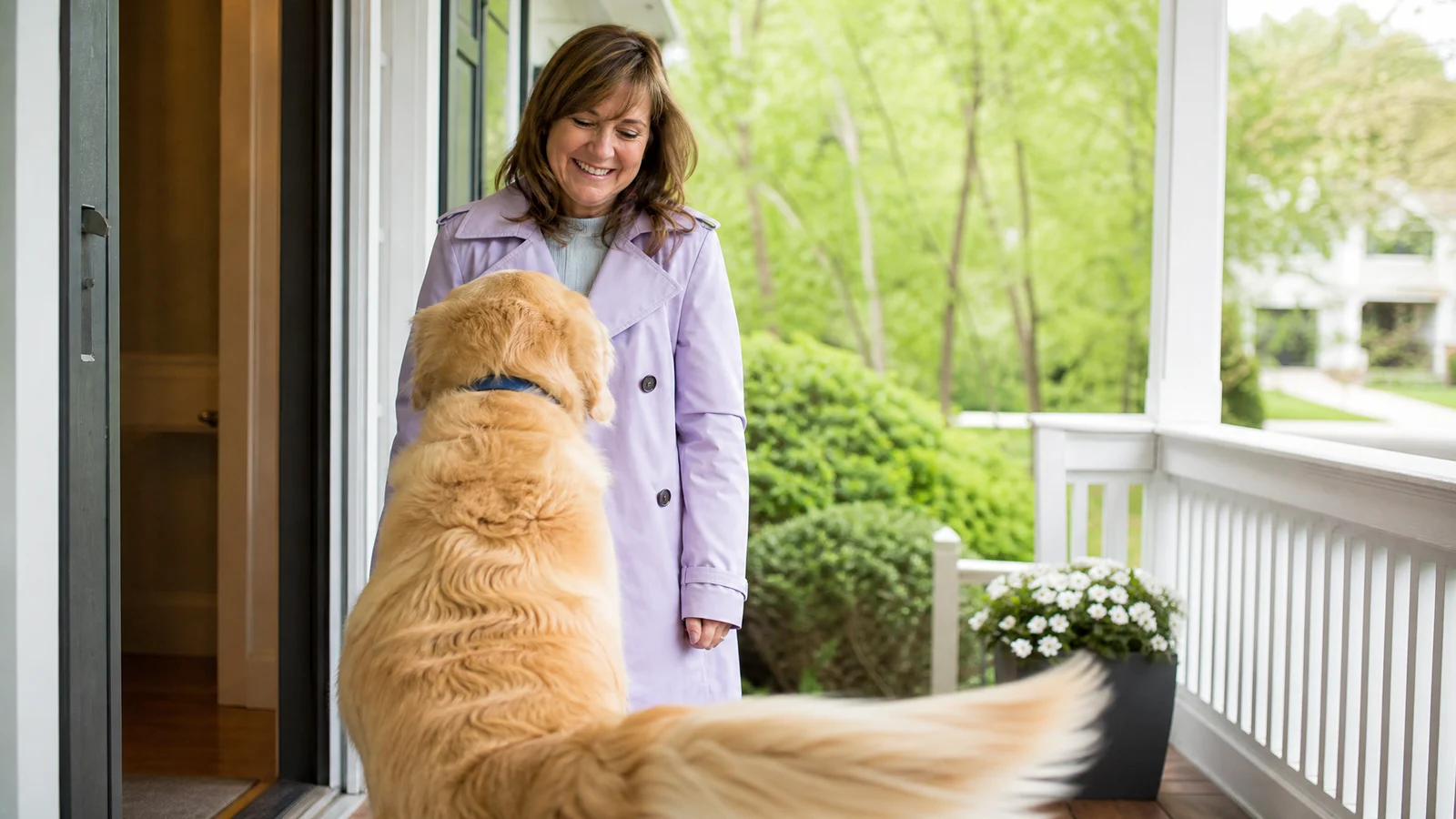
The first hello can go beautifully and the next one can undo the moment. A Golden Retriever stands with every paw down, accepts a brief stroke and then launches toward the second person reaching over. They have practiced one greeting, but the gathering keeps offering another before they have had time to change pace or move away.
We can make those social moments clearer by giving each hello a beginning and an ending. This guide follows a quiet rehearsal, a real break and the decision about whether another greeting belongs in the visit. It also explains how family arrivals and public encounters change the arrangement. Friendly interest is welcome, but neither the dog nor the person needs to keep greeting for the whole visit.
One Person at a Time for Golden Retriever Greetings
Choose a helper who can follow simple instructions and stop when asked. Begin somewhere with space around the dog, away from the excitement of a front-door arrival. Other people can stay out of the exercise so your Golden has one moving person to notice.
Use a comfortable harness and leash where containment is needed, keeping enough slack for natural standing. Do not use a short hold to keep the dog in place while the helper approaches too closely. If the arrangement needs constant restraint, start with more distance or a barrier.
The Golden Retriever Club of America describes a breed that needs substantial family involvement and companionship. That social interest still needs an individual plan. Some Goldens enjoy brief contact, some prefer proximity without petting and some need more space around unfamiliar people.
- Ask the helper to approach quietly and wait for your signal before offering contact.
- Keep food rewards with the handler initially, so the greeting person does not become a moving target.
- Provide a clear route for the dog to move away from the interaction.
- Leave children and anyone unsteady on their feet out of early practice with a jumping dog.
Your first success may be standing comfortably while the helper remains several steps away. That is enough information to repeat an easy lesson. Physical contact can wait until approaching is manageable for everyone.
The First Hello in a Quiet Greeting Rehearsal
Build the interaction in small parts while the helper follows your pace. Standing with four paws down is a useful starting behavior, and a comfortable sit can also work. Choose the response your dog can offer without strain or repeated prompting.
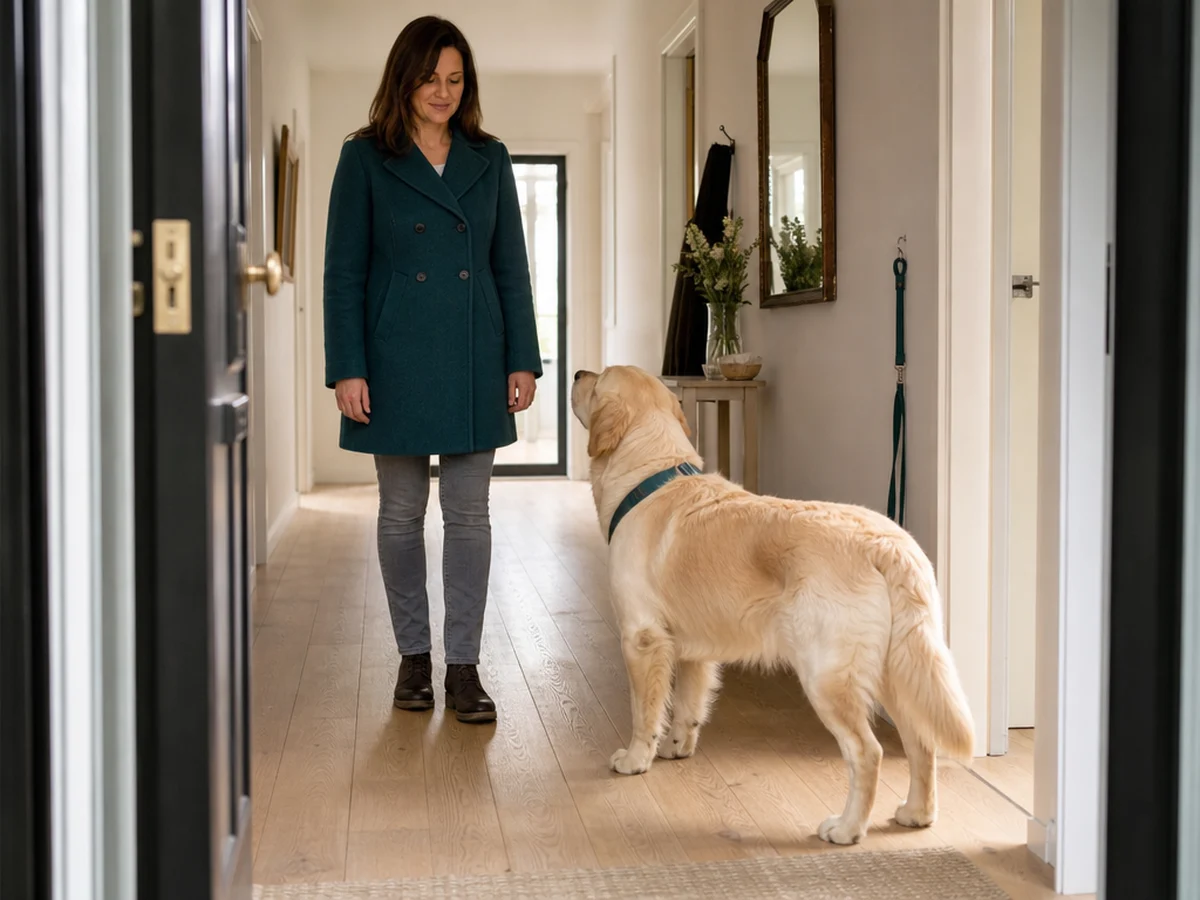
The Person Becomes Visible
Have the helper appear at a distance where your Golden can notice them and still respond to you. Mark grounded paws and deliver a reward low beside the dog. Let the helper remain still while the dog finishes, rather than closing the distance during every mouthful.
If the dog rushes forward, increase space before trying again. The difficulty may be the person's arrival rather than the greeting itself. You can practice that one event without proceeding to an approach or touching the dog.
The Person Comes Closer
Ask for one small approach and reward the dog while their paws remain down. Then let the helper pause or step away. This gives the dog an understandable repetition without requiring them to withstand a steadily advancing person.
In its jumping-up training advice, Dogs Trust recommends rewarding grounded behavior and preparing people for the interaction. Use that principle to adjust your helper's movement. A lively greeting voice or bent posture may need to be introduced separately from walking closer.
Keep the food hand low. A treat moving upward can invite the very reach you are trying to replace.
Brief Contact, Then Hands Away
If your Golden seeks contact and stays comfortable, let the helper offer a short, gentle stroke in an area the dog enjoys. End the contact while it is going well. The handler can reward grounded paws as the helper's hands move away.
Watch the whole dog. Turning away, stepping back or becoming still can mean the interaction should stop. A wagging tail alone does not tell you that more contact is welcome, and a friendly reputation does not remove the dog's choice.
If jumping starts, the helper stops reaching and you create space safely. Do not require them to stand through repeated impacts. Return to an easier part of the exercise after the dog has settled enough to participate.
A Golden Retriever Greeting Needs an Ending
Teach what happens after contact as deliberately as the approach. Use a familiar movement cue to invite the dog back beside you, then reward away from the helper. A short sniffing pause or a return to a comfortable resting place gives the greeting a visible finish.
Battersea explains the value of clear reward timing when teaching an action. Here, mark the dog moving with you or remaining grounded after hands withdraw. If rewards arrive only after another leap, the dog receives less information about the quiet moment you wanted.
Practice ending before the dog becomes frantic for more attention. A successful break does not require a long sit beside an exciting person. At first, simply moving away with you and finding something appropriate to do can be the whole lesson.
A toy can sometimes help a Golden carry their enthusiasm into another activity. Choose a suitable toy they already use comfortably, and do not rely on it if carrying makes them charge into people. The Golden Retriever puppy biting guide covers mouthy interactions in more detail.
Make the ending pleasant and predictable. It should not feel like the reward disappeared because the dog finally behaved.
Rehearse the ending when only one helper is present, rather than waiting until guests arrive. The helper can turn to an ordinary task while you lead the dog toward their resting area. This teaches that another person's attention can move elsewhere without requiring the Golden to win it back.
Another Person Is Another Greeting
Before someone else approaches, decide whether the dog is ready for another hello. Look for an ability to move with you, take a familiar reward and stop watching the previous person continuously. A brief pause measured only by the clock may not be enough.
The next person can begin farther away than the first. Different voices, clothing, movement and ways of touching all change the task. A Golden who greeted one quiet adult comfortably has not practiced a whole group arriving at once.
- Let the first helper step aside before a second person enters the exercise.
- Return to a simple approach without touching if the new person creates more excitement.
- Offer a genuine break away from the people between repetitions.
- Finish the greeting practice if recovery becomes slower or jumping becomes more frequent.
Do not pass the dog along a line of people as though every person needs a turn. During an actual visit, most guests can settle into their own activities while your Golden rests elsewhere. The dog can be included without being the center of every arrival.
People may need reminders even after the dog understands the exercise. Ask one adult to explain the arrangement before guests approach. Clear instructions spare the handler from trying to supervise the dog and several reaching hands at the same time.
Family Arrivals and Public Golden Retriever Greetings
The rehearsal becomes useful when its basic pattern can survive ordinary changes. Keep the idea of one manageable hello followed by an ending, but adjust the surroundings. A hallway, a family reunion and a sidewalk each give you different amounts of space and attention.
Coming Home to the Family
Set up the arrival before opening access to the dog. Put bags down, close the outside door and let the arriving person become still. Another adult can help manage space when needed, or the dog can wait comfortably behind an appropriate barrier.
Reward paws down before the person leans in. Then make the ending clear by moving into an ordinary household activity. If every arrival becomes a prolonged celebration, it will be harder for the dog to recognize when the greeting has finished.
Visitors Who Stay for a While
Let visitors enter and settle before considering contact. The doorway does not have to be the greeting location. Once the room is quieter, you can choose a willing helper and a short interaction that fits the dog's current skill.
A person getting up later may restart excitement. Treat that movement as a new event and help the dog from a comfortable distance. You do not need to repeat the whole greeting every time a guest changes seats or leaves the room.
Keep rewards available to the supervising adult after the initial hello. Quiet moments later in the visit deserve recognition too. A dog who lies nearby while guests talk is participating successfully, even if nobody is petting them or offering another exciting interaction.
People Met During a Walk
Public greetings are optional. If space is narrow, the person cannot follow instructions or your Golden is already pulling, keep moving at a safe distance. Our Golden leash training guide explains the walking skills that support those decisions.
When an encounter is suitable, ask the person to wait while you prepare the dog. Keep the interaction brief and allow an exit. Declining a greeting protects the lesson you are building and makes the walk easier for other people using the same space.
| What happens after hello | What to do next |
|---|---|
| The dog moves away easily and relaxes. | Continue the visit without immediately adding another person. |
| The dog repeatedly returns to demand contact. | Offer a quieter break and shorten future greetings. |
| A person cannot stay safe around the dog's movement. | Use separation and choose a more suitable practice helper later. |
The Visit After Greetings Are Over
Keep regular veterinary visits and discuss changes in comfort or tolerance of touch. A reward-based trainer can help if jumping remains difficult to manage safely, especially around vulnerable people. Training should make contact easier for the dog and the people, rather than asking either to endure an uncomfortable rehearsal.
Judge progress by what follows the hello as well as by paws on the floor. A Golden who can greet briefly, move away and remain comfortable while people get on with their visit has learned a useful social pattern. Keep rewarding that whole pattern and leave room for days when a quieter welcome is the better choice.
 BehaviorGolden Retriever Puppy Chewing Everything? Teach Leave It
 BehaviorLeaving a Golden Retriever Home Alone (and Separation Anxiety)
 CareGrooming a Golden Retriever: Brushing, Baths, Ears and Handling