 Golden Retriever
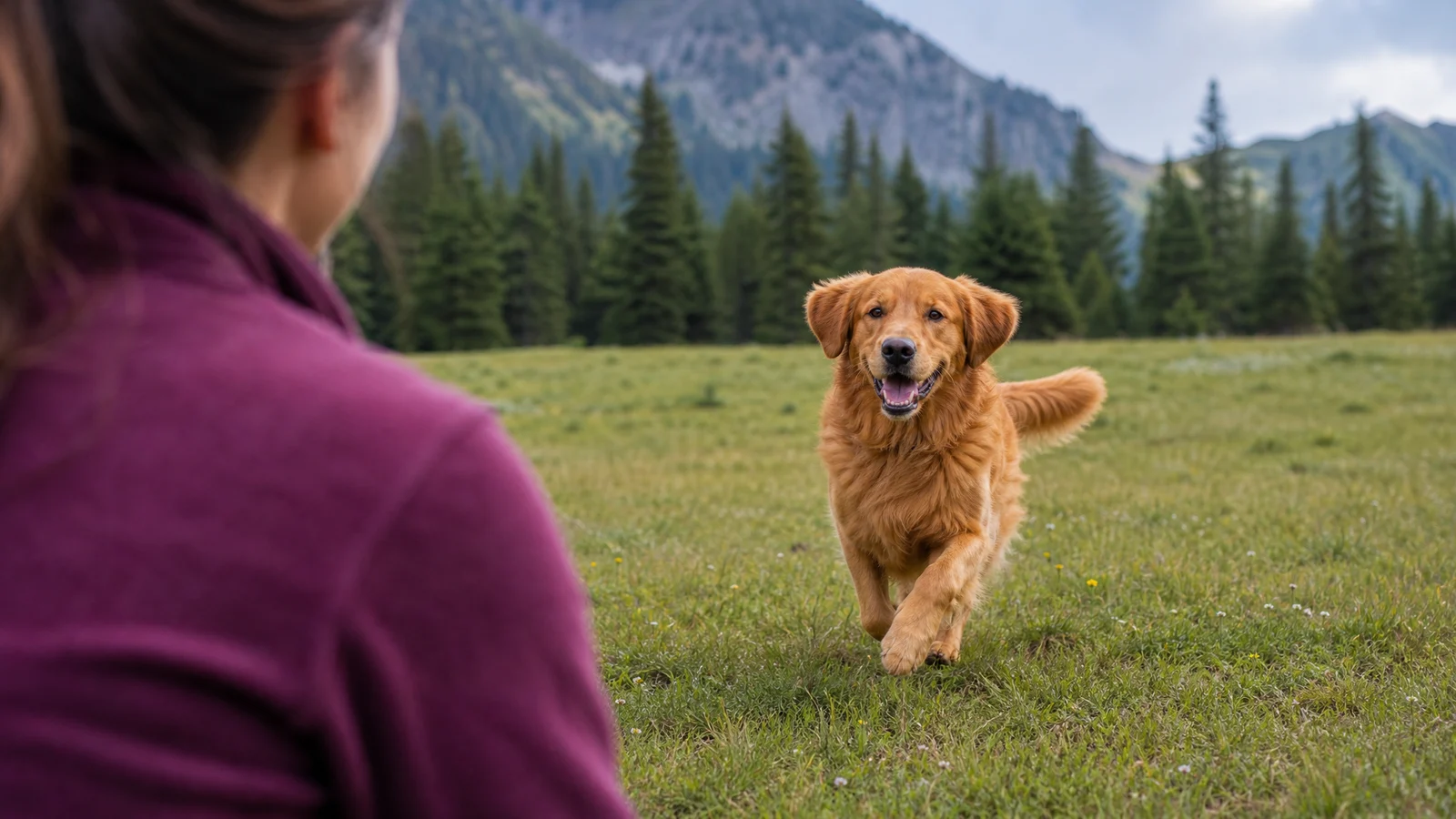
Teach a Golden Retriever to come when called by giving the cue once, rewarding the complete return at your side, and practicing first where the dog cannot disappear into a distraction. Recall becomes dependable through a history of worthwhile arrivals. It does not arrive automatically with the Golden Retriever name.
Begin in a quiet room or secure yard, then change distance, location, people, and distractions one at a time. This guide covers the return itself, why the consequence after arrival matters, and how outdoor freedom stays separate from training success. We begin with the complete arrival before changing the setting. A leash, long line, or secure fence remains part of the plan whenever the setting could outrun the skill.
Make Coming Back Worthwhile
Choose one short recall cue and a reward that matters in the current setting. Battersea's recall guidance recommends something the dog really wants and does not receive all the time. Save that value for returns instead of showing it first and asking the dog to follow visible food.
Practice when success is likely. The first lesson is not a test across a busy park. It is a clear sequence in which the cue predicts movement toward you, the arrival reaches all the way to your body, and the reward appears there.
- Wait until your Golden Retriever is only mildly occupied, then say the recall cue once in an inviting voice.
- Move away a step if that helps the dog follow, and mark the turn toward you without repeating the cue.
- Reward at your leg when the dog arrives, rather than tossing the reward before the return is complete.
- Pause long enough to handle the collar or harness gently when needed, then release the dog or begin the next safe activity.
A marker identifies the part of the return that earned reinforcement. The American Veterinary Society of Animal Behavior describes reward-based training as a cue, a marker for the wanted behavior, and an appropriate reinforcer. Mark the turn or arrival consistently, then put the reward beside the finishing point you have chosen.
Do not reach over the dog as they approach or chase them through the last few feet. Reaching as the puppy comes near can prompt a last-second jump away, even after most of the return is complete. Kneel or turn slightly, let the dog close the gap, and make gentle handling part of easy repetitions instead of an ambush at the end.
Golden Retriever Recall Around People and Objects
A Golden Retriever may find a visitor, moving dog, scent, toy, or patch of grass more compelling than the reward that worked indoors. That is information about the setting, not proof that the cue has failed everywhere. Increase distance from the attraction, shorten the return, or improve the reward before asking again.
Use attention as a setup, not as a substitute for recall. If the dog cannot briefly orient toward you, the return is probably too difficult from that position. The broader Golden Retriever training guide covers everyday cue work. Here, one usable glance simply tells you that the recall cue has a fair chance of being heard.
Dogs learn in context, so change one variable at a time. Practice in a second quiet room while keeping the caller and distance unchanged. Add a visitor only after that transfer is fluent. Change the caller before adding distance, then move outside on a long line before another dog enters the picture. A slower response means the new condition arrived too soon, so rebuild where the dog most recently turned promptly. Keep regular vet visits, and discuss a sudden unexplained behavior change with your veterinarian.
Best Friends Animal Society advises saying the cue once rather than repeating it when the dog does not respond within a few seconds. Repeating teaches that the first call can be ignored. Instead, prevent the dog from reaching the distraction, make the setup easier, and reward the eventual arrival without pretending the failed setup was ready.
Does the Recall Cue End All the Fun?
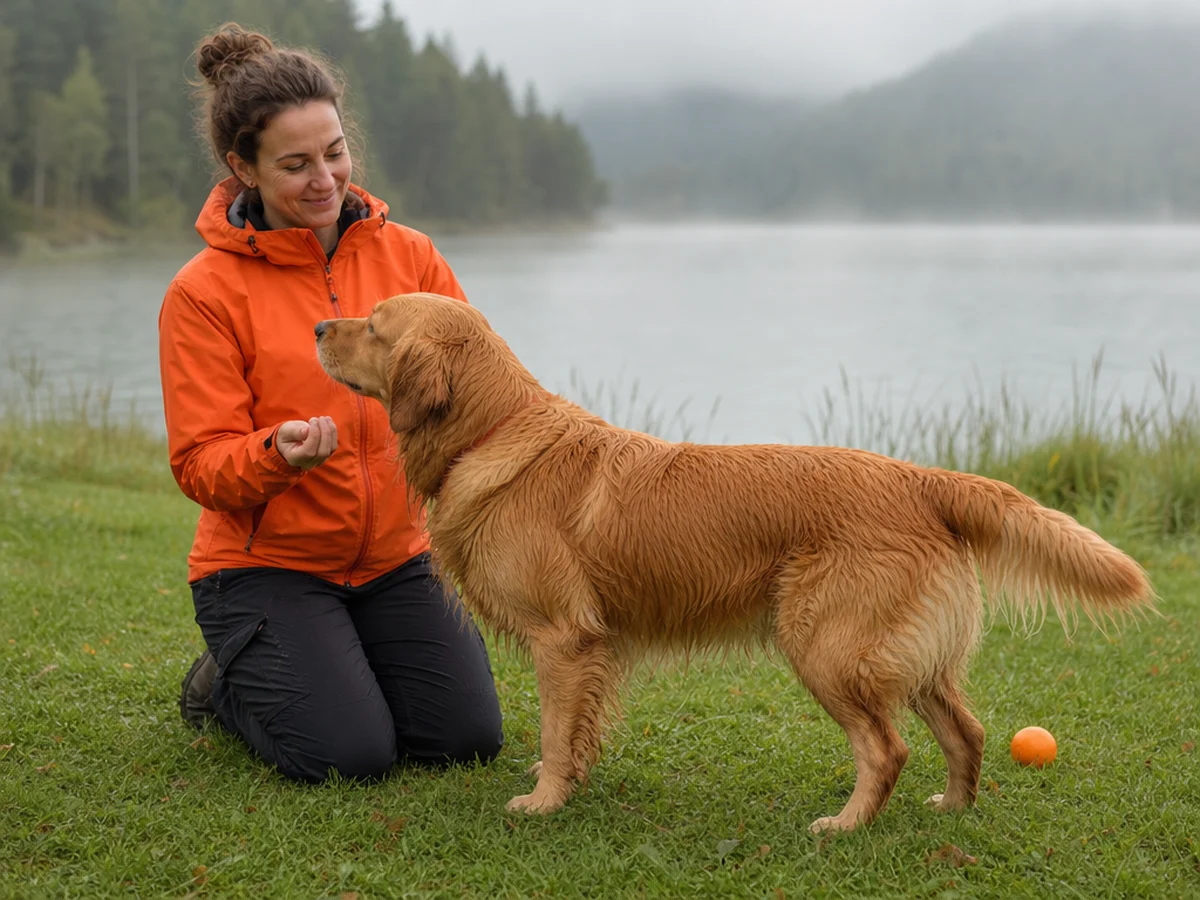
A cue can lose value even when every return earns food. If coming back always ends the walk, removes a toy, starts grooming, or closes the garden door, the larger consequence still predicts loss. Sometimes the dog should return, collect the reward, and receive permission to resume the safe activity.
Return and Be Released
Call during a quiet part of exploration, reward at your side, and use a consistent release phrase before the dog goes back to sniffing. The return becomes a brief connection instead of a trap. On a walk, keep the line attached while you practice so the release grants movement without granting uncontrolled freedom.
The same principle works with a toy or a family member. Call from a manageable distance, reward the arrival, and send the dog back only if the next round is safe. This is different from fetch, where returning an object owns the lesson. Recall rewards the dog for returning themselves.
Finish Without Poisoning the Cue
Some returns genuinely must end the activity. Pay especially well, handle the dog calmly, and make the transition predictable. If the leash is going on, deliver the reward at your side before clipping it, then walk a few easy steps rather than pulling the dog away the instant they arrive.
Ordinary walking has its own skill owner. Use the Golden Retriever leash pulling guide for movement under tension, while recall keeps the narrower job of bringing the dog back to you. Separating those outcomes prevents one cue from carrying every demand of the outing.
Use a clear marker and a reward the dog values after a difficult return. Blue Cross training guidance supports pairing a marker with valued reinforcement. The value may be food, brief play, or safe access to the environment, but it must follow the behavior rather than become a lure held in front of the dog.
Recall Questions Away From Home
The main progression covers cueing, arrival, reinforcement, and context changes. These practical questions fill the remaining gaps about replacing an old cue, coordinating callers, and deciding whether indoor success changes outdoor management.
- Can an old recall word be replaced after it is ignored?
- Yes, but teach the new sound as if the dog has never heard a recall cue. Begin in an easy secure place, pair it with a valuable arrival, and protect it from repetitions in situations where the dog cannot respond. A new word does not repair a setup that remains too difficult.
- Should two people call a Golden Retriever at once?
- No. One person should cue while the other stays quiet, because competing voices make the correct destination unclear. Two people can practice alternating easy returns, but each repetition needs one caller, one arrival point, and one release.
- Is a fast return indoors enough to remove the leash outdoors?
- No. Indoor fluency proves the cue in that indoor context, not around outdoor movement, scent, traffic, or other dogs. Continue with a leash, long line, or secure fence while adding those changes separately, and keep management in place whenever a failed return could be dangerous.
Choose the Next Safe Golden Retriever Recall Test
Choose one change for the next session. You might move from the kitchen to a quiet yard, add a few feet on the long line, switch to a second family caller, or practice while a familiar object rests at a distance. Set the remaining conditions so the entire return is still comfortably within reach.
Judge the repetition by the turn, arrival, recovery, and willingness to engage again. A hesitation means the context needs adjustment, not a louder call. Keep the line or fence in place, reward at your body, and finish after a clean return. Reliable recall grows by carrying one successful history into the next secure setting, not by declaring an off-leash graduation.
 BehaviorGolden Retriever Resource Guarding: Safer Trades and Boundaries
 Training basicsHow to Choose a Golden Retriever Trainer
 Exercise and jobsIndoor Activities and Brain Games for a Golden Retriever