 Golden Retriever
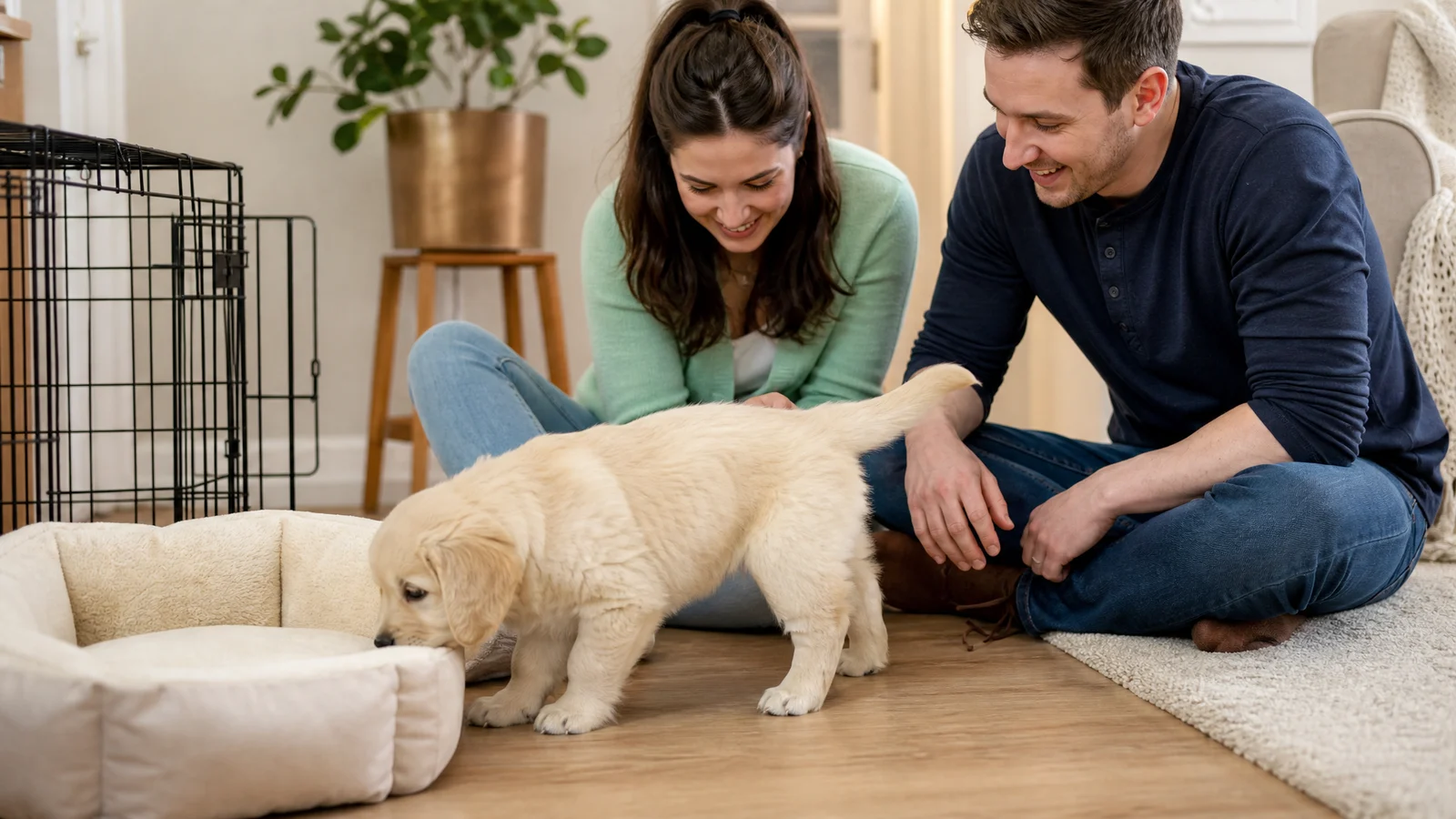
Is this normal for an 8-week-old puppy, and when does it get easier? It is a question many new owners have in the middle of a bad night, and the usual answer, just be patient, falls short for a Golden. This is a mouthy, people-hungry large breed, and owners describe the first week as emotionally hard, with sharp teeth on every sleeve, broken sleep, and a puppy who seems to fall apart the moment you leave the room.
Our focus is Golden behavior and training, and one pattern holds up. Much of the trouble is about being apart from people, not about the crate or the house. Handled badly, week one ends in tears on both sides. Handled well, it starts a gentle-mouthed companion who is thrilled to see you.
This guide covers the first week as you will actually hear and see it, from needle teeth and midnight crying to puddles, grabbing paws, and upset stomachs, and then the setup and signs that tell you things are going well.
Sharp Teeth on a Golden Retriever Puppy
Needle teeth on hands, wrists, and ankles are usually the first thing you react to, and scratched arms can make an 8-week-old feel like a tiny shark. Owners report this sharp biting from about 7 weeks. This is not aggression. The biting is a puppy exploring, teething, and inviting the people they love to play, in a breed with a need to have something in their mouth. The useful question is which kind of biting you are seeing.
Play Biting Versus Overtired Biting
Play biting is bright-eyed and bouncy. The puppy lunges, you squeal or wave a hand, and the teeth come back harder. It usually eases the moment a toy appears. Overtired biting looks different. Many owners describe a daily spell of an hour or two, in an otherwise sweet puppy, where the bites turn relentless and nothing satisfies, often worse after a morning alone.
If it arrives like clockwork, suspect sleep before bad manners. Owners who enforce daytime naps in a crate or pen in a quiet room say it gives them a breather and keeps the puppy from getting overtired, and a quiet, dim space helps an overtired puppy settle. Put the puppy down before the spell starts, not after.
Hands and Clothing Targets
Hands and sleeves become targets because they move, flap, and sit at exactly the right height. Sore gums as baby teeth erupt and fall out add to the urge. So give the mouth better options. Owners say rope and harder toys outlast plush, and a frozen washcloth soothes gums nicely. Keep a toy in your pocket so one is always in reach before teeth find skin.
What to Do in the Moment
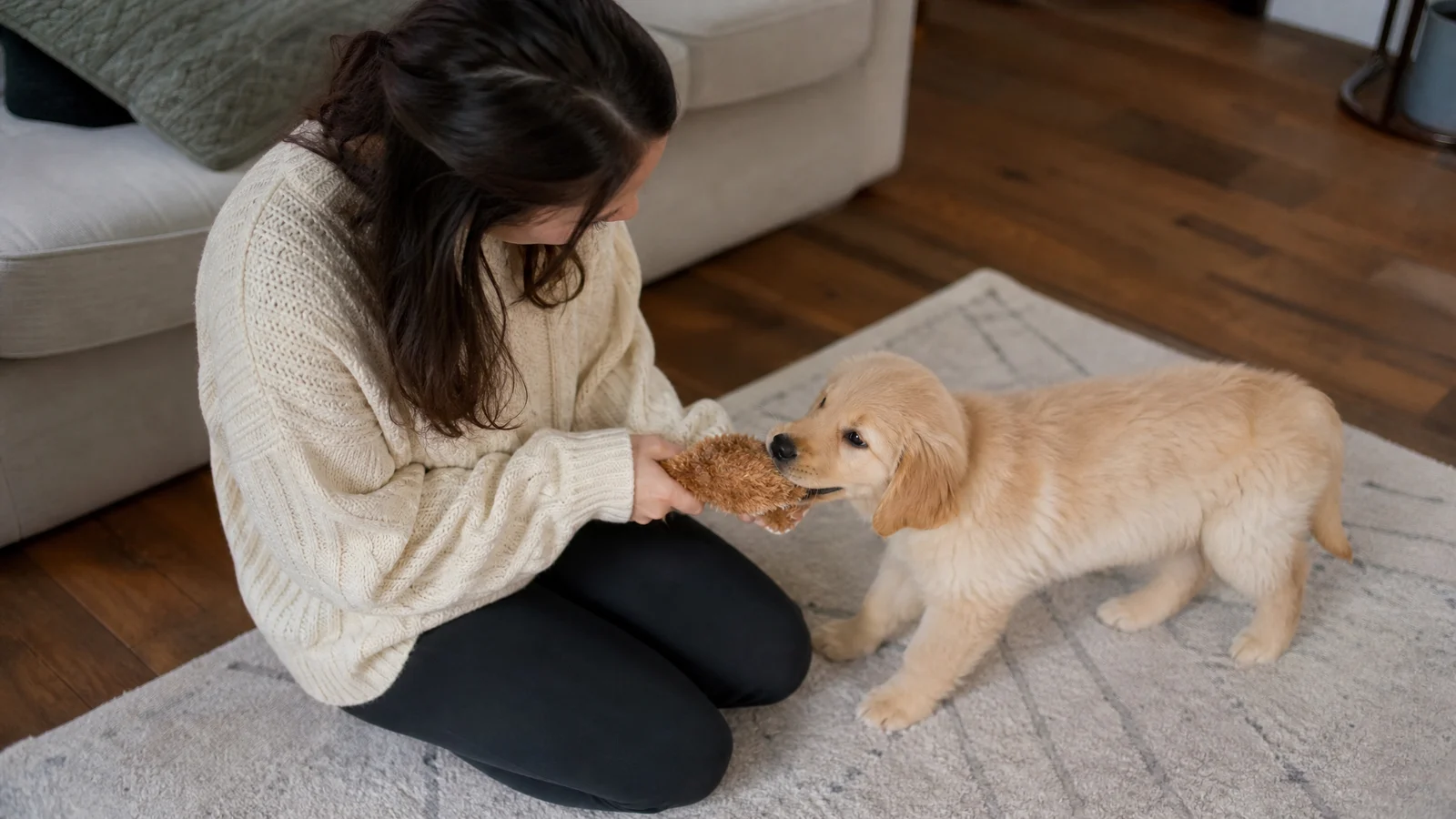
The moment teeth land, slide a toy into the mouth and praise when the puppy takes it. If the bite was hard, stop play briefly by moving away for 10 to 20 seconds, then come back and start again. The puppy learns that gentle play continues and painful play stops. Keep your own energy low, since squealing and wrestling only rev them up.
Expect this to take months, not days. Owners who give an age mostly say constant biting ends somewhere between 4 and 7 months, and many put the loss of baby teeth around 4 to 5 months. Some milder mouthiness lingers longer. Those who came through say the puppy who bit everything became gentle enough to carry things or even have a hand in their mouth.
Puppy Crying and Broken Nights
Few things test a new owner like a howl from the crate in the dark. Owners describe crying that starts within minutes of lights out, can last half an hour, and may return after a short sleep, followed by waking every few hours ready to play. Most puppies settle within one to four nights, though a few take longer.
Why the First Night Is Loud
An 8-week-old Golden has just lost their mother, littermates, and every familiar smell, and their abilities and needs are a lot like those of a two-year-old toddler. The loudness is mostly about being alone, not about the crate. The giveaway is a puppy who sleeps silently in the crate at night yet protests in the daytime when the family is home and busy, yelping, barking the moment they see you, drooling, or hopping out before the door can shut.
Crate and Bedside Placement
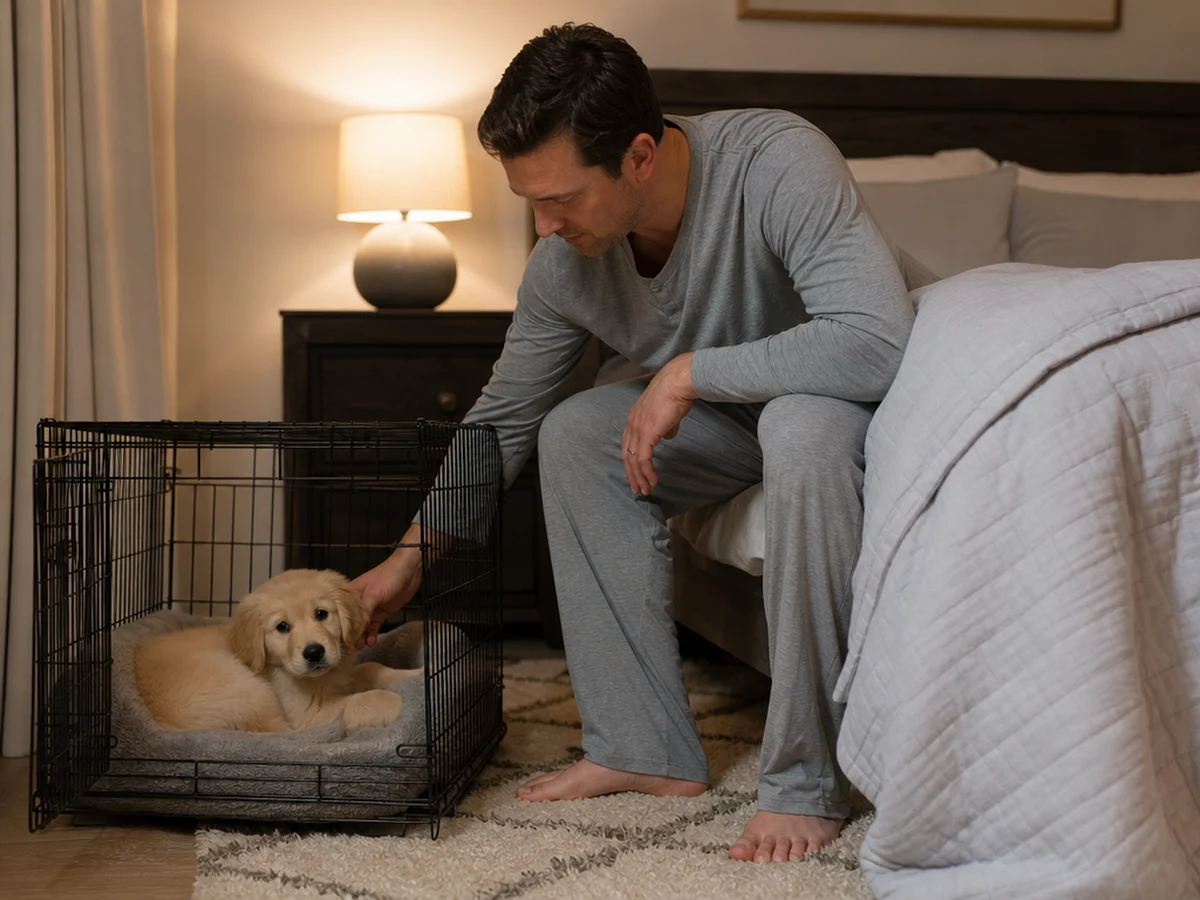
Common advice says to park the crate in a far corner so the puppy learns independence. With a Golden, we would do the opposite. Put the crate right beside your bed, close enough for the puppy to hear you breathe and feel your fingers through the bars. Some owners report the whining stopped once the crate moved into the bedroom, and some slept on the couch or floor next to it for the first nights.
Small comforts help too: white noise or a fan, a blanket that smells like the mother or littermates, a heartbeat toy. During the day, put the crate somewhere the household spends its time, offer short stints with a chew, and open the door while the puppy is calm. Families sometimes took turns beside the crate for up to a month. Our guide to crate training a Golden covers the longer plan.
The Night Potty Schedule
Expect to get up every 3–4 hours in the beginning, and keep night trips boring by dimming the lights, skipping conversation, and saving play for daytime. Carry the puppy out, wait, praise quietly, and go straight back to the crate. A tight daytime schedule of crate naps makes nights easier, and some owners lift the water bowl at 8 or 10 p.m. while potty training.
Many first-time owners cry from tiredness around now, and that is common. Trade night shifts if you can. If you are wondering whether you took on too much, our piece on Goldens for first-time owners may help.
Puppy Accidents Indoors
A puddle in the hallway, a puppy circling with their nose down, a damp spot behind the sofa: each one tells you something. Most accidents trace back to one of three causes. The timing was off, the puppy had more freedom than they could handle, or a cue went unnoticed. The fix is a schedule, not frustration.
Sniffing circles are the last warning, so carry the puppy out the moment you see them, then reward with a treat right where they finish. The spot behind the sofa means they slipped away unseen. Keep a puppy who is not yet house-trained in the room you are in, because leaving the room feels to them like leaving the den. A gate across the doorway lets them stay in view.
Build the day around trips outside: first thing, after naps and meals, after play, and last thing at night. Choose a crate with a divider so the space stays snug, since a crate roomy enough for the puppy to sleep in one corner and use another as a bathroom undermines the lesson.
Progress is uneven. Some puppies are reliable by 12 weeks, while many owners find house-training is not a snap. A new accident after weeks of success deserves a call to your vet, since owners report setbacks that came with a urinary infection and cleared up once treated. Our Golden Retriever potty training walkthrough has the full routine.
What a Golden Retriever Puppy Can Reach
Somewhere between 9 and 12 weeks, large-breed puppies get big enough to start jumping up on things, which is earlier than most owners expect. The counter that was safe last week now sits within reach. Goldens also eat nearly anything, from dinner to toys, paper, and crayons, so walk each room at puppy height and again at counter height before they do.
Removing the Targets
Start with counter edges, the kitchen trash, low shelves, cables, and shoes. Push food and dish towels back, keep the bin closed or behind a door, tuck cords out of reach or gate off the area, and put shoes in a closet. Owners report puppies chewing everything from sneakers to guitar cables, so one careful sweep saves a lot of repair.
Chewing Is a Symptom
Treat chewing as a symptom, not defiance. Sore gums, a mouth that always wants a job, boredom, and being left alone all push a Golden toward whatever is nearby. Swap the object for a rope or hard toy, praise the swap, and add company and naps. Owners say the habit fades with plenty of chew toys in the meantime.
Counter-Surfing Versus Jumping
These two need separate plans. Counter-surfing is food-driven, so keep counters bare and reward four paws on the kitchen floor. Jumping is greeting-driven, so say hello only when the puppy is sitting or standing and ask visitors to do the same. A friendly 60–70 lb jumper is a real risk to children and older people, so start while the puppy is still small.
Puppy Appetite and Stomach Upsets
The first meal in a new home tells you less than you think, because a puppy who just left their litter is processing a lot besides dinner. Some Goldens arrive ravenous and others pick at the bowl, and both are common. A few days of watching will show you which pattern you have.
Skipped Meals and the Move
Some puppies sleep much of the first day, eat little, and seem subdued, then perk up by that night or the next day. Owners describe picky or off-food puppies mostly while sick or newly arrived. Offer measured meals at set times in a quiet spot. If the quiet behavior or the refusing goes on beyond the first day, phone your vet.
Gulping at the Bowl
Goldens love to eat, and some owners watch a first meal vanish in under 45 seconds. A slow feeder helps. Measure meals, feed only at mealtimes, and count training treats as part of the day's food. Do a rib check: ribs should be easily felt but not prominent. Puppies of the same age differ hugely in size, and lean ones often get called too skinny by strangers even when the vet says they are fine.
Soft Stools
Several owners report loose stools starting in the first days home and lasting weeks to months, with repeated vet visits and negative tests before a cause turned up, such as giardia or a food intolerance. What finally worked varied from dog to dog. We cannot sort that out from here, so note what you see and tell your vet early.
This is general information, not veterinary advice. Check with your veterinarian about food, amounts, and any loose stools or lost appetite in your puppy, and ask before changing foods.
Setting Up Before Your Puppy Arrives
If you are reading this before pickup day, every fix above folds into a short checklist, and doing it over a quiet weekend beats doing it the night before. The aim is that day one is not improvised, because a puppy who sleeps through much of the first day will be lively by night and you will want the house ready.
- Put a crate with a divider beside your bed, with a blanket that smells like the mother or littermates, so the first nights are not spent alone.
- Set up gates so the puppy can stay in whatever room you are in, and sweep each room at counter height for food, towels, cords, and shoes.
- Stock rope and harder chew toys, a frozen washcloth for sore gums, a slow feeder, and a treat pouch by the door so you can reward good choices all day.
- Find out what the breeder feeds, measure it out, and book the first vet visit, asking what is safe for socializing before vaccines finish.
- Settle the house rules for the sofa, bed, and off-limits rooms before arrival, plus who takes the night trips, who feeds, and who is on duty for the evening biting spell.
Socializing starts early with this breed. Owners who began puppy classes at 8–12 weeks and carried the puppy nearly everywhere except dog parks and pet stores report friendly, confident dogs, while a fearful puppy may need trust built first. Dividing the work also matters, because owners who had nobody to share the nights with found them the hardest.
Golden Retriever Puppy Settling Signs
Week one will not look polished, and it does not need to. What matters is direction. A Golden is a people-hungry, mouth-busy breed, so the puppies who thrive are the ones whose days include company, the right things to chew, and a steady schedule. Meet those needs and the crying, biting, and grabbing mostly fade, which is why so many owners who came through the hard version say it got better, sometimes quickly, and now miss the stage.
Use the table below as a check by day seven. The left column lists small signs of progress, and the right column lists when to phone your vet or a trainer rather than wait.
| Signs it is working by day seven | Signs to phone a vet or trainer |
|---|---|
| Fusses at the crate are shorter, and nights have longer stretches of sleep. | Howling or distress that is getting worse, or a puppy who stays quiet and hides beyond the first day. |
| Biting comes in short spells and stops when play pauses or a toy appears. | Biting that is truly frantic or intense, does not ease with pauses and toys, or comes with a tense, frightened puppy. |
| The puppy heads for the door or sniffs and circles where you can catch it, and accidents are fewer. | Accidents that return after a good stretch of success. |
| Chewing lands on toys more than on shoes and cords, and counters are ignored. | Vomiting, or a puppy who has swallowed something they should not have. |
| Meals are eaten with interest, and stools look normal. | Refusing food, lethargy, or loose stools that keep going. |
Keep regular vet visits on your calendar through puppyhood so small changes get caught early. Goldens take about two years to mature, roughly a month of puppy life for every year of a child's, so judge progress over weeks, not days. Our Golden Retriever puppy training timeline shows what comes next. A puppy who is gradually calmer, gentler-mouthed, and more at home with you is on track.
 Training basicsAre Golden Retrievers Easy to Train?
 Training basicsRed, Dark and Light Golden Retrievers: The Color Range Explained
 Puppy trainingGolden Retriever Puppy Biting: Why It Lasts and What Helps