 Golden Retriever
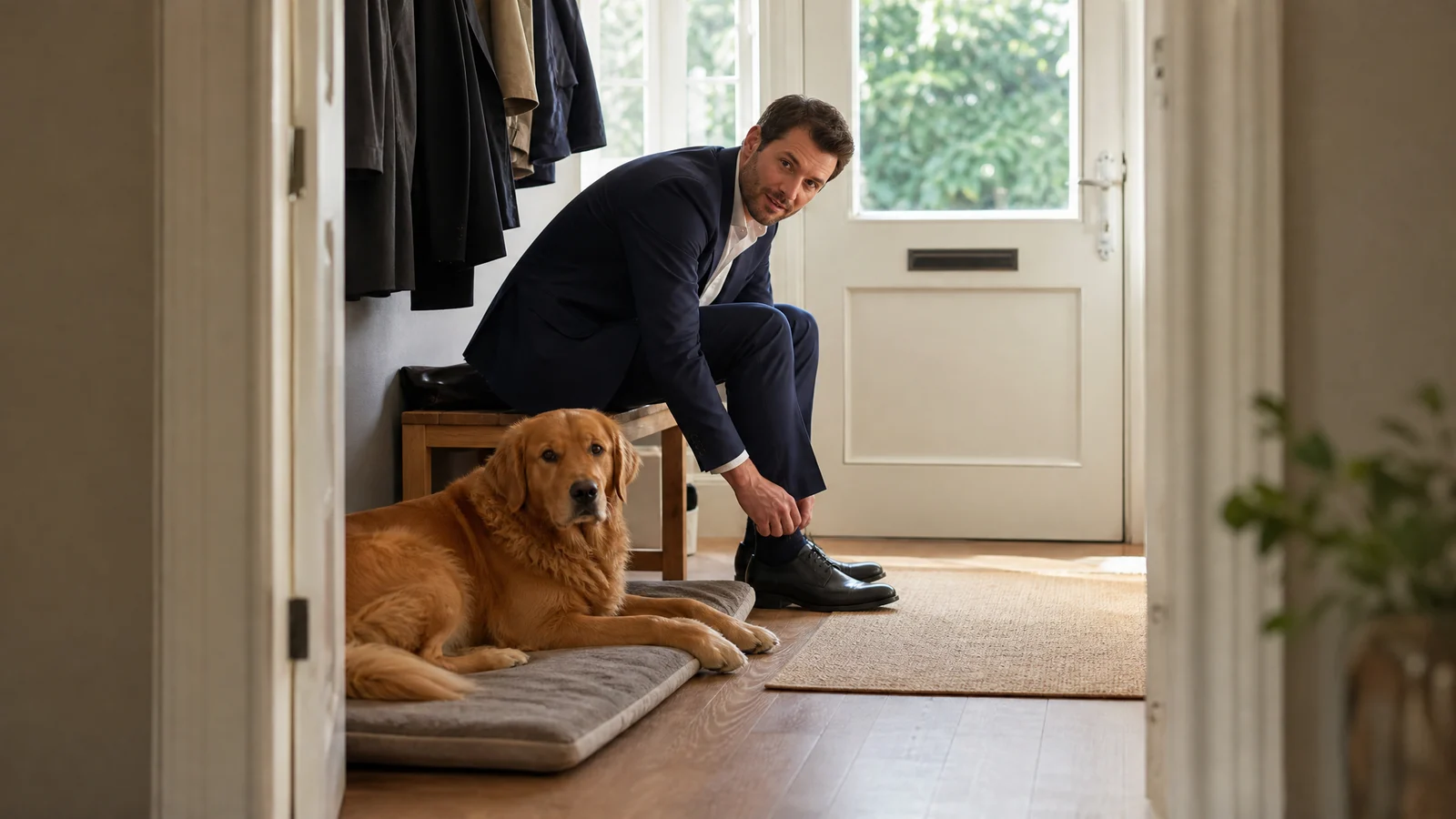
A quiet house when you return cannot tell you what happened after you left. Your Golden Retriever might have slept, watched the door, paced between rooms or reacted to a delivery before settling. Even an undamaged room leaves those possibilities open, so a useful alone-time plan starts with observation rather than a breed reputation or a single snapshot.
Below, we follow the sequence of a departure recording and explain what each part can help you decide. The guide separates preparation, the first response, later changes and the practical arrangements that fit the evidence. A recording cannot diagnose separation anxiety by itself, but it can help you recognize concern earlier and give your veterinarian or behavior professional a much clearer account of what your dog experiences.
What a Golden Retriever Alone-Time Recording Can Show
Place a camera where it covers the dog's resting area and the route toward the exit, without creating a cable or equipment hazard. Check sound and picture before using it. A view of only the bed may miss a dog spending the absence beside a door elsewhere.
Introduce equipment while you are home so you know whether it changes the dog's behavior. Keep the room otherwise familiar. The first useful recording might be a very small separation within the home, especially if leaving already causes visible concern.
The RSPCA suggests monitoring dogs during absences because some signs are easy to miss. Watch live when practical so you can respond to developing distress. Recording should help you protect the dog, not become a reason to leave them struggling for a more complete video.
- Check that the camera captures the dog moving away from the resting place.
- Record the conditions, including location, people present and ordinary activity before departure.
- Keep your first observation within a separation the dog is expected to manage comfortably.
- End the absence if concern develops rather than waiting for dramatic behavior.
A blind spot matters. If the dog disappears from view, you cannot assume they are sleeping in the next room. Improve the view before drawing a conclusion from missing information.
Note what you cannot see as carefully as what you can. Camera sound may miss quiet panting, and a distant view may conceal a tense face. If the recording leaves a concern unresolved, arrange a better observation or professional help rather than treating incomplete footage as reassurance.
Before the Alone-Time Departure
Observe the dog while you prepare to leave. Shoes, a bag or the movement toward a particular door may change their behavior before any separation occurs. Note whether they continue resting, follow loosely or become increasingly unable to disengage from your movements.
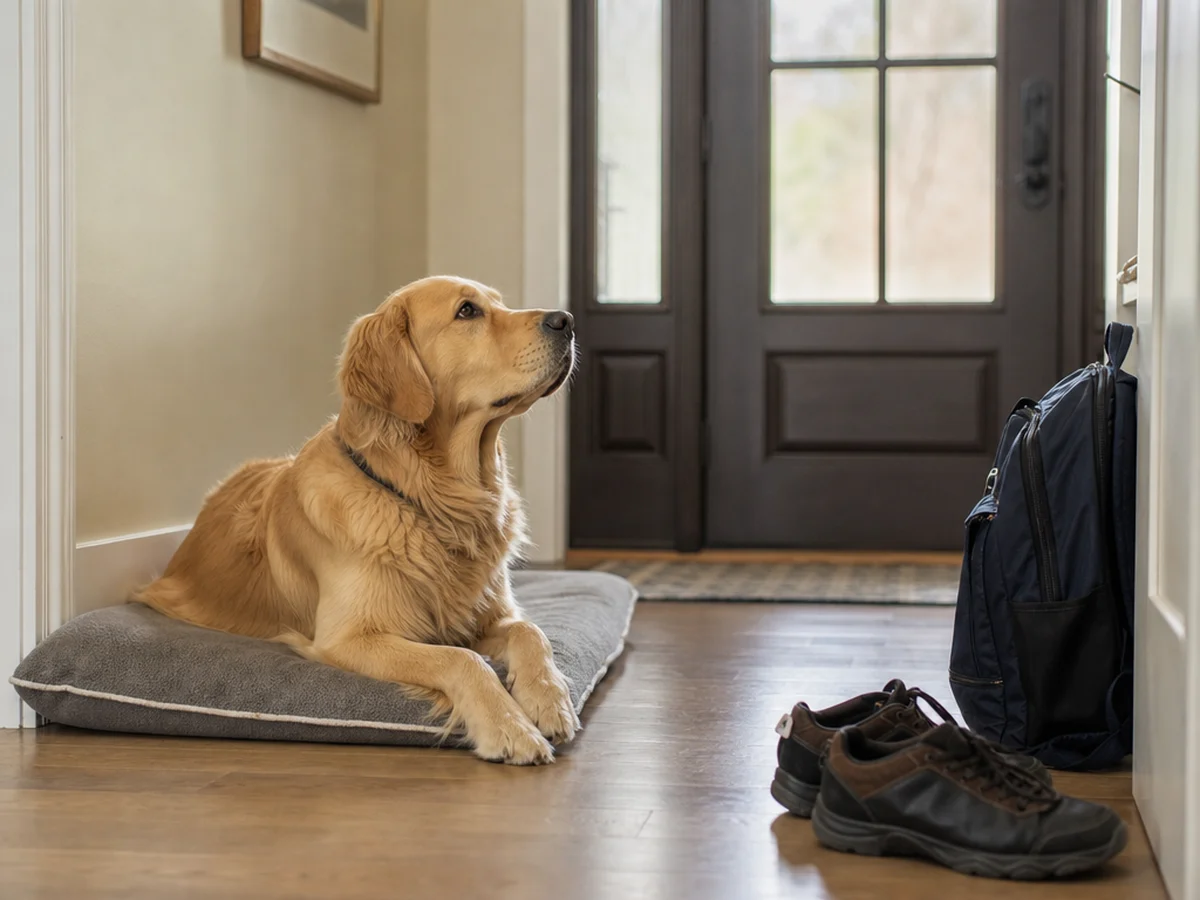
Following by itself does not diagnose anxiety. Look at the whole pattern and whether the dog can return to an ordinary activity. A Golden who briefly checks what you are doing and then lies down is showing something different from one who becomes progressively tense.
Record practical needs too. The dog should have appropriate bathroom opportunities, water, a comfortable temperature and a suitable daily routine. An absence cannot fairly assess comfort if they already need something you have not provided.
Do not turn departure into a long series of tests with keys and shoes. If a particular action consistently produces concern, it can become part of a carefully graded professional plan. Repeating it until the dog stops reacting may conceal fatigue or distress rather than teach comfort.
The First Response to Golden Retriever Alone Time
Look at the transition after the person disappears. Does the dog return to resting, continue a familiar activity or remain fixed on the exit? Note the sequence instead of assigning a meaning to a single posture.
A dog can be still without being relaxed. Persistent watching, a tense body or repeated movement between the same locations may matter even without barking. Conversely, a brief look toward the door followed by ordinary rest need not be treated as a problem by itself.
The ASPCA describes a range of separation anxiety signs, including distress around departures and behavior during absence. Those signs need interpretation in context. A recording gives a professional more information than simply reporting that the dog was “good” or “bad” while alone.
If concern begins immediately, make the next practice easier than that departure. The starting point might be a person moving within sight or briefly passing a doorway. Necessary absences will need a care arrangement while that smaller skill develops.
Do not wait outside for a dog to become quiet before returning when they are distressed. The useful adjustment is to prevent the next practice from reaching that level. Comfort is the objective, rather than silence obtained after a difficult wait.
Later Changes During Alone Time
A comfortable beginning does not establish that every later part of the absence is manageable. Review what happens when food ends, an outside noise occurs or the dog wakes. These changes can explain why a short check of the first moments missed the difficult part.
Compare the event with the response. Barking at a passing delivery vehicle may have a different pattern from distress that begins with departure and continues despite a quiet street. Both deserve attention, but the practical changes may differ.
| Video sequence | Useful next question |
|---|---|
| Rest, outside sound, brief alert, rest again | Would reducing that disturbance help? |
| Departure, repeated pacing, no return to rest | Is this absence beyond current comfort? |
| Food activity, then sustained exit watching | What happens without ongoing food occupation? |
| Dog leaves the camera view | What information is missing? |
Use the table as a prompt for observation, not a diagnostic checklist. Several causes can exist together, and changes in health can affect behavior. Share persistent or worrying patterns with your veterinarian instead of selecting a label from one clip.
If the dog becomes distressed after a certain event, do not repeat the same length of absence to confirm it. Arrange support and shorten future practice. You already have enough information to know that the current version needs changing.
Turning Observations Into an Alone-Time Plan
Choose the next action from what you saw. If the dog remained comfortable, continue ordinary care and check again periodically. If an environmental disturbance repeatedly interrupts rest, adjust the room or view while keeping the dog in a familiar, comfortable setting.
When absence itself appears difficult, begin below the point where concern starts. That may require tiny changes in your movement rather than a measurable outing. Increase demands only when the current version is relaxed, and include easier repetitions instead of making every attempt longer.
Humane World for Animals offers guidance on supporting separation difficulties. Persistent distress calls for qualified help, with daily arrangements that avoid leaving the dog beyond their ability to cope. A food toy or a longer walk cannot stand in for that plan.
- Write the observed behavior before writing your explanation for it.
- Change one relevant condition so the next observation remains understandable.
- Keep departures short enough to end comfortably rather than waiting for a failure point.
- Arrange veterinary and behavior support when the dog cannot settle or risks injury.
Reward calm, voluntary resting during ordinary time at home, without insisting that the dog remain isolated to earn attention. Affection does not need to disappear from the household. The skill is comfort during manageable absence, not a general rule that the Golden must avoid their people.
Alone Time Within a Golden Retriever Working Household
The absence your schedule requires may be longer than the one your dog can currently manage. Solve that practical problem separately from the training exercise. A familiar caregiver, suitable sitter or other comfortable arrangement may be needed while you work on smaller departures.
Check whether the proposed care actually suits the dog. Company helps only if they are comfortable with that person and setting. A busy group environment may be unsuitable for an individual who prefers quiet, and a brief visit does not cover every part of a long absence.
Our Golden settling guide discusses wider daily routines. Use activity and rest to meet ordinary needs, without trying to exhaust the dog into coping with something that worries them.
Plan for delays as well as the expected return time. Someone who can step in when work or travel changes prevents the training plan from depending on a perfectly predictable day. Keep contact details and access arrangements clear before you need them.
A crate is not automatically the best solution. If confinement produces concern, choose a safer resting arrangement and discuss it with a professional. The dog needs a place where they can settle, not simply a place where household damage is harder to reach.
A Useful Alone-Time Record for Professional Help
Bring a short selection of relevant footage and a plain account of the sequence. Include what happened before departure, when behavior changed and what the dog did after you returned. Keep the original files available rather than relying only on a description.
Your veterinarian can assess possible health contributions and advise on appropriate behavior support. Discuss new or persistent changes at regular veterinary visits, and seek help sooner for severe distress, attempts to escape or possible injury. The video supports assessment without replacing it.
- Include an ordinary comfortable period for comparison when you have one.
- Identify the event immediately before a change, such as a door closing or food ending.
- Describe the room, confinement arrangement and any people or animals nearby.
- List the care options available so a plan can fit the actual household schedule.
A history of training helps too. Our Golden training foundations explain familiar cues and rewards you may already use. Tell the professional which responses remain easy and which disappear around departures.
This article offers general observation and training information, not a diagnosis or treatment plan. A veterinarian should assess persistent separation distress and possible health contributions. Seek prompt advice if your dog may injure themselves, and use an appropriate care arrangement while help is organized.
Rechecking Golden Retriever Alone Time After Changes
Review the arrangement after a move, schedule change or change in the dog's health. Keep observations specific and practice within current comfort, even if longer absences were manageable before. A useful alone-time plan stays connected to what this Golden is actually doing between goodbye and your return.
 CareGrooming a Golden Retriever: Brushing, Baths, Ears and Handling
 BehaviorKeeping a Golden Retriever's Nose Off the Kitchen Counter
 BehaviorTeaching Golden Retrievers Polite Play With Other Dogs