 Golden Retriever
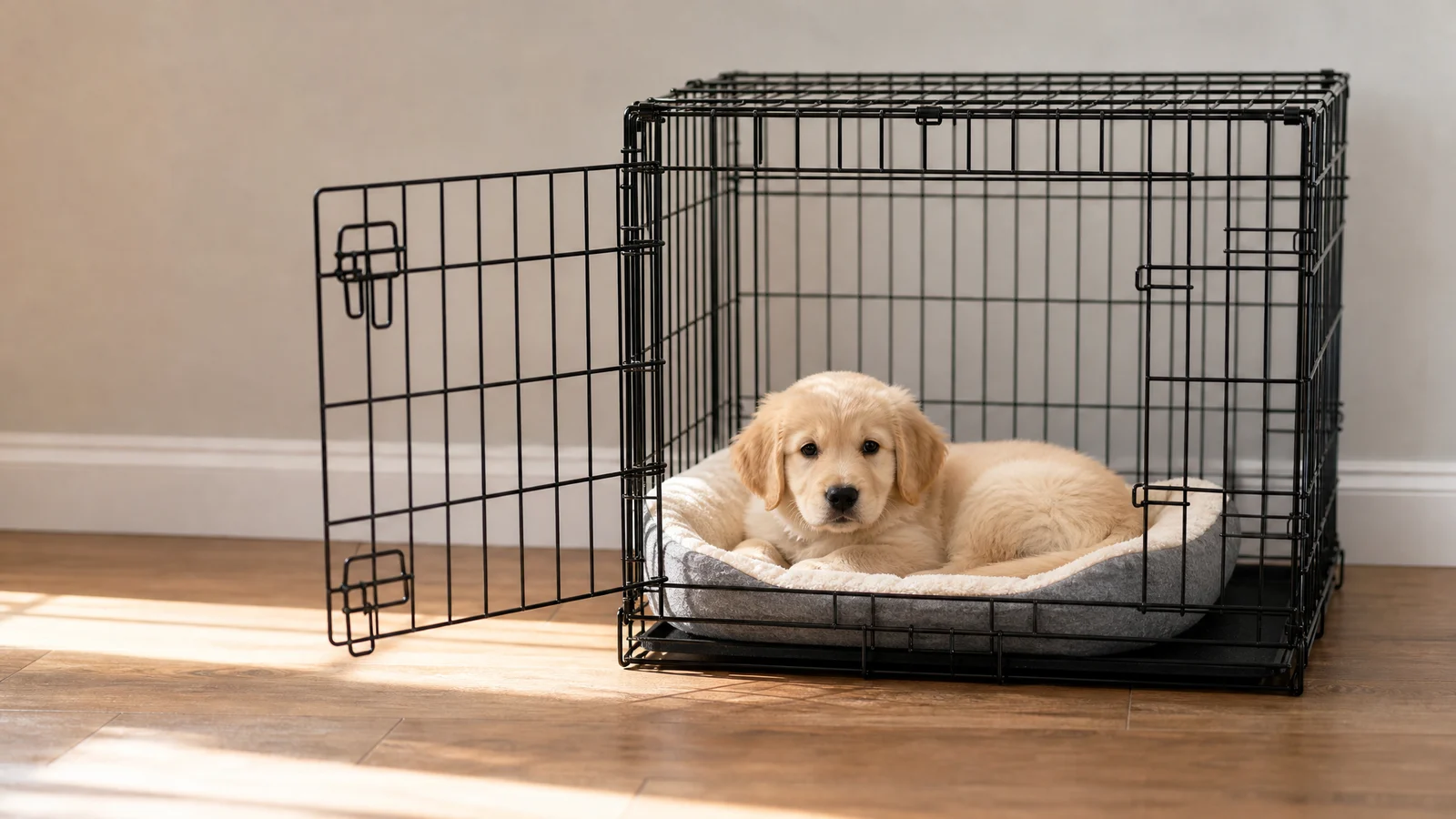
Crate train a Golden Retriever puppy by making the crate comfortable, rewarding voluntary entry, and adding door movement only while the puppy remains relaxed. The goal is a resting place they choose, not a puppy who has learned that noise is useless. Fit, location, entry, latching, and duration are separate decisions, so progress in one does not prove readiness for the next.
This guide follows those decisions in order. You will set up a usable space, teach entry with the door open, read the response to each door change, and fit practice around normal puppy needs. It also draws a firm boundary around real absence distress. Crate comfort can support household management, but it does not resolve fear when people leave.
A Crate Your Golden Retriever Can Use Comfortably
A comfortable crate lets the puppy stand naturally, turn around, and lie in more than one relaxed position. Check the usable inside space rather than relying on a product size name. A growing puppy may need the space adjusted as their body changes, but the divider should preserve comfort rather than pin them into one posture.
Assess the space when the puppy is standing calmly and again when they settle. A quick turn during excitement can hide awkward contact with a wall, while a curled nap can hide too little room to stretch. Watch ordinary movement before deciding that the fit is right.
Room to Move
Watch the puppy enter and turn without guiding them. Their back should not touch the top, and they should not have to fold tightly to rest. Recheck the fit during growth spurts and after adding bedding, since a thick pad changes the usable height and floor area. Replace or adjust a setup that no longer allows easy movement.
Choose items the puppy already uses safely under supervision. Bedding that becomes a chewing project is not providing rest, and a bowl or toy that crowds the turning space does not improve the crate. Keep the arrangement simple enough that you can see whether the puppy is actually comfortable.
Where the Crate Belongs
Start in a room where ordinary household life happens without constant foot traffic across the opening. Breed-specific puppy guidance recommends introducing the crate in a people area such as a kitchen or family room. That placement lets a puppy practice resting near the family instead of combining a new enclosure with immediate isolation.
Move the crate away from a doorway, television, or window if each sound brings the puppy upright. The useful location is not necessarily the quietest corner in the building. It is the place where the puppy can notice normal activity and then settle again without being bumped, watched, or invited to interact every minute.
Observe the location during several parts of the day before fixing it. A corner that works during a quiet afternoon may sit in a traffic lane at breakfast. If you move the crate, return to easy open-door practice so the puppy can learn the new view and sound pattern without a second demand.
Start With the Door Open
Fasten the open door to the crate side so a bump cannot send it toward the puppy. Let them inspect the crate without being placed inside, and reward any willing approach. Best Friends Animal Society advises handlers to mark and reward approaches, even before the whole dog enters. That makes the first lesson about choice and clear feedback.
A marker, Blue Cross notes, identifies the chosen response before the puppy receives something they value. Use a small food reward or another quiet reward the puppy values. Deliver it inside only after the chosen behavior occurs, then allow the puppy to leave. Do not block the exit or rush to close the door after a successful entry.
- Reward a look or step toward the opening, then pause so the puppy can choose again.
- Mark a front paw inside and place the reward where the puppy can collect it without being trapped.
- Build to four paws inside, then reward a brief pause before the puppy leaves.
- Wait for a voluntary sit or lie-down and reward low inside the crate.
- Add the crate cue only when entry is predictable, saying it just before the puppy goes in.
Keep several easy repetitions in which nothing else happens. A crate cue should predict a behavior the puppy understands, not a door that always closes or a person who always disappears. Stop while the puppy is still willing to approach, then leave the crate available without turning every visit into a training session.
If the puppy waits outside, reduce the request instead of repeating the cue. Reward an approach, check whether the location or flooring changed, and rebuild from the easiest willing behavior. A cue gains meaning from successful pairings.
Reading a Golden Retriever at the Crate Door
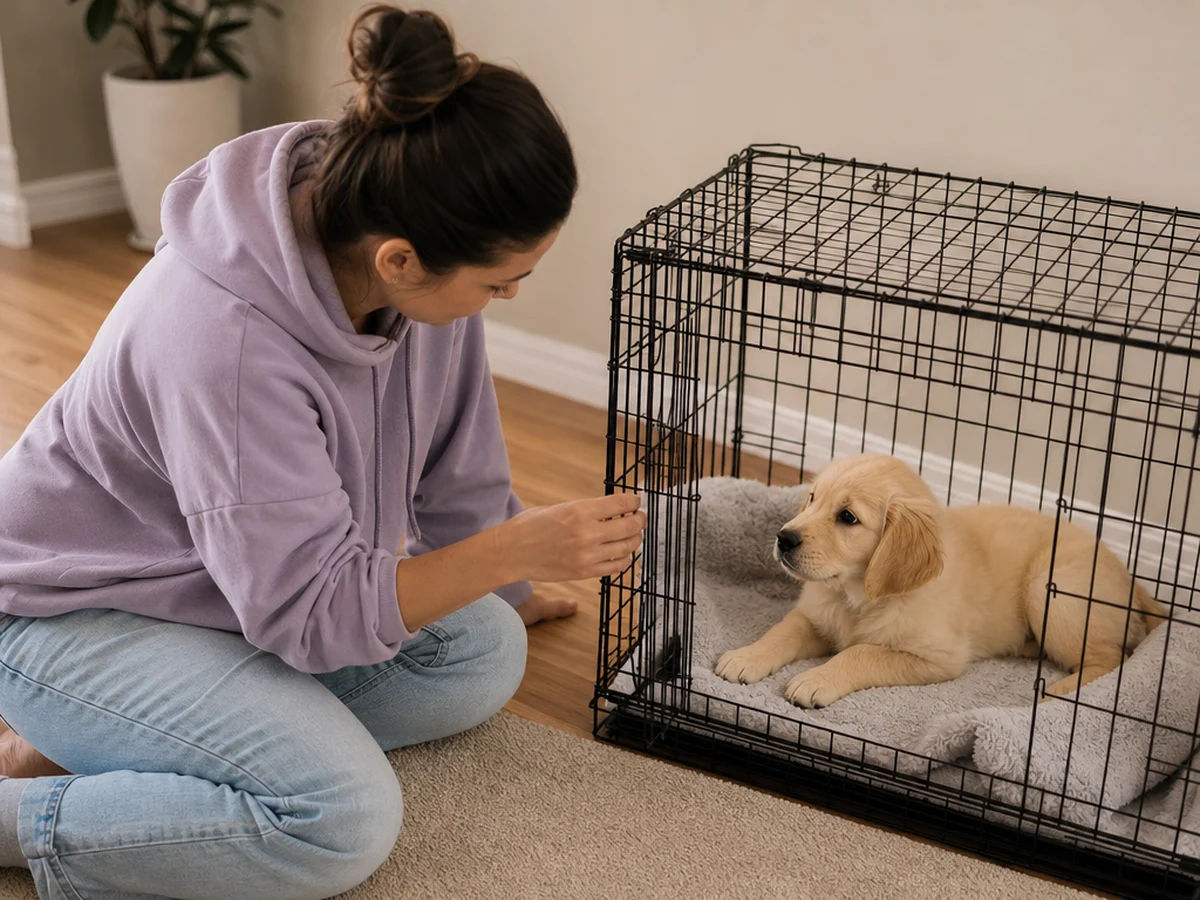
Door work begins after the puppy can enter, eat, and rest with the opening clear. Change only one feature at a time. Touching the door, moving it, bringing it to the frame, latching it, and leaving it closed for a little longer are different questions. A relaxed answer to one question earns a small next question, not the end of the sequence.
The Door Moves
Touch the door and reward continued ease, then let go. On later repetitions, move it through a short arc and reopen it before the puppy changes position. Mix those moments with open-door entries so approaching the crate does not suddenly predict loss of choice. If the puppy leans toward the exit or stops taking food, make the movement smaller.
Look beyond silence. A loose body, normal breathing, ordinary interest in food, and the ability to return to rest are more useful than a quiet but fixed puppy. The PDSA describes the purpose of crate training as a comfortable place for rest. The puppy's behavior should match that purpose.
The Door Closes Briefly
Bring the door to the frame, reward, and open it. Latch it only after that motion has become ordinary, and stay beside the crate for the first closed-door repetitions. Open it again while the puppy is still comfortable. A consistent release cue can prevent the opening door from becoming a signal to push through it.
Do not make every repetition longer. Follow a slightly harder moment with an easier one, such as a brief latch followed by an open-door settle. This variation gives the puppy familiar successes and makes the training about calm responses rather than enduring a countdown.
| Puppy's response | Useful next decision |
|---|---|
| Loose body, takes food, returns to rest | Repeat once, then make one small door change |
| Watches the latch but relaxes after it opens | Repeat the same easy version before advancing |
| Leans out, stops eating, or remains fixed on the door | Reduce the door movement and restore choice |
| Pants, cowers, barks repeatedly, or escalates | End the step safely and return to an earlier comfortable version |
The RSPCA lists whining, panting, excessive barking, cowering, and aggression as signs that crate duration may have increased too quickly. Treat those signs as information. Waiting for a puppy to become exhausted does not turn an oversized step into successful practice.
Crate Training and Puppy Needs
A puppy who needs the toilet, water, movement, or sleep cannot give you a clean answer about crate comfort. Meet those needs before a session and keep early practice within a period you can supervise. Avoid formulas that promise a puppy can remain confined for a fixed number of hours based only on age.
Use the crate as one management tool, not the puppy's entire day. The same breed-specific guidance says confinement can be part of a daily routine but cannot be the whole routine. Time outside the crate should include toileting, appropriate activity, social contact, training, and undisturbed rest in other suitable places.
Keep a brief record if comfort changes across the day. Note what happened before the session, whether the puppy slept, and which door step you used. That makes it easier to distinguish a training change from an unmet need or a setup that works in the evening but not beside busy morning traffic.
Management and training can share the same equipment without becoming the same event. If you need safe supervision while preparing a meal, use a crate step the puppy already handles comfortably. Do not use an urgent household moment to introduce a longer latch, a new location, and an unfamiliar activity at once.
Nighttime Is Not a Test
Night practice still depends on needs and comfort. Place the crate where you can notice restlessness, plan calm toilet trips, and return the puppy without adding play. A difficult night calls for an easier arrangement and closer supervision, not a contest over who stops responding first.
Changes in sleep, repeated restlessness, discomfort, or unusual toileting deserve veterinary attention. Keep regular veterinary visits and discuss concerns rather than assuming every nighttime problem is a training problem. The crate should help you observe the puppy, not hide a pattern that needs care.
When the Crate Is Not Helping
Pause if the puppy cannot recover after the door step becomes easier, tries frantically to escape, or shows distress around departure preparations. First check the fit, location, temperature, physical needs, and the last successful training step. If ordinary crate practice is comfortable but real departures are not, the difficulty belongs to absence work rather than stricter confinement.
Do not use the crate to force a puppy through separation distress. Choose a safer supervised setup, prevent absences beyond current comfort, and seek qualified help. Our guide to Golden Retriever alone time owns the observation and absence plan, so this crate guide does not duplicate its full method.
A crate is also a poor place for punishment. Sending the puppy there after an unwanted behavior changes the meaning you have been building. Manage the environment, teach the behavior you want in the relevant location, and preserve the crate as a predictable place where resting remains safe.
Questions About Golden Retriever Crate Training
The setup and door sequence answer most crate questions, but three practical gaps remain. Each answer keeps the same rule: change one feature, observe comfort, and avoid turning crate use into a test of endurance.
- Can the crate move after a Golden Retriever learns to use it?
Yes, but treat the new location as a real change rather than assuming the skill transfers automatically. Begin with open-door rest and easy entries there, then repeat door work only after the puppy is comfortable with the new sounds, traffic, and view.
- Should the crate cue be different from a bed cue?
A separate cue is useful when the behaviors end in different places or have different release rules. Keep each cue attached to one clear behavior, and reward the puppy for reaching the named resting place instead of repeating both words until one happens to work.
- Does enjoying an open crate mean a puppy is ready to be left alone?
No. Choosing an open resting place shows comfort with that location, but it does not prove comfort with a closed door or a departing person. Test door motion and brief confinement separately, and use the alone-time owner if departure itself changes the puppy's behavior.
Keep the Crate Optional as a Resting Place
Continue easy crate moments after the door skills are learned. Let your Golden Retriever choose the open crate for a nap, reward an occasional voluntary settle, and practice resting on a bed or mat elsewhere too. A useful crate is one comfortable option within family life, not the only place where the puppy knows how to stop moving.
Judge progress by choice and recovery. The puppy enters without being placed inside, stays loose as the door moves, and returns to rest after small changes. When that picture changes, reduce the step and protect the meaning of the space. Comfortable crate use grows from many uneventful decisions, not from one long session.
 BehaviorHow to Stop a Golden Retriever Barking
 Training basicsHow to Teach a Golden Retriever to Lie Down
 Training basicsHow to Teach a Golden Retriever to Sit