 Golden Retriever
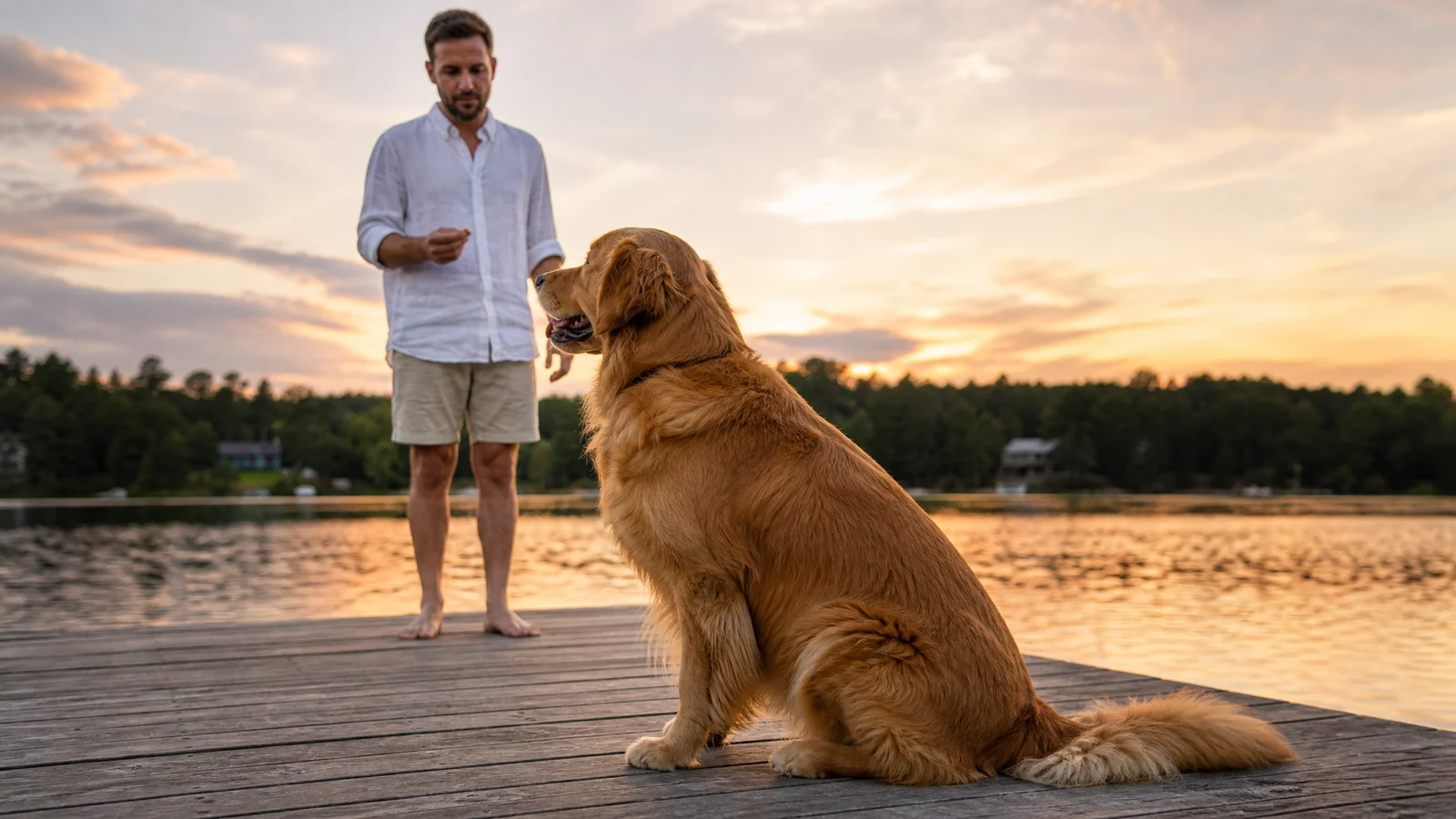
To teach a Golden Retriever to sit, guide the dog's nose upward with food, mark and reward the completed position, then add the word as the movement becomes predictable. The dog should choose the position without being pushed or physically arranged.
The first goal is a comfortable response to a simple hand movement. The next is a sit that no longer depends on visible food. In this guide, we will build that progression in a quiet setting, budget rewards thoughtfully, compare an empty hand with a room change, and finish with one ordinary transfer checkpoint. Adjust a single feature for each attempt, allowing the response to show which next step is useful.
The General Method for Teaching Sit
Prepare a valued food reward and choose footing where the dog can move comfortably. The RSPCA sit guide supports guiding the position with a food lure and rewarding the completed sit. Keep the hand path smooth and let the dog follow it voluntarily.
- Hold the food close enough for the dog to notice without giving it yet.
- Draw a small arc above the head, allowing the dog to track it and settle into a seated position.
- At the moment the dog is seated, mark the result and supply the earned reward.
- End the repetition with a simple release instead of stretching the sit into a stay lesson.
- When the motion is predictable, say the sit cue just before the same hand movement, then begin using an empty hand.
A marker identifies the instant the sit is complete. The narrow point retained from Blue Cross training guidance is that a clear reward marker is paired with a valued reward. Keep that role simple here rather than turning the sit lesson into a separate marker curriculum.
Reward-based practice is the relevant direction here from the AVSAB dog-training position. It does not promise a Golden Retriever outcome or a learning deadline, so the dog's current response determines whether to continue or simplify.
Golden Retriever Sit Rewards
Food can make the first hand movement easy to follow, but the useful reward is the one this Golden Retriever values in the current setting. A dog who follows calmly may need a different choice from one who loses interest, and neither response establishes a breed-wide rule.
The AKC Golden Retriever page says treats can aid training while too many can contribute to obesity. That supports accounting for training food rather than adding an unnoticed extra stream of treats. It does not set a food amount, weight plan, or menu.
Set aside an appropriate portion of the dog's existing daily food plan for practice when that fits the reward choice. Keep routine veterinary visits, and take questions about weight, food amount, or individual health to the veterinarian. The sit method stays the same whether the earned reward is small food or another valued outcome.
Does the Sit Cue Work Without Food Showing?
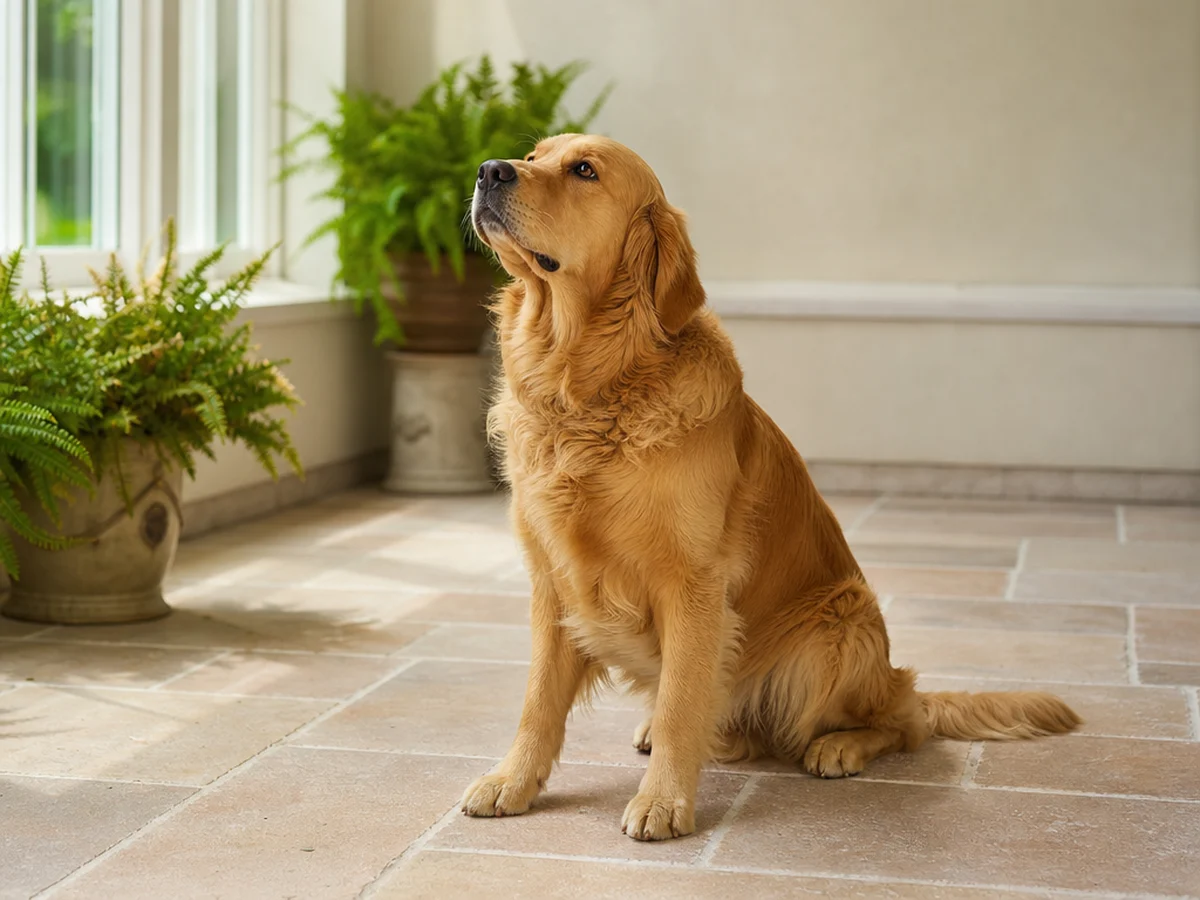
A sit can falter for two different reasons. If the response disappears when food is no longer visible in the familiar room, the hand may still function as a lure. If it works there but not elsewhere, the room change has raised the difficulty. Test those questions separately.
An Empty Hand Signal
Begin with the same hand path but keep the food out of that hand. Mark the completed sit and deliver the reward from elsewhere. The hand movement remains familiar while the visible food disappears, which shows whether the Golden Retriever is following the signal or only tracking the lure.
If the dog searches the empty hand, return briefly to an easier version and make the food's location less obvious on the next try. Do not repeat the verbal cue while the dog is still guessing. One clear presentation gives better information than a string of words.
A Different Room
Change rooms only after the sit works with an empty hand in the familiar setting. Keep the cue and hand movement unchanged while the surroundings change. This is a test of context, not a lesson about sustained focus, greetings, or responses around intense distractions.
If the sit becomes slower or unclear, move back to the familiar room and confirm the empty-hand response. Then try the new room with an easier position and fewer competing activities. The adjustment belongs to the setup rather than to a claim that the dog is refusing a known cue.
Use the observation table after both checks. It keeps visible-food dependence separate from a context change so the next adjustment addresses the problem that actually appeared.
| Observation | Likely Training Question | Next Adjustment |
|---|---|---|
| Sits with food showing but not with an empty hand | The visible lure still controls the movement | Keep the familiar hand path and reward from the other hand |
| Sits with an empty hand in the familiar room only | The cue has not transferred to the new context | Return to the easy room, then change only the room |
| Sit remains clear after the room changes | The response is ready for one ordinary use | Reward that success and stop before adding another challenge |
Questions About Teaching Sit
The completed body leaves three narrow sit-sequence gaps. They concern an offered sit before the cue, the form of the marker, and a later change in handler position. They do not reopen household consistency, broad older-dog training, or marker mechanics.
What if a Golden Retriever sits before the cue?
Rewarding the completed position still supports the early lesson. As the movement becomes predictable, present the sit cue just before the dog begins to lower. Avoid adding the word after the dog is already seated, because that does not connect the cue with the upcoming movement.
Can a verbal marker mark this sit?
Yes, when it is the clear marker paired with the valued reward in this sequence. The marker identifies the completed sit and does not replace the sit cue. For choosing, establishing, or troubleshooting a marker, use Golden Retriever clicker training rather than expanding this cue lesson.
Can the sit cue be given from beside a Golden Retriever?
Treat that handler position as one later context change after the empty-hand response is clear from the familiar position. If the sit becomes uncertain, return to the successful position, then change only where the handler stands. This tests transfer without turning the exercise into a household-consistency plan.
Take the Golden Retriever Sit Into Daily Life
Choose one ordinary context where a sit is useful and where the dog can still respond comfortably. Present the cue once, use the familiar empty-hand signal if needed, and reward the completed position. Greeting behavior and a longer stay remain separate skills rather than tests added to this checkpoint.
Transfer is successful when the Golden Retriever can complete the sit after one clear context change without visible food in the signaling hand. Reward that response and finish. Stopping there preserves a precise result instead of letting several new demands blur what the dog just understood.
 Puppy trainingYour 8-Week-Old Golden Retriever: The First Week Home
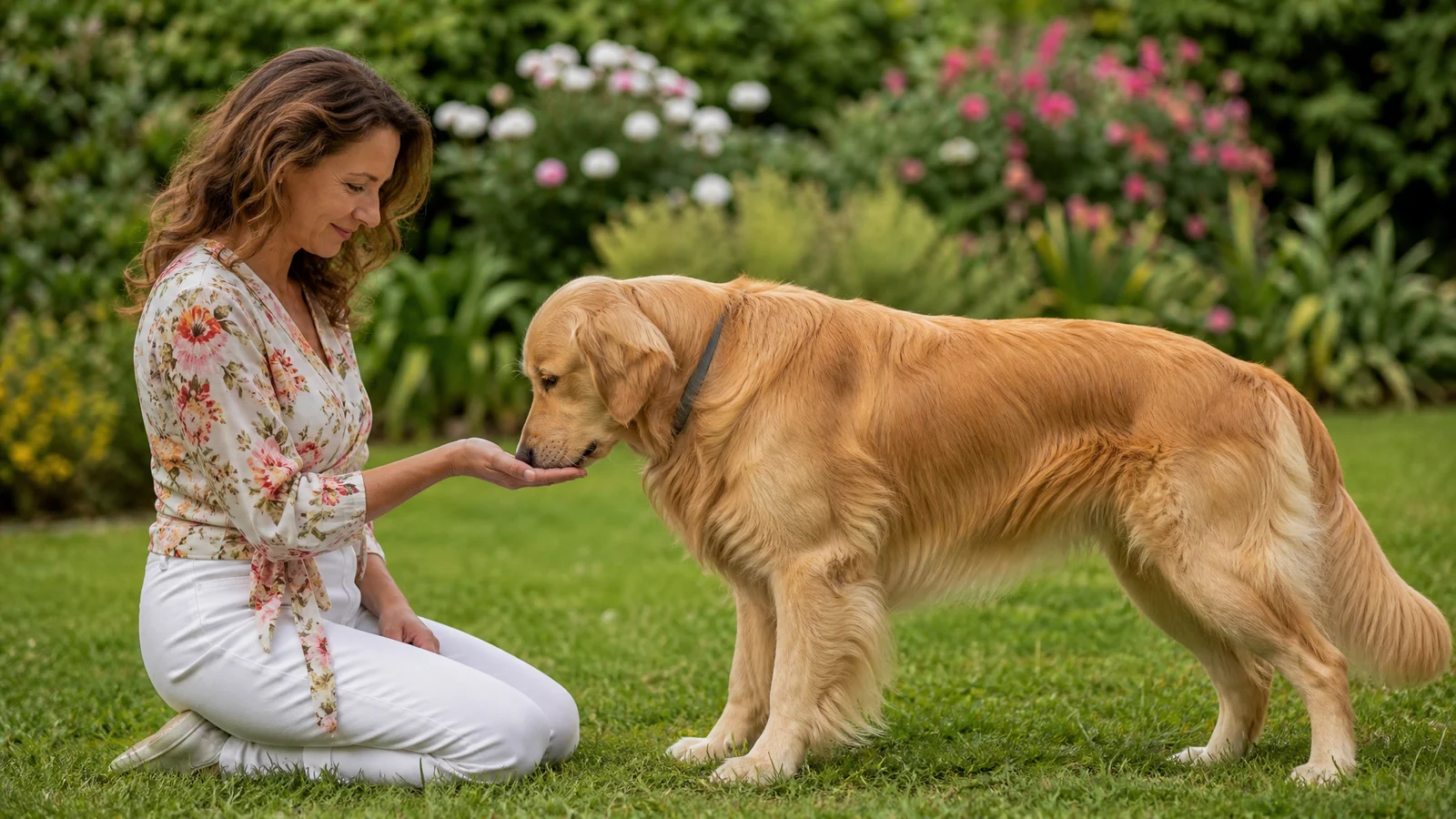 Training basicsAre Golden Retrievers Easy to Train?
 Training basicsRed, Dark and Light Golden Retrievers: The Color Range Explained