 Golden Retriever
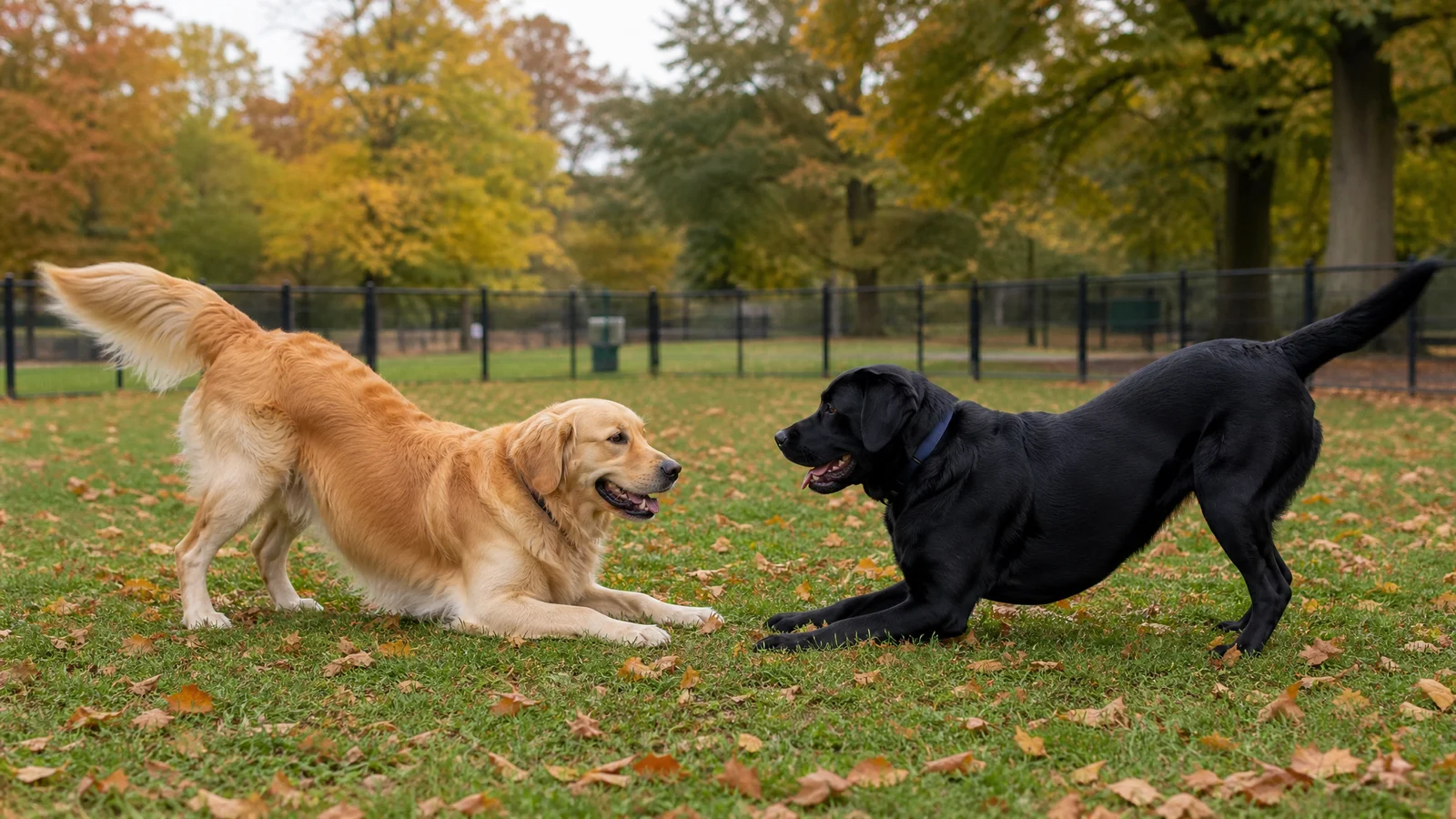
Your Golden Retriever's enthusiasm answers only half of the question about a play session. The other dog may welcome another chase, prefer a slower interaction or be trying to leave. A game stays useful when both participants can influence what happens, rather than one dog's energy deciding the pace for everyone.
Watch the quieter dog as closely as the bouncy one. Movement away, a pause or a choice to investigate something else may tell you more than the amount of noise in the game.
Below, we use those choices to decide whether play starts, pauses or ends. The guide covers suitable partners, a practiced call-away and the decision about another round. We also consider different settings and mismatched play styles, so your Golden can enjoy other dogs without relying on them to tolerate every invitation.
Play Starts With Two Willing Dogs
Choose a known, suitable partner when possible and arrange a safe space with room to separate. Both people should be willing to pause or end the interaction. A busy group of unfamiliar dogs gives you fewer options for understanding what either participant wants.
Look for comfortable interest from both dogs before allowing a game. Loose movement, approaches that can pause and the ability to turn away provide useful information. Do not push a hesitant dog into contact because the Golden appears friendly.
The ASPCA's canine body language guidance emphasizes reading signals in context. A wagging tail or an open mouth alone cannot establish that an interaction is comfortable. Look at the body, movement and response to the other dog together.
- Use a secure space appropriate to both dogs and the activity.
- Keep each dog's handler available to help with a break.
- Remove items likely to create competition before play begins.
- Choose another activity if either dog appears worried or unwilling.
Age and size matter, but they do not tell the whole story. A smaller confident dog and a larger gentle dog may still need careful supervision, while two similar-sized dogs can have incompatible styles. Observe the actual interaction rather than treating a match on paper as sufficient.
The Play Partner Has an Exit
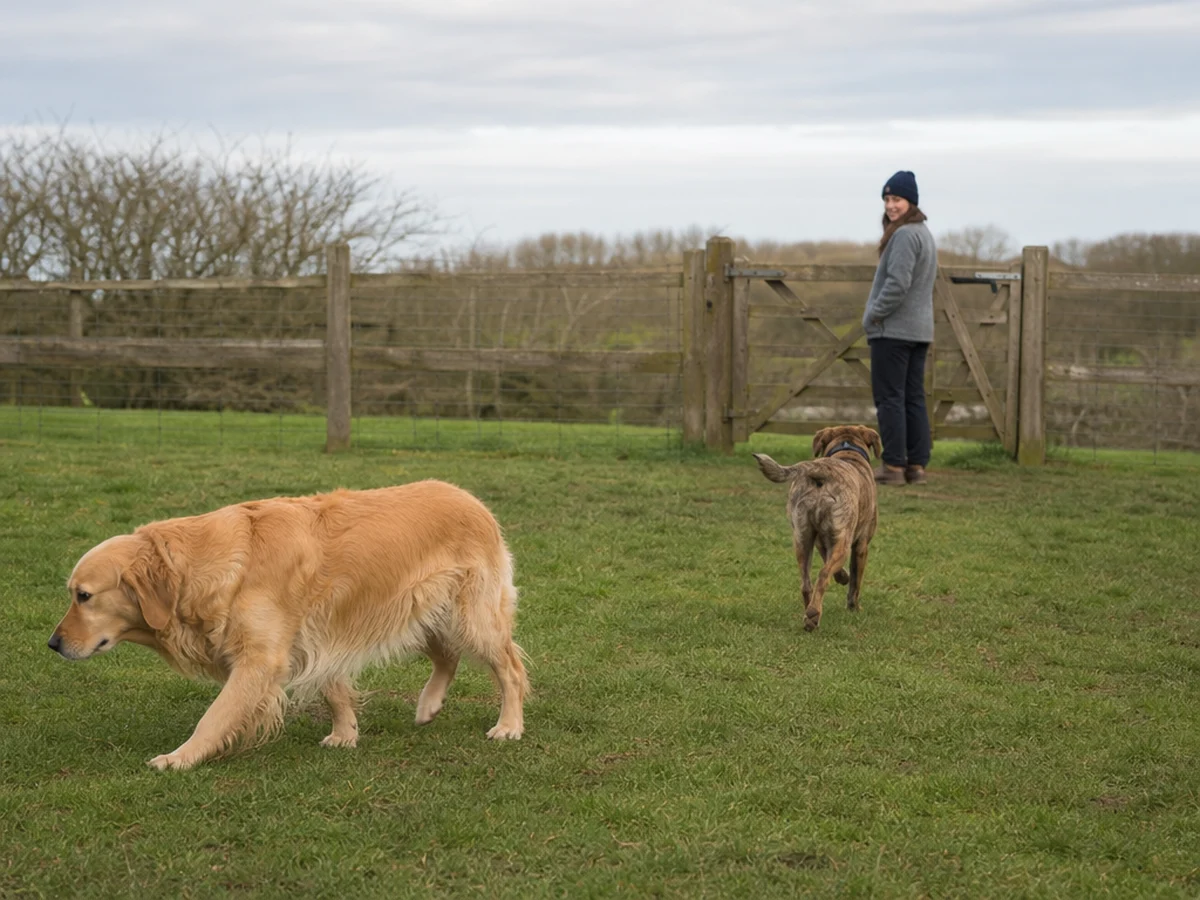
A dog should be able to leave the game without being immediately pursued into a corner. Watch how your Golden responds when the partner changes direction, slows down or moves toward a person. Those moments show whether the interaction allows a choice.
Movement Away That Is Respected
Some movement away belongs to a mutual chase game, while other movement is an attempt to stop. Look for the surrounding pattern. Does the partner return willingly after a pause, or keep trying to create distance while the Golden follows?
If the pattern is unclear, call your dog away and allow space. You do not need to wait for a stronger warning. A comfortable break can clarify whether both dogs still want the interaction without requiring the quieter dog to escalate.
Position yourself where you can help before the pair reaches a fence or narrow passage. The layout can make a playful approach feel inescapable if one dog has nowhere to go.
A Safe Place Outside the Game
Provide separate resting areas or enough distance for each handler to gather their dog comfortably. Keep the Golden from following a partner into that space. Rest is only meaningful if the dog can use it without another invitation arriving immediately.
For dogs living together, use suitable gates or rooms when needed. A companion who wants quiet should not have to negotiate every pause themselves. Our Golden daily routine guide discusses activity and rest in shared households.
Protect access to water and ordinary resources during breaks. If either dog becomes tense around an item or location, separate them and arrange appropriate advice. Social play should not require tolerating competition over something important.
A Break Reveals More About Play
Pause before the interaction becomes too difficult to interrupt. Each person can invite their own dog away, create space and offer a quiet activity. Keep food rewards separated so the break does not introduce competition between dogs.
The professional guide to teaching polite play highlights the importance of responding to another dog's requests for a pause. Use your Golden's behavior during the break as information. Repeated attempts to rush back may mean the dog needs a longer separation or an easier setting.
Watch the partner too. They may choose to rest, sniff elsewhere or remain beside their person. None of those choices requires another play invitation. A pause is not simply a delay before the energetic dog gets the same game back.
Do not measure the break only by elapsed time. Look for each dog to become available to their handler and able to engage in something ordinary. The right outcome may be ending the session, even if the play period was shorter than expected.
Keep your own response calm. A hurried scramble to grab dogs can add excitement and make the break harder. Prepare the call-away and separation arrangement before the first game begins.
Calling a Golden Retriever Away From Play
Teach the call-away outside dog play first. Use a familiar recall or movement cue in a safe, quiet setting and reward generously. The dog should understand the response before another dog becomes the competing attraction.
Add manageable distractions gradually, then practice near a suitable partner while the dogs are not actively playing. Ask for a short return when attention is available and reward away from the other dog. Keep the exercise easy enough that you are not repeatedly calling over an absorbed game.
The RSPCA's reward-based training advice supports brief, achievable lessons. For this skill, a worthwhile return can sometimes lead back to appropriate play, but only after both dogs are ready. The reward is not a promise that every break will reopen the game.
- Build a clear return in an easy setting without another dog playing nearby.
- Practice with a calm partner at a distance where your Golden can still respond.
- Use the cue during a natural early pause in a suitable game.
- Reward the return in separate space and assess both dogs before any reentry.
If the dog cannot respond, arrange a safer, less exciting practice context next time. Avoid adding a long trailing line to active wrestling where it could tangle legs or bodies. Arrange a lesson with a trainer who uses rewards if you need help making call-away practice safe.
The Golden training foundations provide the familiar cue and reward routine. Keep that routine recognizable when the setting changes, rather than replacing it with repeated urgent calling.
Another Round of Golden Retriever Play Is Optional
Decide about reentry from both dogs' behavior after the break. The Golden's willingness is necessary, but it is not sufficient. The other dog also needs room to express interest without being approached at full speed.
Both Dogs Seek Another Interaction
Allow a calm opportunity to approach when both handlers agree and both dogs look comfortable. Watch the first moments closely. A relaxed return to mutual play is different from one dog immediately overwhelming the other.
Keep the next round short enough to observe clearly. You do not need to increase duration because the break worked. Several manageable interactions can be more useful than extending the game until it becomes difficult to stop.
Observe the first approach after separation rather than looking away once both dogs are released. This is the moment when a comfortable break can either support a better game or disappear into the previous imbalance. Stay close enough to supervise while leaving the dogs room to move without being crowded by people or equipment. Ask the other handler to watch their own dog closely too.
The Partner Chooses Something Else
If the other dog stays away, rests or investigates another part of the area, let that choice stand. Help your Golden move into a different activity with you. Repeatedly sending them back to invite play can turn persistence into the main lesson.
A dog who enjoyed the first round may still be finished. Their earlier participation does not commit them to another game. Keep the ending pleasant and make another arrangement on another day if appropriate.
The Same Imbalance Returns Immediately
If the Golden repeatedly pursues, crowds or ignores attempts to leave, end the shared activity. A break that leads straight back to the same uncomfortable pattern has given you useful information. The pairing, setting or current skill level needs changing.
Arrange professional help when interactions repeatedly become tense or difficult to interrupt safely. Do not ask another dog to teach the lesson through stronger warnings. A controlled plan can protect both dogs while the Golden learns more manageable social responses.
Different Playmates Change Golden Retriever Play Decisions
A successful game with one friend does not establish compatibility with every dog. Familiar partners develop expectations that an unfamiliar dog may not share. Begin cautiously and keep non-play activities available.
An older dog may prefer parallel walking or quiet company. A puppy may need much shorter interaction and more protected rest. A dog recovering from illness or injury should follow their veterinarian's activity advice rather than the pace of a healthy playmate.
- Choose partners whose movement and interaction style remain comfortable for both dogs.
- Avoid crowded entrances and narrow areas where a dog cannot leave easily.
- Keep toys out of an unfamiliar pairing until you know whether they create tension.
- Use separate walks or calm company when active play is not the suitable shared activity.
Regular veterinary visits are an opportunity to review movement and comfort, especially when a dog begins avoiding games they previously enjoyed. A change in tolerance deserves attention rather than being dismissed as a social failure.
Remember the human agreement too. If the other handler will not pause an uncomfortable game, leave the situation. Your dog's social experience should not depend on convincing someone to notice a problem after it has escalated.
Ending Play While Choices Remain Easy
Finish with enough attention available for a comfortable departure. Move into separate space, secure equipment and allow a quiet transition before the journey home. Avoid making the last act another intense round because the dog still appears willing.
Notice what your Golden learned about the partner's choices. A useful session includes approaching appropriately, responding to pauses and leaving when the game is over. Keep reinforcing those responses so enjoyment of other dogs develops alongside the ability to give them room.
 Training basicsLoose Leash Walking With a Golden Retriever
 Training basicsHow to Teach a Golden Retriever to Heel
 Training basicsHow to Teach a Golden Retriever to Stay