 Golden Retriever
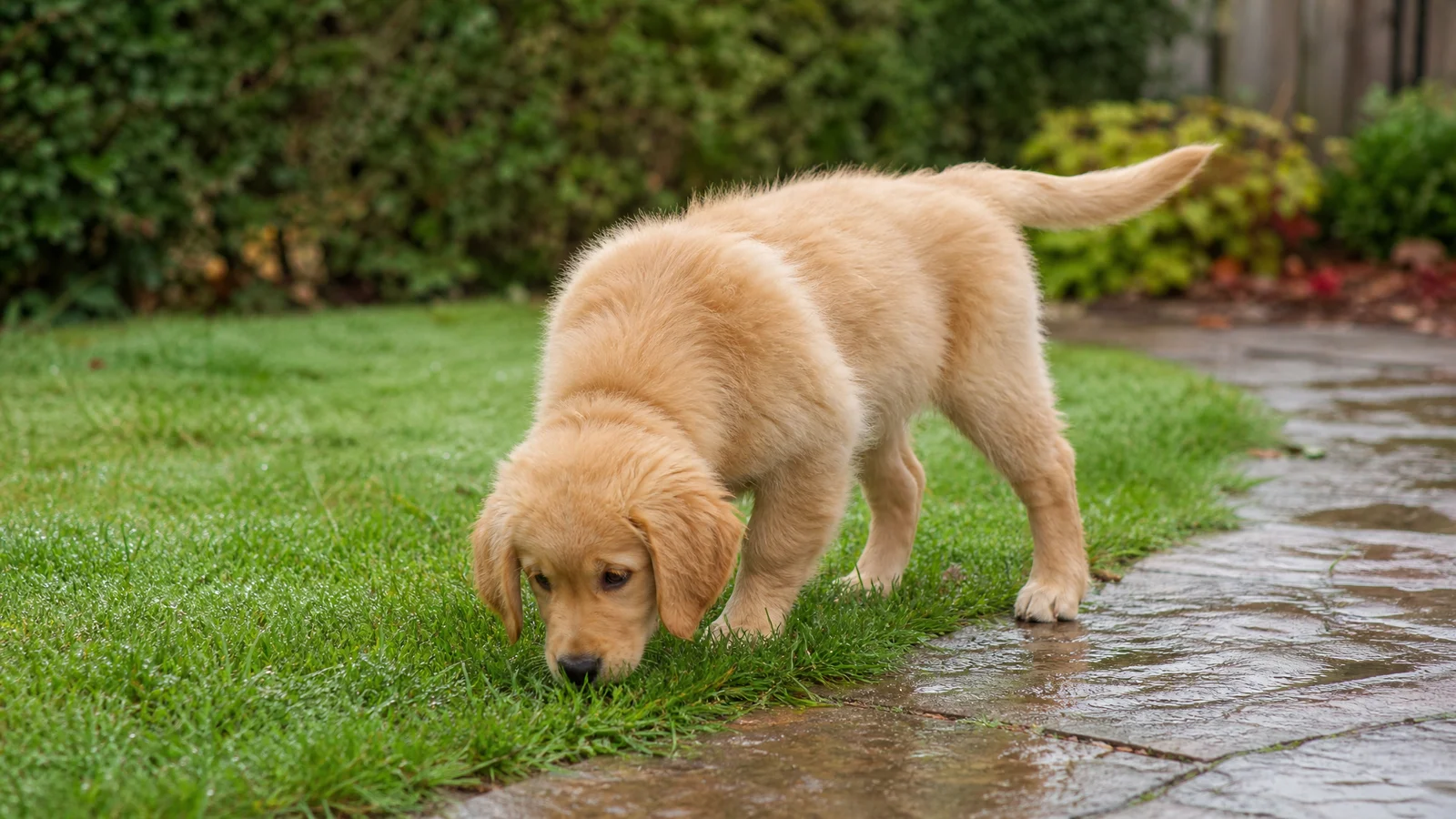
House training works when the right place is easier to reach before an accident happens. A Golden Retriever puppy needs repeated access to one clear toilet area, immediate reinforcement after finishing there, and supervision that matches what the puppy can reliably do today.
Do not build the routine around a fixed claim about how long a puppy should hold it. Use waking, meals, drinking, play, restlessness, and the individual accident record as prompts for another opportunity. The puppy's behavior supplies the schedule.
This guide follows the whole feedback loop. We will arrange trips, location, supervision, and rewards, then use accidents to revise the routine instead of treating them as disobedience. A separate section covers changes that belong with a veterinarian rather than another training adjustment.
Build the Golden Retriever Toilet Routine
Prepare the route before the puppy needs it. Keep shoes, leash, rewards, and cleanup supplies where the household can reach them quickly. Agree on the exit and toilet area so different family members do not create several competing routines.
Household consistency matters because a puppy meets the routine through several people, not through a written plan. The Golden Retriever Club material notes that dogs generally try not to soil their crate, which explains why a comfortable crate can help housebreaking. That useful tendency does not replace prompt toilet trips or attentive supervision.
Follow the House-Training Sequence
Use this general sequence every time. The details will change with the home, but the order keeps the feedback clear:
- Offer a toilet opportunity after waking, eating or drinking, play, and any behavior that usually appears before an accident.
- Take the puppy directly to the chosen area with as little indoor wandering as possible.
- Wait quietly and give enough room for the puppy to finish without turning the trip into play.
- Mark the completed behavior and reward immediately in that location.
- Return indoors for supervised freedom, a safe managed area, or rest based on what the puppy can handle next.
The reward belongs after completion, not when the puppy first squats or halfway through. Humane World for Animals recommends rewarding immediately after the puppy finishes. Staying at the toilet area for that moment makes the connection clearer than waiting until everyone is back in the kitchen.
Recognize the Opportunity
Watch transitions as well as obvious signals. A puppy who just woke, stopped playing, left the water bowl, began circling, moved toward an edge, or suddenly wandered away may need access outside. Offer the opportunity before asking whether the signal was certain.
Keep a simple note of the event before each successful trip and each accident. Patterns can emerge around a particular room, activity, doorway, or handoff between family members. The note should make the next decision easier, not become a rigid timetable imposed on every day.
Also record successful trips that happened before a strong signal. Successes reveal the household actions that worked, such as going out immediately after a nap or noticing that play had paused. Comparing both outcomes prevents the log from becoming a list of mistakes and helps each caregiver recognize this puppy's developing pattern.
Reward at the Right Place
Carry the reward outside so delivery can happen at once. The RSPCA's reward guidance explains that delivering something a dog values after a response encourages the dog to repeat it. Praise, food, or calm access to a favorite safe activity can work if the puppy values it.
Then allow a little safe sniffing when practical. If every successful toilet trip ends outdoor access immediately, some puppies may delay finishing to preserve the outing. Separate the reward from the trip home so completion does not always predict an instant end to everything interesting.
Choose a Golden Retriever House-Training Location
Choose a location that is safe, reachable, and consistent enough for the puppy to recognize. The route matters as much as the surface. A distant area behind several doors creates more opportunities for delay, while a clear path helps the household respond to early signals.
Use the same broad area while the habit is new, but do not turn one exact spot into the only acceptable answer. Weather, maintenance, travel, or access may shift the usable patch. Build recognition around the outdoor toilet context and the completion-reward sequence, not a single square of ground.
Surface changes can be a separate problem. A puppy who learned on one surface may hesitate on another without having forgotten the whole routine. Return to close supervision, offer more opportunities in the new context, and reward success there. Specialist surface-transition advice owns a persistent case beyond this initial method.
Keep the route calm. Play can follow after success, but racing, greeting neighbors, or exploring every corner before the puppy finishes can hide the purpose of the trip. Give the toilet opportunity first, reward it, then decide whether the puppy is ready for more outdoor time.
Practice the route when the puppy is calm enough to learn it. Open the same doors, move past the same distractions, and arrive without adding a stream of cues. A familiar path reduces decision points when the need is urgent. If the normal route becomes unavailable, supervise closely while teaching the temporary route as a new context.
Watch Your Golden Retriever Between Toilet Trips
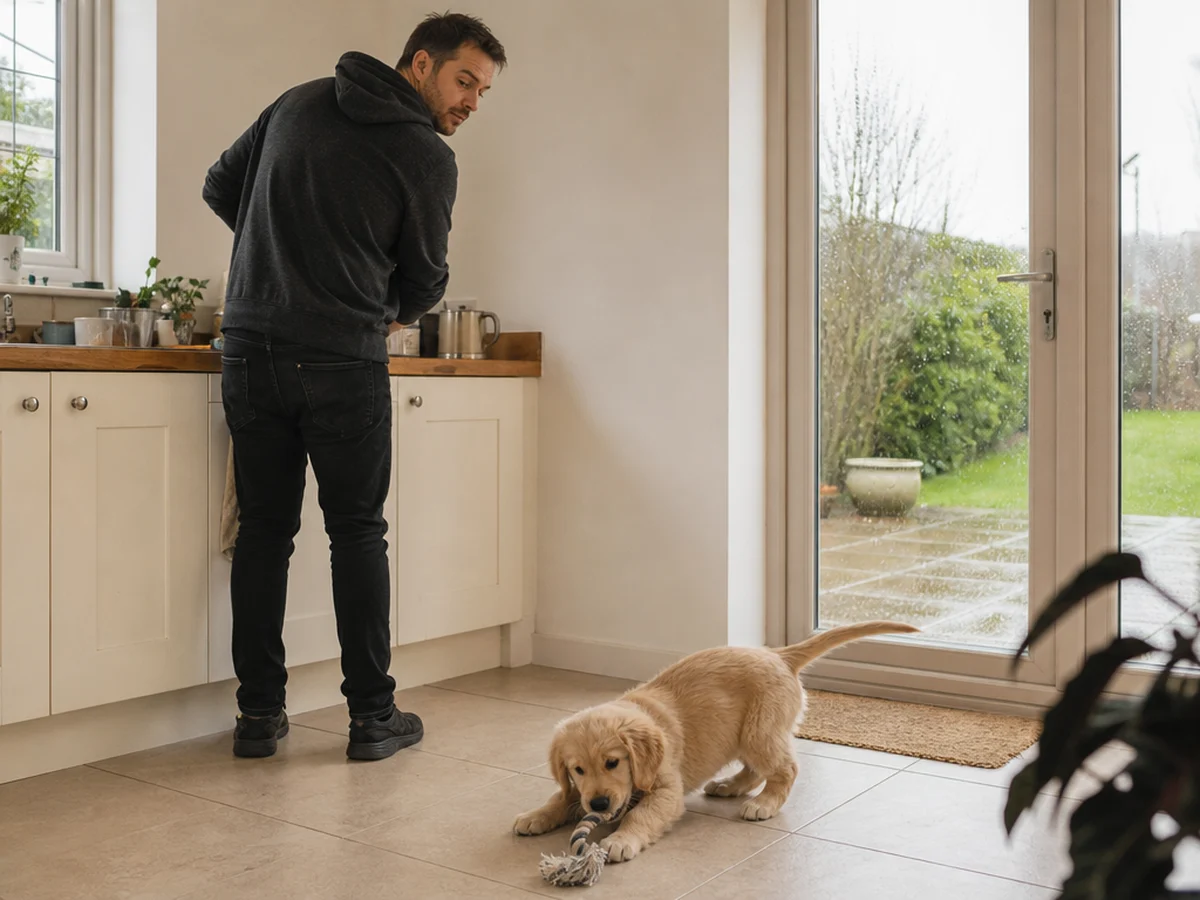
Freedom should match the evidence in the current room and routine. A puppy who has just toileted successfully may have supervised access near the family. A puppy whose signals are easily missed needs a smaller area or closer connection until the next planned opportunity.
When You Can Watch
Stay within view so you can respond when the puppy turns toward furniture or leaves the shared area. Use a gate, a puppy-safe room, or a supervised household leash when appropriate. The goal is not constant instruction. It is keeping the puppy within the part of the home where an adult can respond.
Puppy-proofing supports the same lesson. Remove absorbent items, block hidden corners, and keep exciting objects from pulling attention away when the puppy begins to search for a place. A manageable room makes both signals and mistakes easier to interpret.
Decide who is watching before attention shifts to a call, meal, visitor, or child. A vague assumption that someone else has the puppy creates gaps that look unpredictable later. Use a clear handoff, including whether the puppy has toileted and what usually comes next, so the routine survives changes between caregivers.
When You Cannot
Use a safe managed area suited to the puppy and the length of the interruption, then provide another toilet opportunity when supervision resumes. A crate can support management, but it is not a schedule and cannot justify delaying access beyond the puppy's present needs.
The existing Golden Retriever crate guide owns comfortable setup and confinement skills. House training keeps the narrower job of matching access, observation, and reward timing. A puppy who is not comfortable in the crate needs that separate plan.
Rest can also change the next opportunity. After a nap, take the puppy to the toilet area before opening access to the whole room. This keeps waking linked with the route outside and prevents the first energetic minute from becoming an indoor search.
Read Golden Retriever House-Training Accidents as Information
Interrupt only when you can calmly guide the puppy to the correct area. If you find an accident afterward, clean it and update the routine. A reaction after the event cannot show which earlier choice you wanted, while the household can still use the context to prevent a repeat.
Record enough detail to choose one adjustment. The table turns common contexts into practical changes without claiming that one accident explains the puppy:
| Accident Context | What May Have Been Missed | Next Routine Adjustment |
|---|---|---|
| Shortly after waking | Indoor activity began before the toilet opportunity | Go directly outside when rest ends |
| During or after play | The transition signal was hidden by excitement | Pause play and offer an earlier trip |
| In a newly opened room | Freedom expanded faster than supervision | Return to the previous area and add the room gradually |
| Near the exit | The puppy signaled but the route was too slow | Move supplies closer and simplify the doorway routine |
| Repeatedly in one hidden spot | Access exceeded visibility | Block the spot and keep the puppy nearer an adult |
Clean the area thoroughly so the old location does not keep providing a familiar odor cue. Then change access or timing rather than waiting to see whether the same setup fails again. One adjusted variable gives better feedback than changing the location, reward, schedule, and supervision all at once.
Review the record after ordinary household disruptions such as a changed workday, a visitor, or access to another room. The useful question is what opportunity or observation changed. Restore the last workable arrangement first, then test one small change after the puppy is succeeding again.
An accident in a new room does not erase success elsewhere. It shows that the behavior did not transfer under those conditions. Shrink the area, restore the earlier routine, and build a short history of success before opening the room again.
When Golden Retriever House Training Needs the Vet
A new pattern in a previously reliable puppy or dog deserves more than another schedule adjustment. Frequent urination, difficult or painful urination, and toileting in unusual places can be signs of a health problem according to the Merck Veterinary Manual. Contact your veterinarian rather than trying to train through those changes.
Keep regular vet visits and describe what changed, when it began, and what you observed. Continue safe access to the toilet area while you seek guidance, but do not treat straining, discomfort, leaking, or a sudden loss of reliability as stubbornness. The medical question must be addressed before the training record can be interpreted.
House-Training Questions Beyond the Routine
The body has covered opportunities, location, reward timing, supervision, accident logging, and veterinary changes. These remaining questions address household coordination, weather, and a setback in a newly opened room without repeating the full method.
- Should everyone use the same puppy toilet area?
- Use the same general area and completion-reward sequence while the habit is new. Family members should agree on the route, cue if one is used, and reward timing. Small differences in where a person stands matter less than a clear, accessible context.
- Can bad weather change a Golden Retriever puppy's toilet behavior?
- Yes, a changed surface, sound, temperature, or routine can make the context harder. Keep the trip calm, shorten unnecessary waiting, and reward completion in the correct area. Do not assume indoor success means the puppy understands every outdoor condition.
- Does an accident in a new room erase earlier progress?
- No. It shows that supervision or context changed faster than the behavior transferred. Close the room again, restore the successful routine, and add access in smaller supervised steps.
Expand House-Training Freedom When the Evidence Supports It
Add one room, one transition, or one longer supervised period after the puppy has a useful record of successful trips and visible signals in the current setup. The Golden Retriever first week guide can help organize the broader arrival while this page keeps toilet access and reinforcement in focus.
If accidents return, reduce freedom without drama and review the log. Reliability in one context is evidence for a small next step, not proof that every room and routine is ready. Let repeated success, clear signals, and prompt household response determine expansion rather than the calendar alone.
Make the new freedom observable. Open one boundary while keeping the next one closed, stay near enough to see the puppy's choices, and preserve the established toilet route. That controlled change shows whether the skill travels with the puppy. If it does, the household has evidence for another small expansion. Keep noting successful transitions so the record shows whether each new room has become dependable.
 Training basicsHow to Teach a Golden Retriever to Come When Called
 BehaviorGolden Retriever Resource Guarding: Safer Trades and Boundaries
 Training basicsHow to Choose a Golden Retriever Trainer