 Golden Retriever
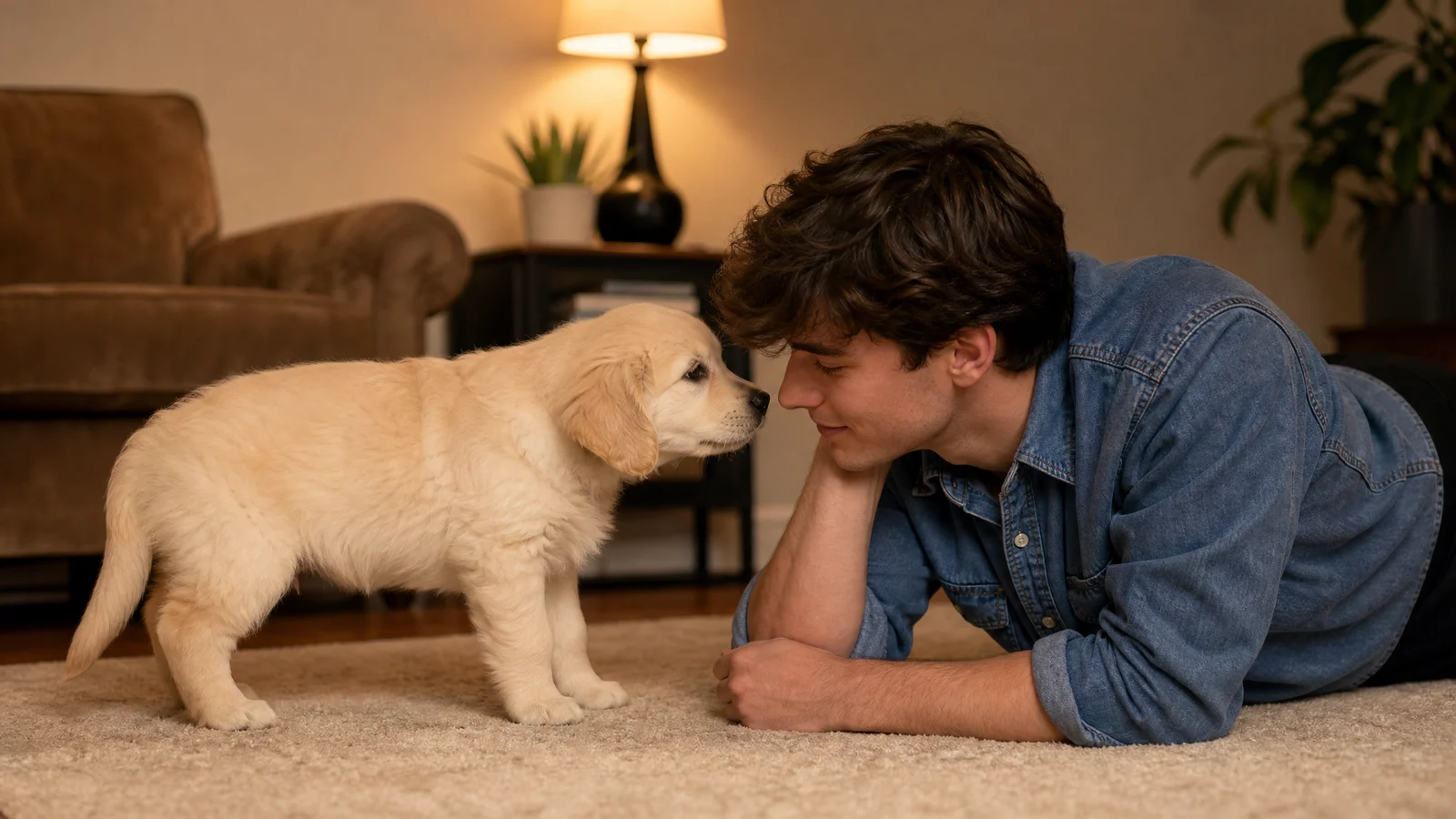
The first week is less about collecting commands than making daily life predictable. A Golden Retriever puppy can begin learning as soon as they arrive, but safety, sleep, toilet opportunities, food, and calm access to the household come before a long lesson plan.
Early training happens through small choices. The puppy follows a person, settles near a bed, pauses before a doorway, allows brief handling, or turns toward a familiar sound. Those moments can be rewarded without asking an infant dog to perform like an older puppy.
This guide maps the first responsibilities and sends each detailed problem to its proper owner. We will separate management from cue practice, show how to recognize a useful learning opportunity, introduce new experiences without overload, and use the age timeline as navigation rather than a promise.
Your Golden Retriever Puppy Needs More Than Cue Practice
A puppy learns from everything that happens after a choice, not only from formal sessions. Reaching a shoe can start a chewing pattern, following you outside can start a toilet routine, and lying on a mat can begin a resting habit. Arrange the environment so ordinary choices are safe enough to reward.
Sleep and recovery are part of learning. A tired puppy may grab clothing, stop responding, race through the room, or struggle to settle. That does not automatically mean the puppy needs a harder lesson. Reduce the activity, offer an appropriate resting place, and resume teaching when the puppy can take part again.
Management Comes First
Use doors, gates, a puppy-safe area, a leash where appropriate, and close supervision to prevent access to hazards and protect habits that are not ready. Management is not a substitute for teaching. It creates the conditions in which the right response can happen and receive a reward.
Agree on household rules before the puppy rehearses several versions. PDSA's first-day guidance recommends deciding rules such as furniture and off-limits rooms in advance and having everyone follow them. Consistency makes the environment easier to understand.
Care Before Cue Practice
Treat the first days as orientation rather than a performance period. The adult behavior you eventually want should guide which safe choices you arrange now, not how many skills the puppy must display. Preventing a rehearsal can be more useful than adding another cue.
Build a responsibility list for the household: safe rest, supervised movement, predictable toilet access, appropriate items to mouth, brief handling, and calm social contact. Assign each need before the puppy arrives so several people do not give competing instructions when care becomes busy.
Keep regular vet visits and ask your veterinarian about a sudden change in appetite, movement, sleep, or willingness to participate. Pause training when discomfort may be involved. This page organizes ordinary puppy learning and does not replace individual health guidance.
A Puppy Training Page for Each Need
The entry page should help you choose, not compress every puppy method into one body. Start with the need affecting daily life today. The table shows what this overview can clarify and where a complete method belongs.
| Immediate Need | Detailed Topic Owner | What Stays on This Page |
|---|---|---|
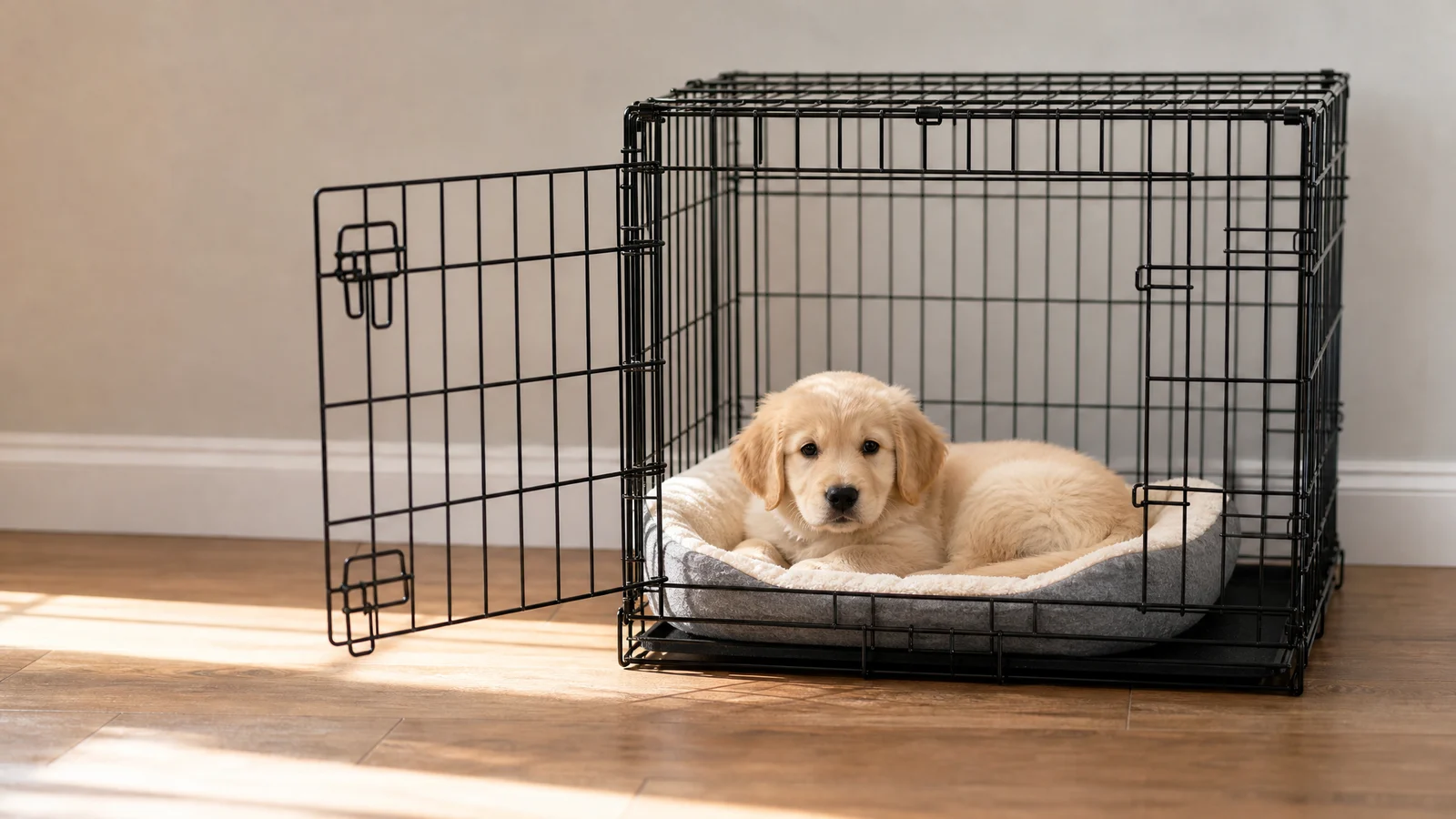
| The puppy cannot settle in a crate | Golden Retriever crate training | Recognize that rest and confinement are separate from cue practice |
| Indoor accidents continue | Golden Retriever house training | Protect regular opportunities and route the full schedule elsewhere |
| Mouthing disrupts play | Golden Retriever puppy biting | End an overloaded interaction and choose the dedicated plan |
| New people or places feel difficult | Golden Retriever socialization | Use choice, distance, and recovery before adding more exposure |
| The family wants age priorities | Golden Retriever training timeline | Select the current stage without treating it as a deadline |
| A first cue is ready | The dedicated cue guide | Set up one small reward-based learning opportunity |
These topics interact, but they do not become one method. A puppy who bites when exhausted may also need rest, while a puppy who has an accident may need a clearer household routine. Name the immediate need first, then use the specialist page without asking one exercise to solve every part of puppy life.
Use the routing table as a daily triage tool. Safety and basic care come first, then the need causing the most disruption, then optional cue practice. If two needs interact, choose the one that makes the next routine safer and send the second to its owner page afterward.
Do not wait for all management problems to disappear before rewarding useful behavior. Mark a quiet look, a voluntary approach, or a pause at the doorway as it happens. At the same time, keep the complete crate, house-training, biting, and socialization plans with their owners so this entry route stays usable.
What Can a Golden Retriever Puppy Learn Now?
A puppy can learn which choices make good things happen. Begin with behaviors that already appear naturally, such as following, looking toward you, stepping onto a mat, or pausing near a door. Mark the useful moment and provide a reward that fits the situation.
Blue Cross training guidance supports pairing a clear marker with a valued reward. The marker helps separate the exact behavior from everything else the puppy was doing. Deliver the reward promptly, then give the puppy room to choose again.
Tiny Daily Opportunities
Use short opportunities inside care rather than building a packed class at home. Reward the puppy for entering the safe area, orienting to their name, standing calmly for a brief touch, or following you away from an unsafe object. Finish while the puppy is still able to eat, move, and recover normally.
Change only one part of a lesson at a time. A response learned in the kitchen may look different in the yard, with another family member, or after a noisy event. Return to the easy version when the puppy hesitates. The environment changed, so the lesson needs clearer support.
Handle feet, ears, collar, and coat in brief, comfortable moments. The ASPCA grooming guidance advises preparing a puppy for foot care before attempting nail clipping. Begin with a momentary paw touch, reward the relaxed response, and finish before the puppy needs to withdraw.
A Consistent Household Vocabulary
Choose one word for each response and make sure the household uses it the same way. The puppy's name can ask for orientation, a release word can end a pause, and an everyday cue can request one familiar behavior. Avoid turning the same sound into a greeting, warning, recall, and repeated background noise.
Consistency also includes what follows. If one person rewards four paws on the floor while another invites jumping, the puppy receives two workable rules. Decide which behavior fits the home, arrange greetings so it can happen, and reward it across family members.
Children can help with simple, supervised parts of the routine, such as preparing a reward cup or recording which room was easy. A grown-up manages the space, puppy access, and the stopping point. The goal is a clear learning history, not making the puppy responsible for resolving mixed instructions.
New Experiences Without Puppy Overload
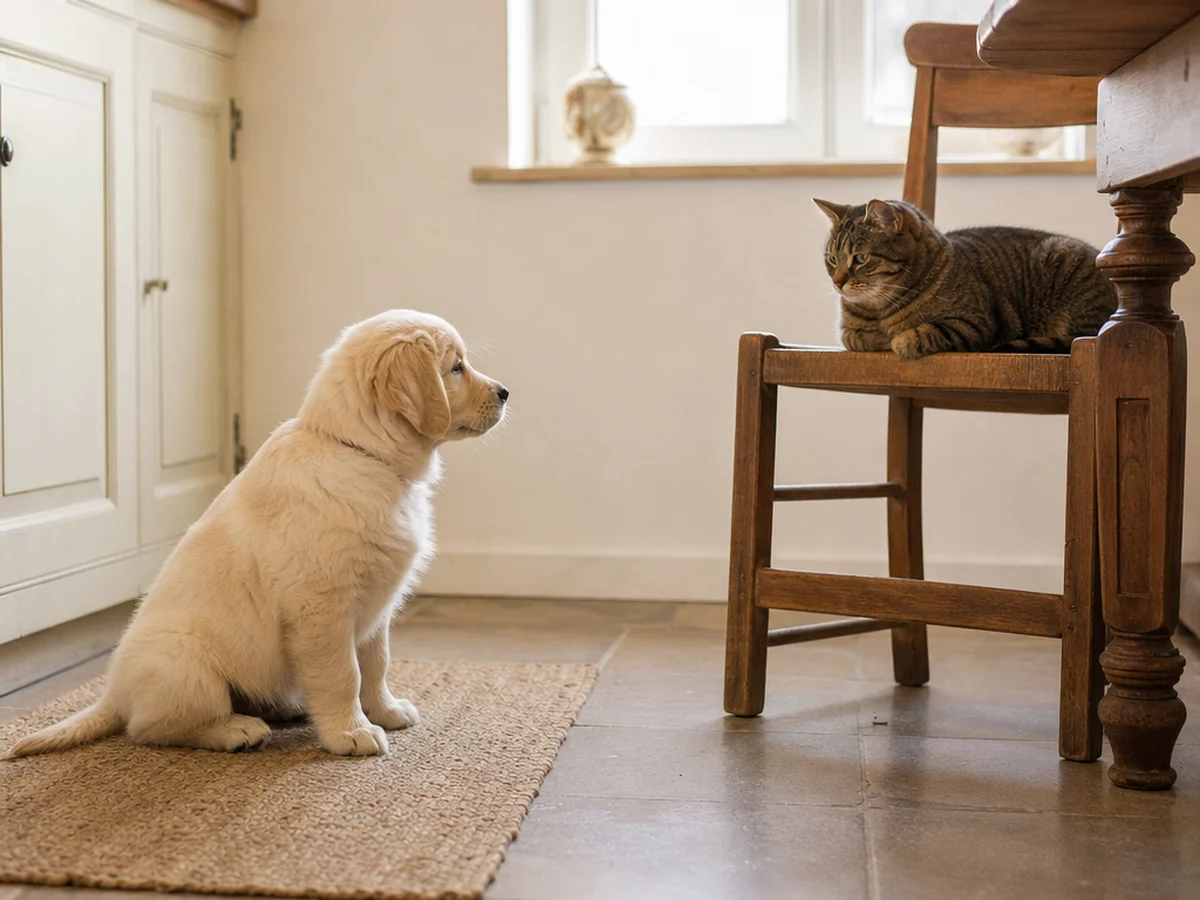
New experiences should add information while leaving the puppy able to recover. Let the puppy observe a surface, sound, person, object, or calm animal from a workable distance. Reward neutral or interested engagement, then allow space instead of pushing the puppy closer.
The American Veterinary Medical Association recommends rewarding positive or neutral engagement and letting a puppy withdraw when uncomfortable. That makes recovery part of the plan. Moving away can preserve trust and create a better starting point for another day.
Watch the whole response. A puppy who can look, take a reward, move normally, and return to ordinary activity is giving different information from one who freezes, hides, refuses food, or remains unsettled afterward. Reduce distance, duration, or complexity when recovery becomes difficult.
One calm exposure can be more useful than a crowded series. New people do not all need to touch the puppy, and a new place does not require a long visit. Let observation count. The dedicated socialization owner can later supply the complete progression without turning this entry page into an exposure schedule.
Keep health and access questions with your veterinarian. Choose settings that fit the puppy's current health guidance and physical comfort. Training decisions can control distance and pace, while veterinary advice owns which environments are appropriate for the individual puppy.
Use the Timeline for Changing Puppy Priorities
Age ranges help families find the next responsibility, but they do not promise that a behavior appears or disappears on a birthday. Use the six-stage timeline to ask what needs support now, then compare the puppy with their own earlier baseline rather than with a fixed image of another dog.
Each stage changes the questions, not the dog's worth. Early pages emphasize arrival and guided exposure, while later pages help the family recognize growing independence and changing distractions. The entry map stays useful because it keeps directing each new concern to the method that owns it.
The stage page can organize arrival, early social learning, growing independence, adolescence, and later practice. It should not erase the evidence in front of you. A puppy who needs more rest stays with an easier routine, while one who is comfortable can take a small new step without racing through the rest of the calendar.
Revisit the plan when the pattern changes. Look for practical signs rather than waiting for an age marker:
- A familiar response disappears in a new room, around a visitor, or after the setting becomes busier.
- The puppy can no longer settle after the amount of activity that was manageable before.
- A household rule works with one person and falls apart with another.
- Handling, grooming, or ordinary movement becomes less comfortable than it was.
- The current problem belongs to a detailed owner page rather than another general lesson.
Return to the last clear setup and change one factor. Keep notes short enough to use: location, need, response, reward, and recovery. That record helps the family identify a pattern without turning normal variation into a deadline or a character judgment.
Golden Retriever Puppy Questions
The main body has separated management from teaching, routed detailed methods, and explained experience pacing and stage navigation. These questions fill the remaining gaps about reward types, children's participation, and a puppy whose age no longer matches a stage heading.
- Should every puppy lesson use food?
- No. Food can be convenient, but play, access to sniffing, a calm greeting, or release to a safe activity may also be valuable. Choose a reward the puppy wants in that moment and keep the exchange comfortable.
- Can children help record puppy training progress?
- Yes, with adult supervision and a simple job. A child can note the room, the behavior, or whether the puppy recovered easily, while an adult manages the puppy and environment. The record should support consistent care rather than become a score the puppy must improve.
- What if the puppy is older than the age window on a stage page?
- Start with the skill and comfort visible now. Use the age page for navigation, then choose the earliest relevant responsibility that is not yet stable. A missed window does not justify rushing several lessons at once.
Pick One Puppy Need for Today
Choose the need that most affects safety or ordinary care today. That may be a quiet resting setup, a toilet opportunity, relief from an overloaded interaction, one comfortable handling moment, or a clear household rule. Use the matching owner page when the issue needs a full method, and keep this overview as the map.
Then create one small success and stop. Reward a useful choice, note where it happened, and protect the conditions that made it possible. Puppy training begins immediately, but it grows through manageable days rather than a race through every cue. One clear priority gives the Golden Retriever puppy and the household a fair place to begin.
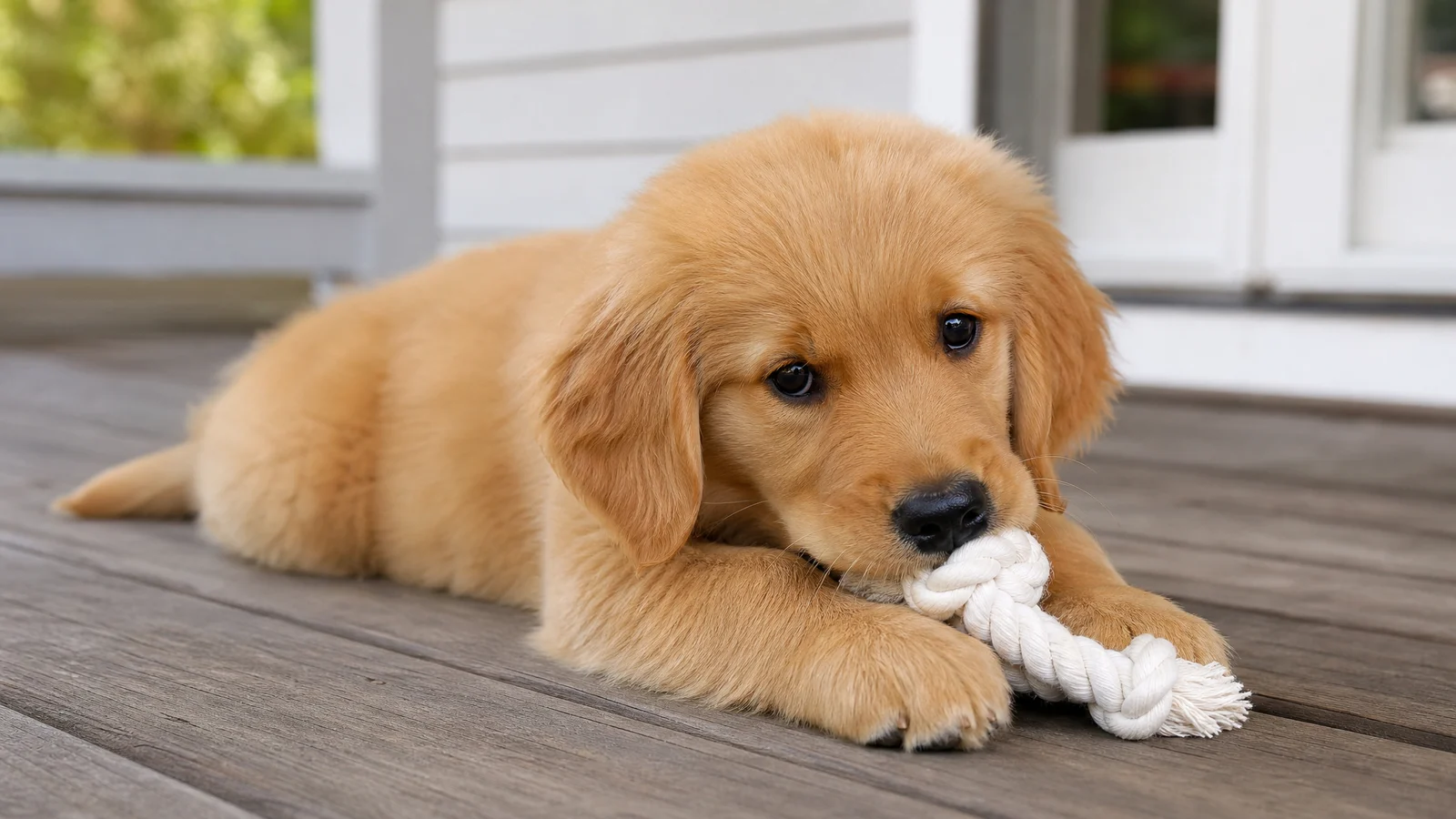 Puppy trainingGolden Retriever Puppy at 3 to 4 Months: Teething and Mouthing
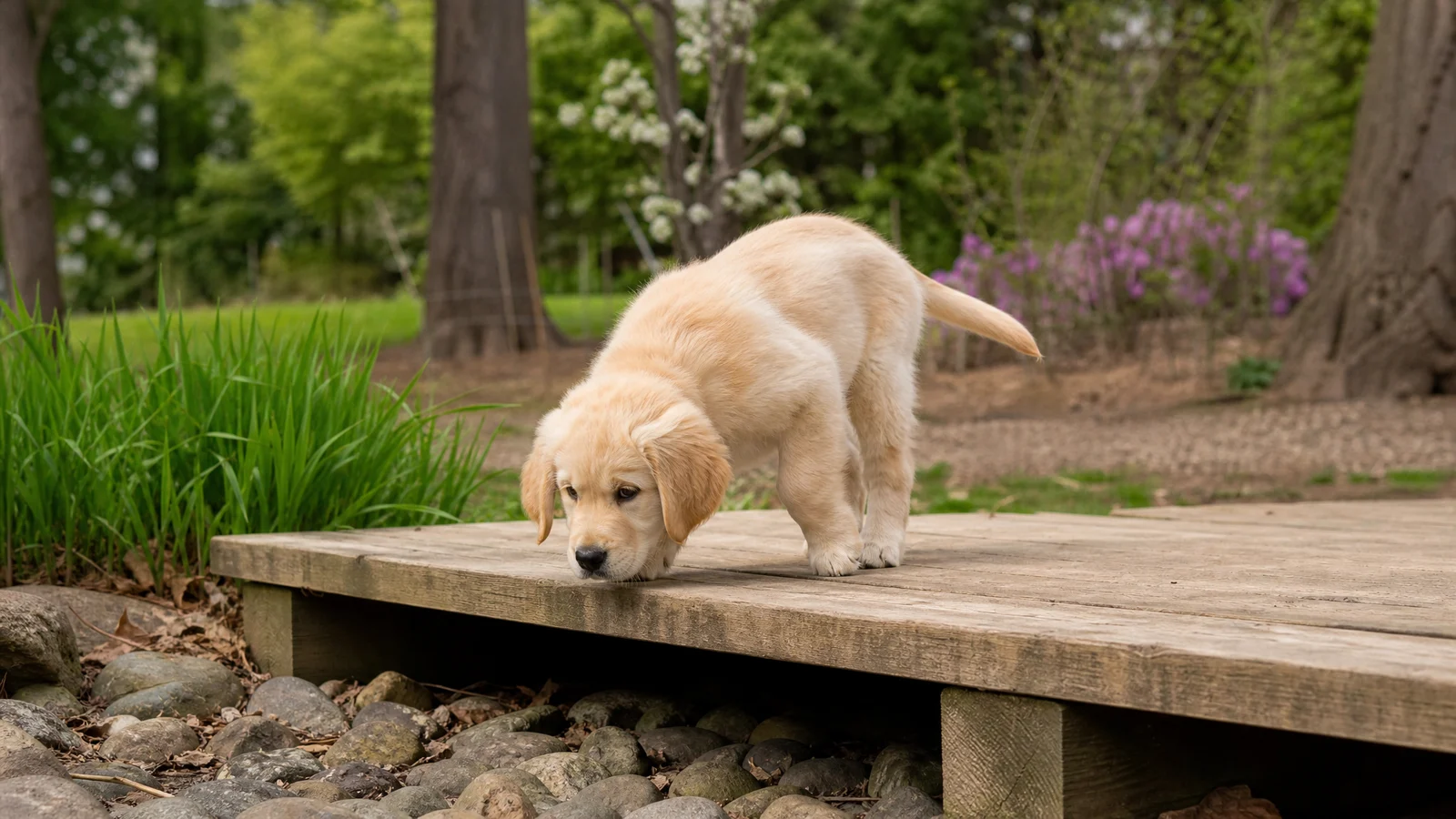 Puppy trainingHow to Socialize a Golden Retriever Puppy
 Puppy trainingHow to Crate Train a Golden Retriever Puppy