 Golden Retriever
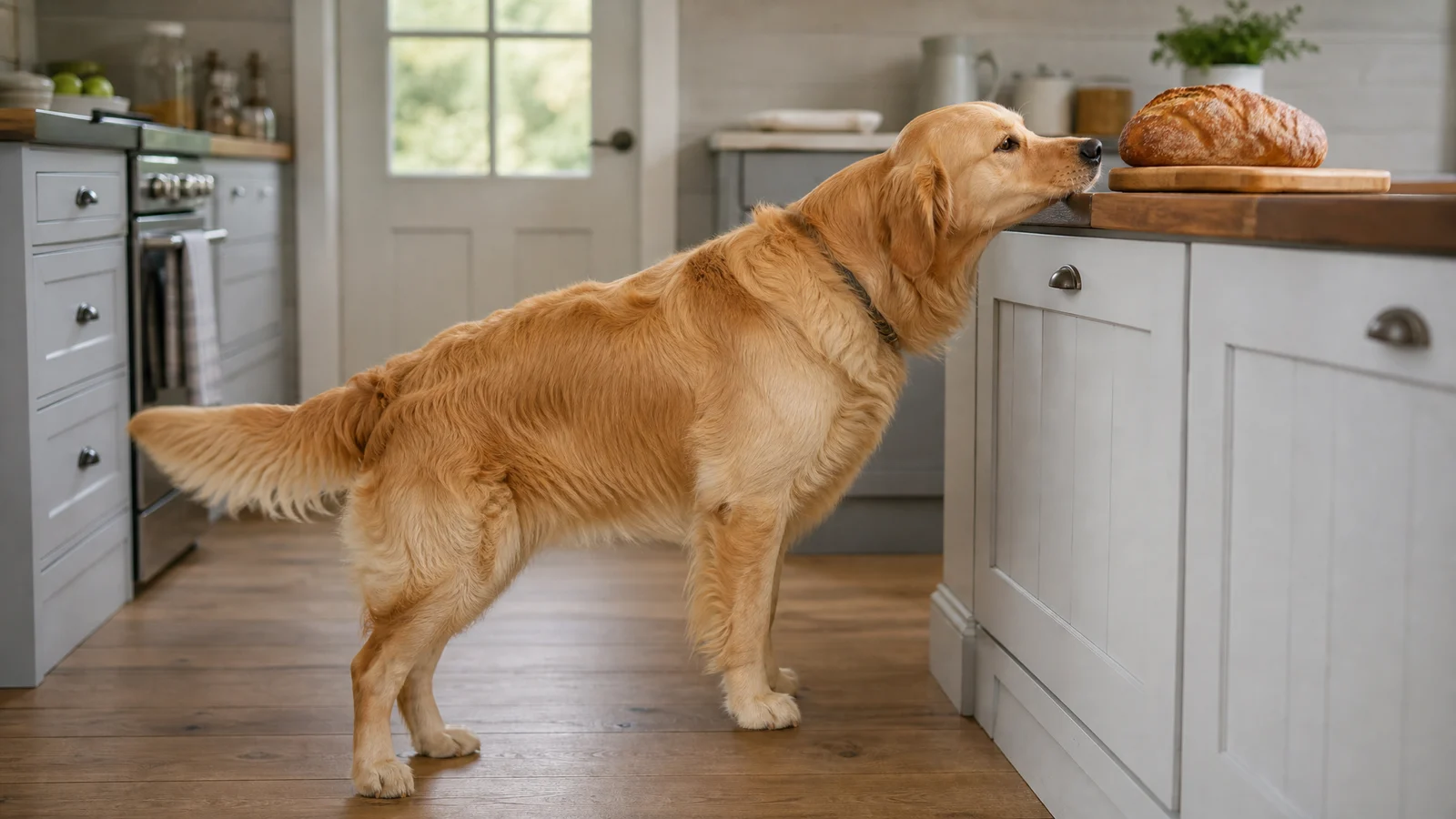
A Golden Retriever can keep checking the counter even when nobody deliberately feeds them there. Sometimes a stolen crumb pays, and sometimes the person calls them down, reaches for food and starts an engaging interaction. The counter has become a place that makes something happen, so simply teaching a response after paws rise may leave the earlier part of the pattern intact.
We will trace where the reward arrives and which action comes just before it. This guide builds a useful destination away from the counter, then adds kitchen movement without making jumping the start of every lesson. It also separates a leave-it cue from a waiting routine and explains how to respond to setbacks. Secure food storage remains part of the arrangement while the new choices develop.
The Golden Retriever Counter Payoff Beyond Stolen Food
Watch the sequence during an ordinary supervised kitchen moment with surfaces safely clear. Does the dog look toward the counter, rise, come down when called and receive food? If that whole sequence repeats, the useful change may be rewarding earlier, before the upward movement begins.
This does not mean withholding a necessary trade after an unsafe grab. Immediate safety still matters. It means arranging the next ordinary lesson so the dog does not have to make a mistake to start an interaction.
The humane dog training statement supports reward-based teaching. In this situation, define the response you want to reinforce: approaching a mat, standing comfortably away from the edge or remaining at a resting place while you move.
Separate food access from attention seeking in your observations. The same dog may check the counter for both reasons at different times. You do not need to assign one permanent motive before you can secure the food and reward a better choice.
A tall or growing Golden may reach something while all paws remain down. Judge access by what the mouth can reach, not only by whether front feet appear on the surface. The useful rule concerns food access as well as posture.
Counter Access While Golden Retriever Training Develops
Remove food, wrappers and other tempting items from reachable surfaces. Use secure storage and a suitable barrier when you cannot supervise. Pushing something farther back is useful only when it is actually beyond the dog's reach.
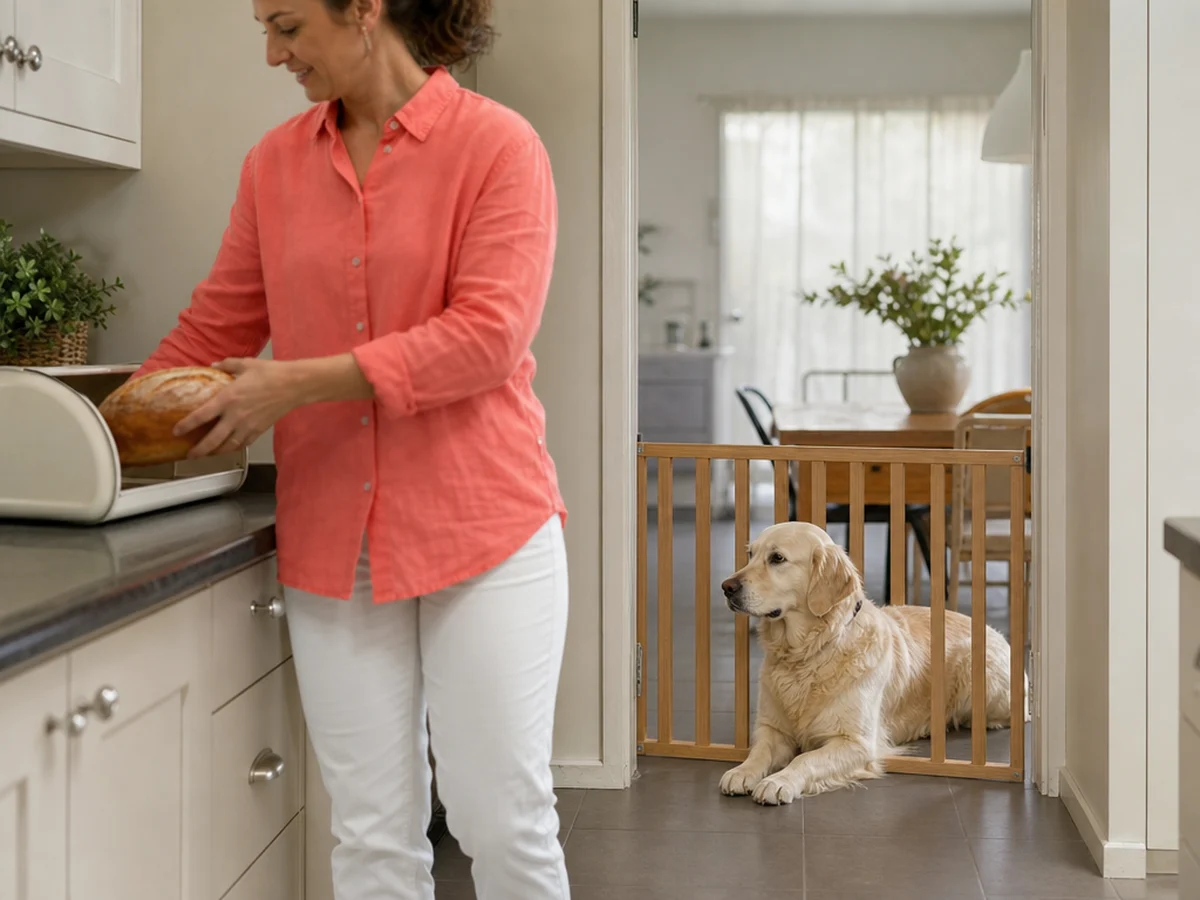
Check the whole room, including tables, trash, bags and the open dishwasher. A counter lesson will not prevent rehearsal if another nearby surface provides the same opportunity. Keep the managed area comfortable, with appropriate access to water and rest.
- Put food in closed storage before leaving the kitchen.
- Keep the dog outside the work area when a task requires full attention.
- Clear dropped items before allowing access to the floor.
- Tell guests where to place plates so the household rule stays practical.
Management can improve the situation immediately while learning takes longer. Do not remove the barrier solely because the counter has been clear for several days. The absence of theft shows that access is controlled, not that every tempting item can now be left available.
Make the plan easy for the busiest person in the household. A storage place that requires several awkward steps is more likely to be skipped. The physical arrangement should support the behavior you want from people as well as from the dog.
Reward Delivery Away From the Counter
Choose a rewarding location that does not draw the dog back toward food preparation. A mat outside the work lane can serve this purpose, or you can begin with a comfortable grounded position beside you away from the counter. Keep your own body clear of hot or sharp equipment.
Mark the useful choice before reaching for the reward. Then deliver it where the dog can collect it without jumping or crossing into the work area. Your hand movement should support the destination rather than lure the dog toward the counter edge.
Battersea's clicker training basics explain the link between a marker and the action it identifies. Use that timing to distinguish a voluntary move toward the station from a return after a counter attempt. The earlier choice needs its own history of paying well.
Watch what happens after the dog eats. If they immediately return to inspect the counter, your interval may be too long or the waiting behavior too new. Simplify the lesson with clear surfaces and more frequent rewards at the useful location.
A food reward does not need to arrive from the counter itself. Prepare what you need beforehand and keep it safely accessible to the adult teaching. Reaching toward a food-covered surface every time can keep the dog's attention on the wrong place.
A Golden Retriever Mat With an End Cue
Teach the mat away from cooking first. Reward a voluntary approach and steps onto it, then comfortable standing or lying there. Keep the first stay brief enough that the dog can succeed without repeated reminders.
Give a release cue and allow the dog to leave after an easy success. A resting destination needs an ending as well as a beginning. If you silently extend the wait whenever the dog does well, leaving may become the only way they discover that the lesson is over.
The Dogs Trust settling lesson develops relaxed behavior gradually. Follow the dog's comfort when adding time. A tense down with constant watching of the food hand is different from a dog who can shift position and rest between rewards.
Keep release into a safe area while kitchen access remains managed. The end cue does not need to open the route to food. You can release into a quiet activity elsewhere, then return to a new short mat lesson later.
- Reward an easy approach to the mat in a quiet setting.
- Build a brief comfortable stay with rewards delivered on the mat.
- Use a release before the dog becomes restless.
- Add a little time only after the current stay is ordinary.
Practice with another adult once the arrangement is familiar. Show them where rewards arrive and when you release, so the dog is not asked to learn a different duration rule from each person.
Kitchen Movement Around the Counter Lesson
Add harmless kitchen actions before actual food preparation. Touch a cupboard, carry an empty plate or take a step toward the sink while the dog remains at the familiar destination. Reward the useful response and stop the movement before increasing difficulty.
A dog who rises when you move may need a shorter action, more space or a clearer end cue. Change one feature instead of making the next attempt longer and more distracting. The counter can remain clear throughout this practice.
Use barriers during tasks that cannot safely pause. Hot cookware and sharp tools do not belong in a lesson where you are still discovering whether the dog can stay out of the path. Management protects everyone while the ordinary movement practice develops.
Our Golden training foundations help keep cues and rewards consistent. You can use those familiar signals for a small kitchen lesson without narrating every action. A few clear moments usually give better information than continuous talking.
Extend the behavior across different times of day only after the easy version works. A quiet morning practice and a crowded evening meal are different settings, even in the same room. Return to a shorter stay when the surrounding activity changes.
Keep one short practice period separate from actual meal preparation. That gives you time to notice the dog's first choice and reward it accurately, without also watching a pan or answering someone at the table.
Leave It Beside a Clear Counter
A leave-it cue addresses a particular object or opportunity. It does not tell the dog how to spend the whole time while you prepare a meal. Keep that skill separate from the mat routine so each word retains a practical meaning.
Teach disengaging from safe, protected items away from the kitchen before applying the skill near a counter. Use enough distance and management that the dog cannot obtain the practice item. Reward turning away with something delivered elsewhere.
The leave-it and release lessons distinguish an object not yet taken from one already held. Use the appropriate response if something is picked up, and seek prompt veterinary advice when an unsafe item may have been swallowed.
Do not keep placing food at the edge to test the cue. That creates repeated opportunities for the very behavior the household is trying to prevent. Ordinary controlled practice can build the skill without using a real meal as a training prop.
Counter Setbacks Worth Distinguishing
Identify which part of the arrangement failed before changing the whole plan. An open gate, an overly long mat stay and a reward delivered after jumping call for different adjustments. A specific description makes the next meal easier to prepare for.
| What happened | What to change |
|---|---|
| Food remained accessible while nobody watched. | Repair storage and access routines. |
| The dog left the mat as waiting grew longer. | Shorten the stay and release clearly. |
| Jumping repeatedly started the reward sequence. | Pay useful choices before the upward movement. |
If the dog already has an item, avoid a chase and use a safe familiar exchange when appropriate. Keep children away from uncertain retrievals. Stiffening or guarding around possessions needs qualified help and a management plan that prevents repeated conflict.
Discuss unexpected appetite changes or persistent object eating at regular veterinary visits. A household training plan can address learned opportunities, but it should not explain away a new change in the dog's behavior without considering their health.
A Golden Retriever Kitchen Worth Maintaining
Keep rewarding the destination you want, especially before a difficult period of cooking. A dog who goes there voluntarily is offering a useful choice. Notice it even when you did not first have to call them away from the counter.
Retain the storage habits that make mistakes less likely. Good training does not require leaving food available without supervision. It gives the dog clearer options during the time you can actively share the kitchen.
As the routine becomes familiar, adjust the amount of waiting and household movement gradually. The practical change is that the counter no longer has to start the interaction. Your Golden has another place where choosing well already works.
 BehaviorTeaching Golden Retrievers Polite Play With Other Dogs
 Training basicsLoose Leash Walking With a Golden Retriever
 Training basicsHow to Teach a Golden Retriever to Heel