 Golden Retriever
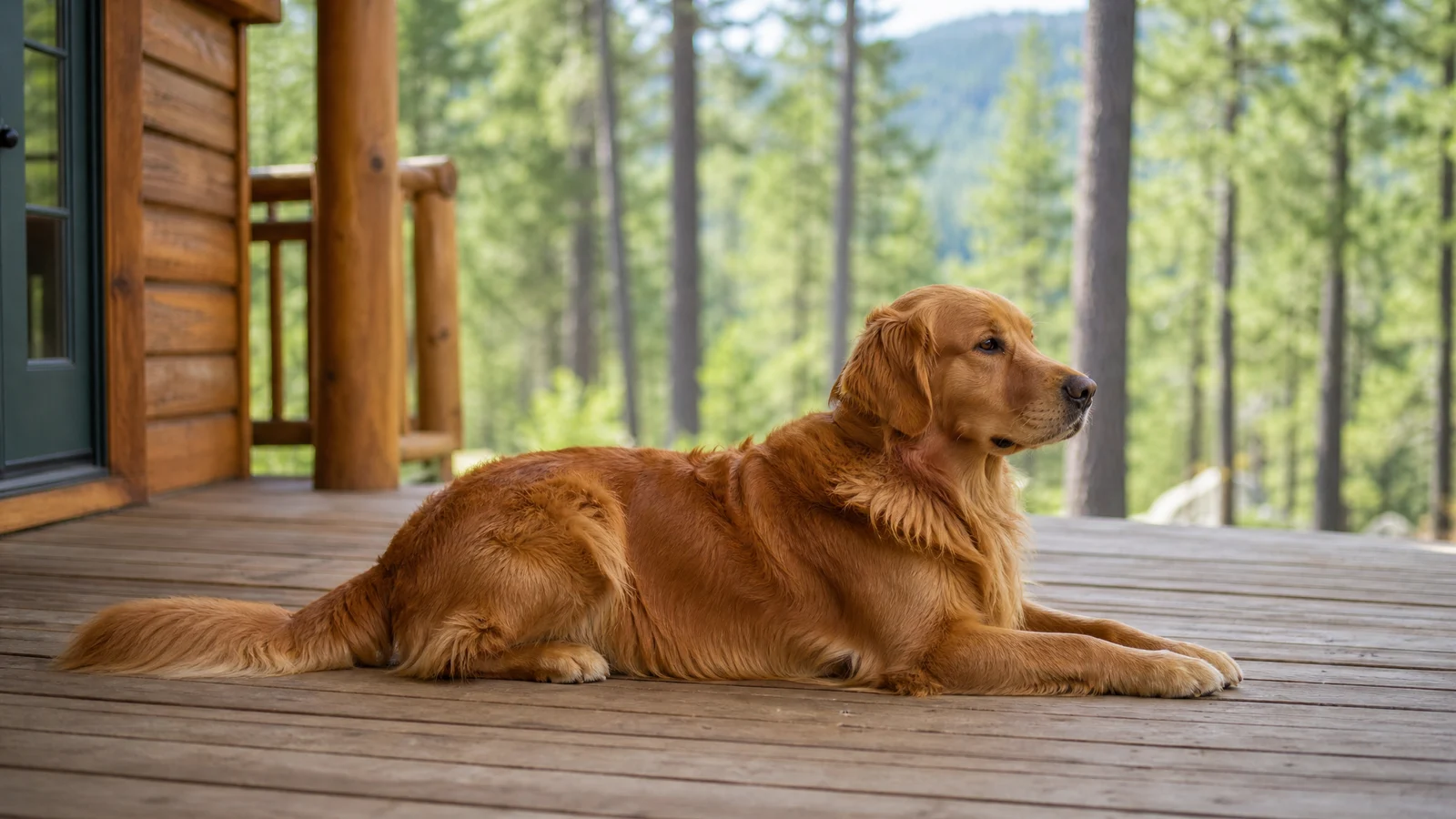
Teach a Golden Retriever to lie down by guiding a voluntary movement toward the floor, marking the completed position and rewarding without pressing on the dog's body. Begin on comfortable footing and make the path easy enough that the dog can choose to follow it.
The down cue names the movement into a lying position. It does not automatically ask the dog to remain there, relax for a long period or settle on a mat. Keeping those jobs separate makes each cue easier to understand.
This guide covers surface checks, the food-guided movement, the transfer to an empty hand and the boundary between down, stay and settle. We favor brief, successful practice. Keep routine veterinary visits, and pause for veterinary guidance if lowering the body looks painful, stiff or newly difficult.
Help the Golden Retriever Find a Comfortable Down
Start on a rug, mat or another surface where the paws do not slide. Give your Golden enough room to lower the chest and extend the front legs without meeting furniture or a wall. A dog who readily lies down elsewhere but stalls in the training spot may be responding to the surface or available space.
Notice the dog's ordinary movement before presenting food. If they sit comfortably and then fold toward the floor, that route may be useful. If sitting appears awkward, begin from standing and guide the nose down without forcing the hips first. Do not push the shoulders or pull the legs into position.
Willingness matters more than speed. If the dog backs away, stands up repeatedly or stops following a familiar reward, reset on a better surface and simplify the path. A physical change or repeated reluctance is a reason to stop and seek veterinary guidance, not to apply more pressure.
Teach Down With the General Method
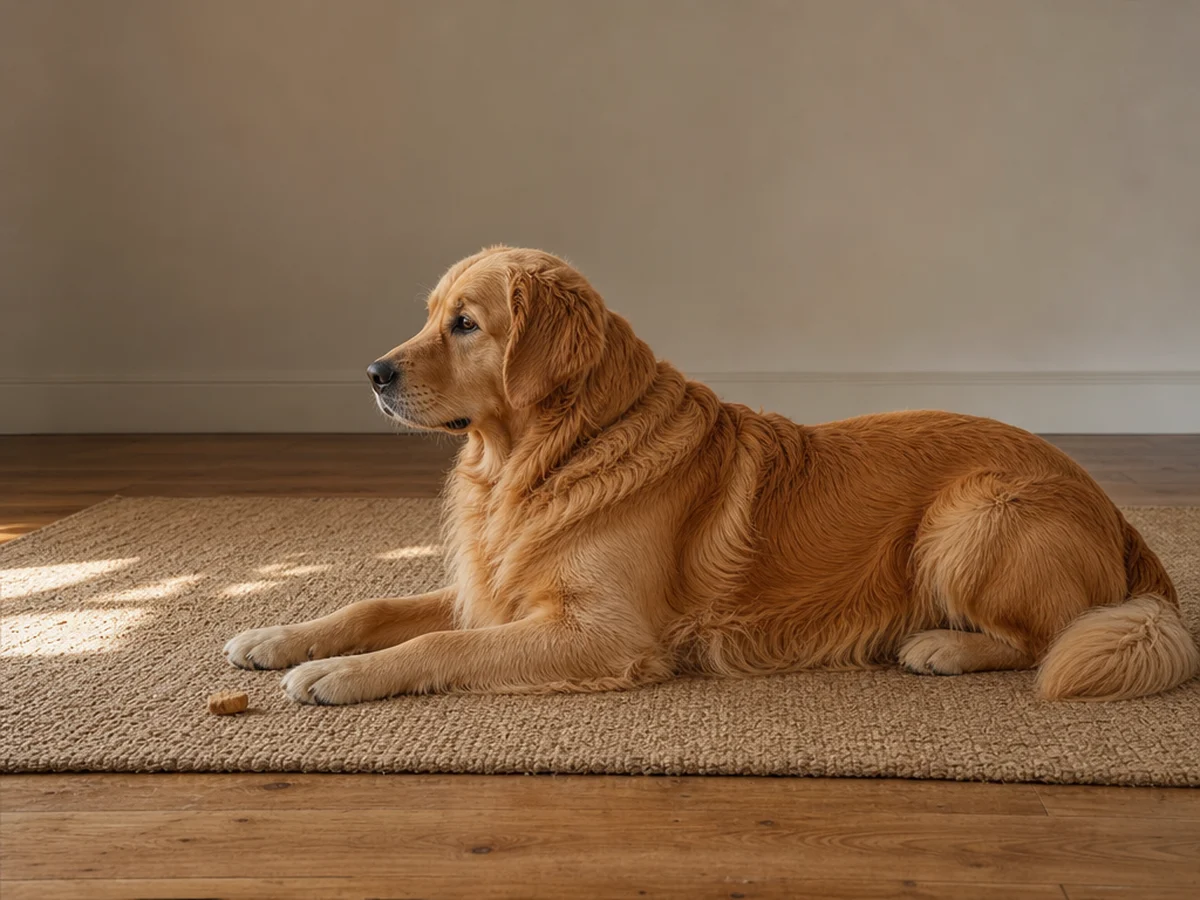
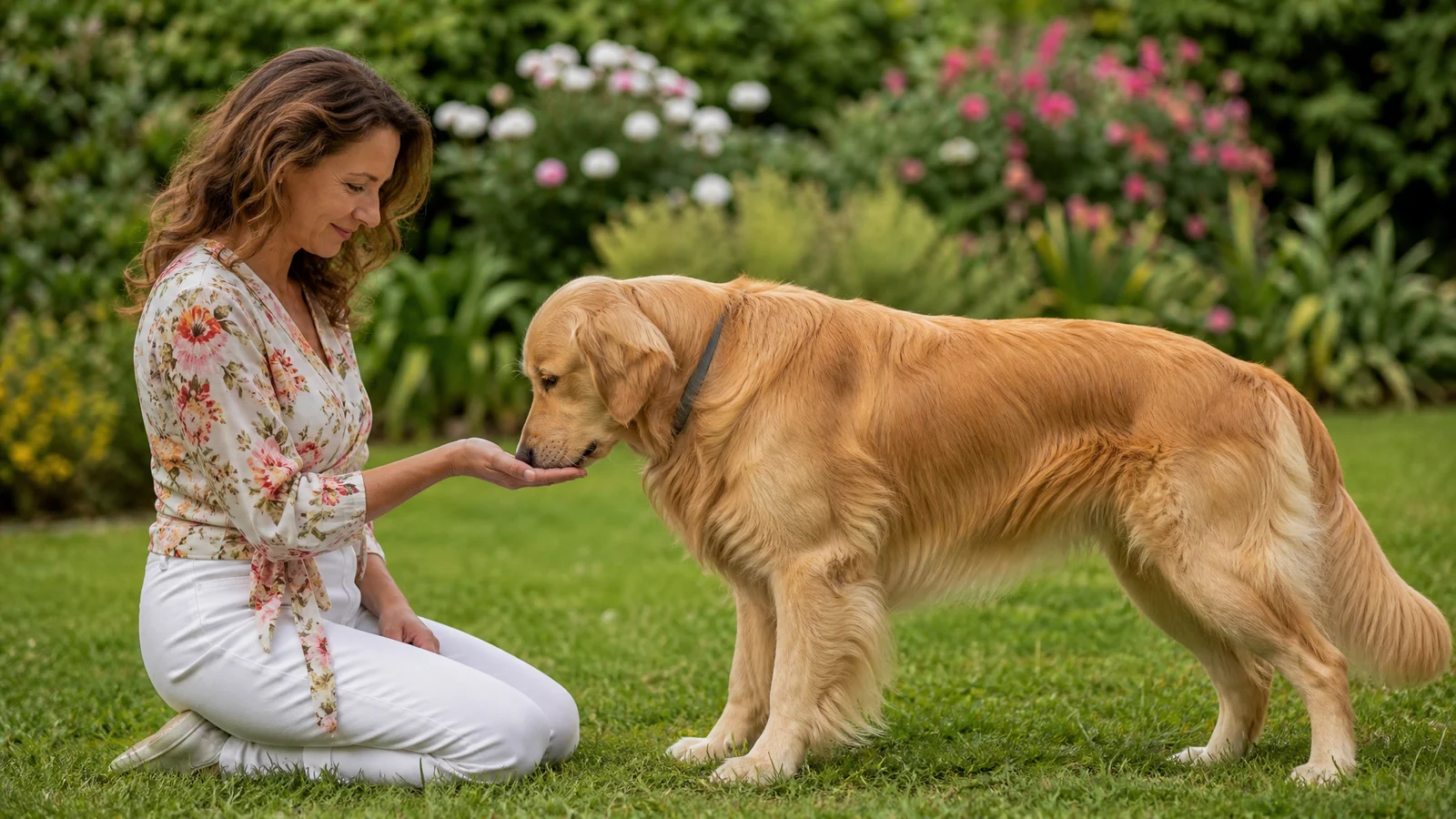
Work in a quiet place with one valued reward between your fingers. The general approach is to guide the nose low enough that the body can follow, mark the completed down and then make the guide smaller over later repetitions. Keep the spoken cue out of the early guessing stage.
- Let the dog smell the reward, then lower it slowly from the nose toward the floor. Keep the hand close to the muzzle so the dog can follow without chasing it.
- Move the reward slightly forward along the floor so the front legs can extend and the chest can lower. The instant elbows and chest reach the surface, mark and deliver the reward low.
- Reset the dog to standing or sitting without lifting or placing them. Repeat the same hand path until the movement is smooth and voluntary.
- Begin the next repetition with an empty guiding hand, mark the down and reward from the other hand. Add the spoken cue only when that smaller signal reliably predicts the movement.
The Lure Path
The Royal Kennel Club's down guide describes moving a valued reward toward the floor, rewarding the completed position and then transferring the behavior to a hand signal and verbal cue. For a Golden, keep the hand close to the nose and travel low rather than pulling the reward far ahead.
Fade the Visible Food
A food lure is useful for explaining the first movement, but it should not remain the only picture the dog understands. The American Veterinary Society of Animal Behavior describes reward-based training as cueing, marking and reinforcing behavior. Use an empty hand for the familiar path, then bring the reward from the other hand after the mark.
Make the empty-hand motion smaller in stages. First use nearly the same sweep, then bend less and shorten the travel toward the floor. If the response becomes uncertain, return to the last clear signal for one repetition. Fading is not a test of whether the dog can guess.
Down Is Not Stay or Settle
Reward the first clean down and release soon afterward while teaching the movement. Remaining in position belongs to a later stay lesson, and choosing calm rest belongs to settle or mat work. Adding duration before the entry is fluent can blur which part of the behavior earned the reward.
Use the broader Golden Retriever training guide to place down among the dog's other everyday skills. Within this lesson, keep the job narrow and use a clear release before starting another repetition.
| Cue | What it owns | What ends it |
|---|---|---|
| Down | Moving into a lying position | A reward and release while learning |
| Stay | Remaining where asked for a planned duration | A trained release cue |
| Settle or mat | Relaxing in a designated place | The household's chosen end signal |
If your Golden lies down and immediately shifts a hip or stretches a leg, decide whether the cue still has its essential result. For everyday down, a comfortable lying position may be enough. Do not turn natural adjustment into an error unless a separate task truly requires a different posture.
Golden Retriever Down Cue Decisions
These remaining choices concern how the cue is introduced, not duration. Tie each answer to voluntary movement, and return to easier footing or a simpler signal when the response changes.
- Can down be taught from standing rather than sitting?
- Yes. Battersea Dogs and Cats Home includes a standing start as an option when sitting is uncomfortable. Guide the nose toward the floor and slightly forward, and stop if the movement appears painful or unusually difficult.
- When should the spoken down cue be added?
- Add it after the hand path reliably produces the position. Say the cue once, pause briefly, then give the familiar hand signal and reward the completed movement. This order lets the new word predict a known action instead of becoming background sound during early attempts.
- Can a marker word be used instead of a clicker?
- Yes. Blue Cross explains that a marker can identify the behavior that earned a valued reward. Use the same short word at the completed down, then place the reward close to the floor so reaching it does not require springing up.
Finish after a voluntary repetition your Golden can understand. Mark the completed position, reward, release and let the dog stand naturally. That attainable ending keeps down focused on a comfortable movement rather than turning the first lesson into a duration test.
 Training basicsHow to Teach a Golden Retriever to Sit
 Puppy trainingYour 8-Week-Old Golden Retriever: The First Week Home
 Training basicsAre Golden Retrievers Easy to Train?