 Golden Retriever

Teach a Golden Retriever to stay by rewarding the dog for holding a requested position until you give a clear release cue. Begin with almost no delay, deliver the reward while the dog is still in place and release before movement becomes likely.
Stay is defined by the release, not by how long you can wait or how far you can walk away. Duration, distance and distraction are separate difficulties. Changing one while the other two remain easy tells the dog what earned the reward and tells you which part needs simpler practice.
This guide covers the release-defined behavior, a one-variable progression, practice around people and what to change after a break. We build an understandable pattern rather than a test of patience. Keep routine veterinary visits, and pause if remaining in the chosen position appears uncomfortable or newly difficult.
What Counts as a Golden Retriever Stay?
A stay begins after the dog is in a known position and ends when the release cue is given. The dog may be sitting, lying down or standing, but the position itself should already be familiar. If you are building the starting position first, use the Golden Retriever sit training guide rather than teaching sit inside stay. Teach one release word for the household and use it only when the dog is free to move.
Reward in position rather than calling the dog out of stay to collect food. Reaching toward the dog preserves the meaning that holding still is the useful action. Then say the release and move together so the end of the repetition is as obvious as the beginning.
Wait can have a different household meaning, such as pausing briefly at a doorway before proceeding together. Settle asks for relaxation, not a fixed posture. Decide what each cue owns and avoid switching among the words during the same repetition.
Build the Stay One Variable at a Time
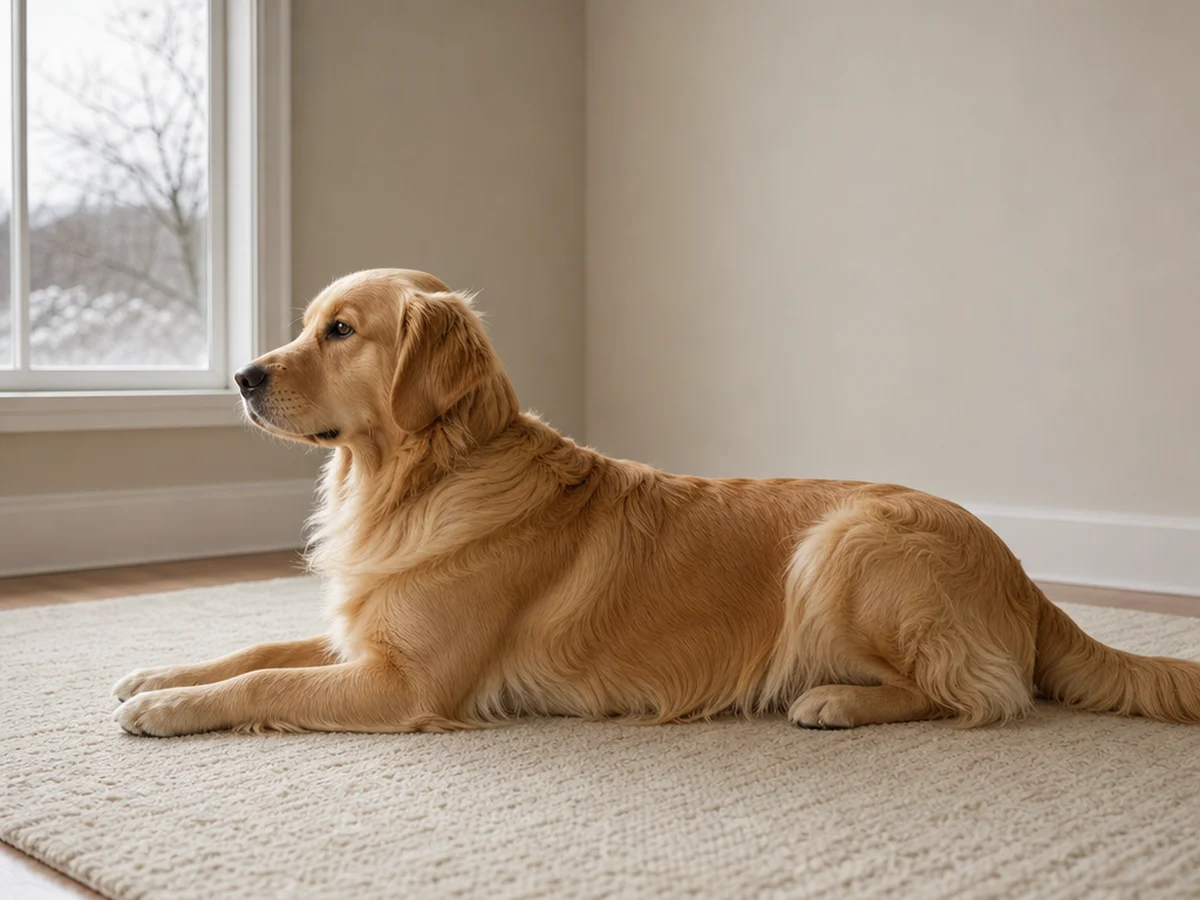
Start in a quiet room with the dog close to you. Dogs Trust stay guidance recommends delivering the reward before the dog leaves position and advancing in small stages. The sequence below makes the release clear before any new variable is introduced.
- Ask for a familiar position. Give the stay cue once, pause only briefly, mark the held position and deliver the reward without drawing the dog forward.
- Say the release cue and encourage the dog to move with you. Reset naturally instead of placing the dog back by hand.
- Repeat with the same short delay until the dog waits for the release. Add a little more time on the next repetition while you remain beside the dog.
- After duration is comfortable, add one small step of distance. Return to the dog, reward in position and release before trying another change.
Time Before Distance
Build several easy durations while standing close before stepping away. Distance changes your body position, the visual picture and your ability to reward promptly. If the dog follows the first step, remove the step on the next attempt and rebuild a shorter delay beside them.
Increase time in uneven, modest increments instead of making every repetition harder. A short easy stay after a longer success keeps the release cue relevant and prevents the session from becoming one continuous test. End before the dog's position begins to deteriorate.
Distractions Come Later
Add a mild distraction only after duration and a small amount of distance work separately. You might shift your weight, set down a light object or practice in a slightly different quiet room. Keep time short and remain close while the new detail is introduced.
The GRCA learning guide explains that dogs learn situationally, so success in one place does not guarantee the same response elsewhere. Treat a new location as a fresh difficulty and lower the other variables.
Golden Retriever Stay Practice Around People
People can be a powerful distraction for a social Golden. Begin far enough from a quiet helper that your dog can still take part, and ask the helper to ignore the dog. Shorten the stay, remain beside the dog and release away from the person rather than using access to a greeting as the reward.
If your Golden repeatedly leaves to approach, the setting is too difficult for this lesson. Add space or return to an empty practice area. Greeting behavior has its own training plan, while this page owns only the ability to hold the chosen position until release.
Use one familiar marker across locations. The Blue Cross training guide describes a marker as a way to identify the behavior that earned a valued reward. For more detail on that timing, use the Golden Retriever clicker training guide.
When a Stay Breaks
The moment of movement identifies the variable to simplify. Avoid repeating the same request at the same difficulty. Reset without frustration, change the one feature that exceeded the dog's current understanding and arrange the next release before that point.
| Break point | Likely difficult variable | Easier retry |
|---|---|---|
| The dog moves as you pause | Duration | Reward almost immediately and release |
| The dog follows your first step | Distance | Stay beside the dog and rebuild time |
| The dog leaves when a person appears | Distraction | Add space and shorten the delay |
| The dog moves after the reward | Release clarity | Give another reward in place, then release explicitly |
Keep the lesson within the reward-based approach endorsed by the American Veterinary Society of Animal Behavior. Movement gives you information about the setup, so arrange an easier repetition rather than asking the dog to hold a harder version.
Stay Decisions for the Next Session
Is stay useful if a Golden Retriever already knows wait? Yes, when the two cues have different, consistent jobs. Stay can mean hold this exact position until release, while wait can mean pause before moving through a doorway or taking another action. Choose the distinction your household can apply reliably.
What if a family member releases the stay accidentally? Reset calmly, then choose a very easy follow-up and agree on one release word before practicing again. Do not repeat the stay cue after the dog has already been released. Household consistency matters more than extending that session.
Should stay practice finish after a mistake? Finish after one easier success instead. Reduce the variable that caused the break, reward your Golden while they are still in position and give the release cue promptly. That clear final repetition is more useful than ending on confusion or asking for a harder retry.
 Training basicsTraining an Older or Adopted Golden Retriever
 Puppy trainingHow to House Train a Golden Retriever Puppy
 Training basicsHow to Teach a Golden Retriever to Come When Called