 Golden Retriever
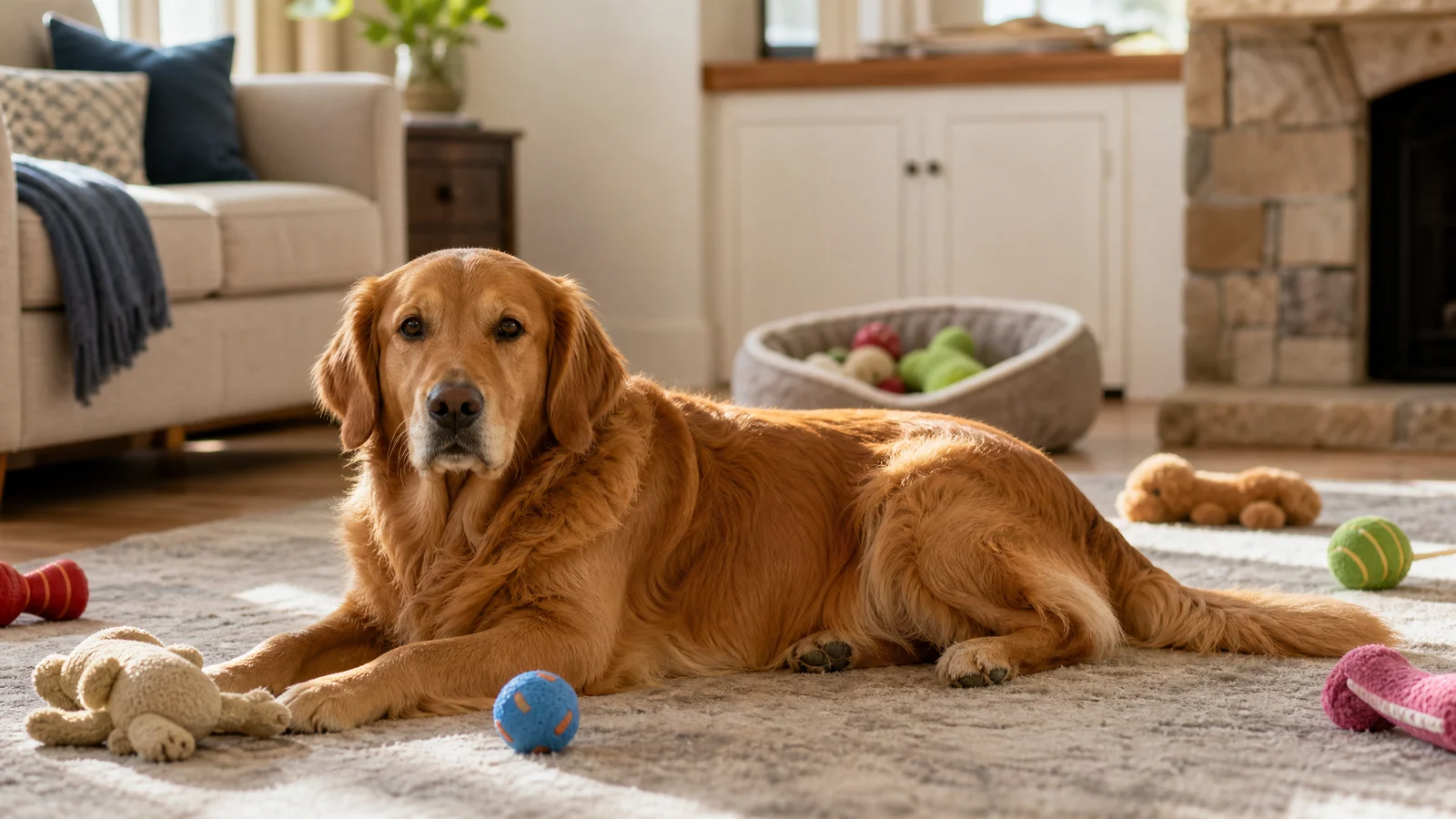
Of the 218 Golden Retriever owners we reviewed who wrote about energy and calming down, 14% described their young Golden as very high energy, wired or wild. That figure tells you wildness is common but far from universal. It says nothing about when yours will end, because owners who reported a calm-down put it anywhere from a few months to past 10 years, with the biggest clusters around 2 to 3.
The timing matters because a Golden whose day doesn't fit them turns spare energy into chewing, jumping and chaos. A Golden whose day does fit settles into the easy family dog people picture. In this article, we'll go through an apartment, a home with toddlers, a two-dog house and a long workday, then look at how field and show breeding move the timeline.
Apartment Mornings That Make a Golden Retriever Calm
Picture a one-bedroom apartment, a young Golden, and no yard to turn them loose in. Timing does most of the work here. Goldens are not self-exercisers, and most have no interest in exercising alone, so every outing is something you do together. A fenced yard wouldn't have solved that anyway.
Why the Energy Label Misleads
Start with the label. The breed's energy rating is 3 out of 5, and on that scale 3 means Moderate. Yet Goldens, as active members of the Sporting Group, are also described as poor couch potatoes. Both statements hold up once you have met enough of them.
Owners report both camps. Some describe adults they call lazy, house cats or old men, asleep most of the day and spent after 10–20 minutes of play, and some of those dogs were mellow from puppyhood. Many more describe young dogs bouncing off the walls, sometimes still full of energy after miles of walking. A moderate rating averages the two. Owners describe both from puppyhood, so plan for the energetic one.
Front-Load the Day
Owners tie the wildest spells, meaning zoomies, biting and jumping, to evenings and to being overtired. A thin morning means a dog who arrives at dinnertime with a full day's pressure and nowhere to put it.
You'll hear that the cure is more miles. We'd push back. Owners repeatedly find that mental work tires a young Golden more than physical exercise, and several say a new place with new smells beats the usual 2-mile walk. Letting a dog use their nose, indoors or out, is both stimulating and calming, so let your morning walk wander.
Skip jogging and biking until at least 12 months, and check with your vet before you start. Our Golden Retriever exercise and brain games guide has the full menu.
A Workable Apartment Day
Here is a day that fits a small space:
- Morning: a brisk leash walk with plenty of sniffing, then a short training session with a few retrieves of a toy in a safe space.
- Midday: a brain game such as a scent search with kibble, a new trick, or a frozen chew.
- Evening: a second outing after dinner, then toys put away and a settle on a mat with a chew.
The reassuring part is that most mature, trained Goldens adapt to a less active lifestyle, even though puppies and adolescents have energy to burn. Reward the settle every time it happens on its own, too. A calm mat habit is built on a day that already met the dog's physical and mental needs, so the morning comes first and the settle follows.
A Golden Retriever Among Toddlers and Spilled Snacks
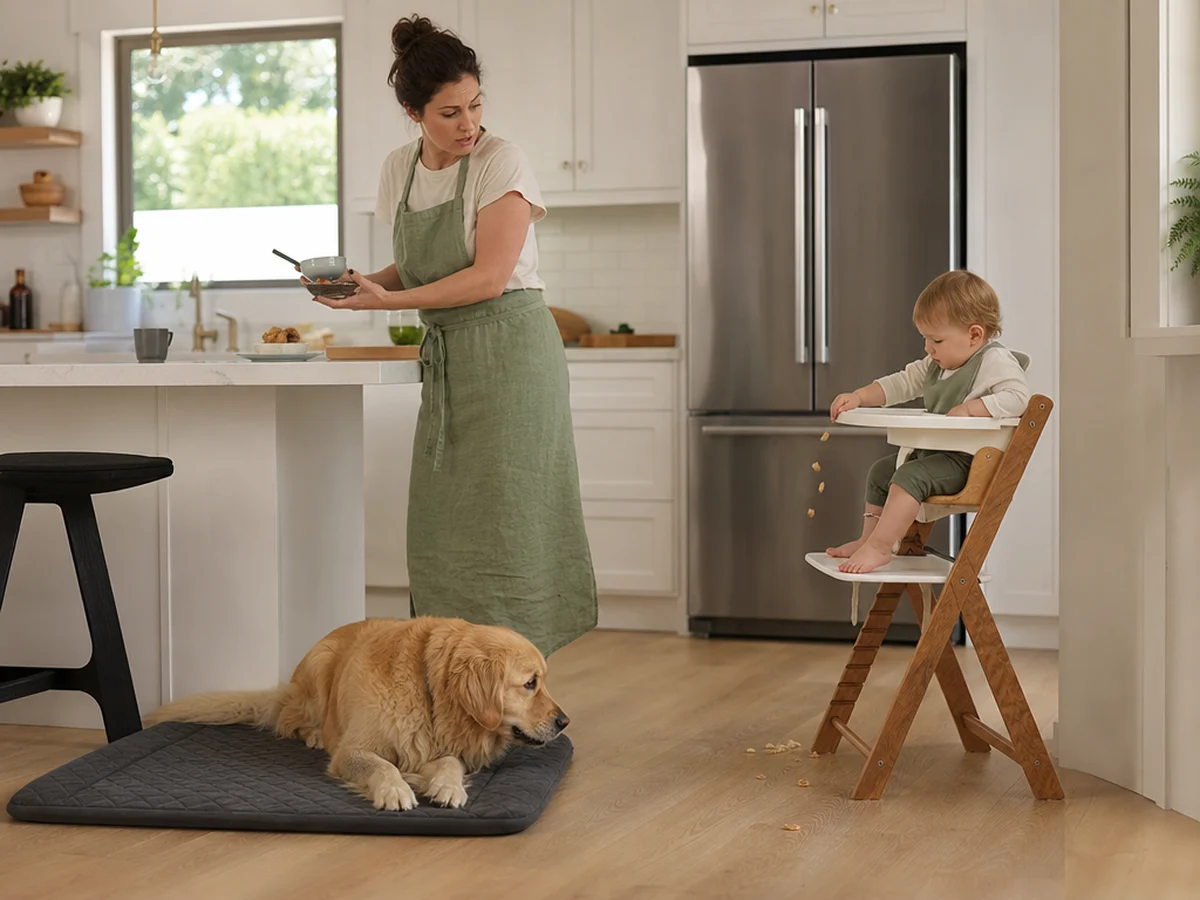
A home with small children is loud and unpredictable, and it's full of dropped food. The households that do best don't try to make it quiet. They plan for when the chaos peaks.
Put Structure Around the Noise
Puppies chase, jump and bite the way they did with littermates, and children's squeals and sudden movements set that off. What looks like wildness is often an overstimulated, overtired dog in a busy room. Some owners found that a biting spell simply meant the puppy needed a nap or a potty trip.
Supervision is the lever that matters, and it has to be structured. Try this:
- Run short, supervised sessions with toys and simple cues, then gate or crate the puppy for a real rest before they tip over the edge.
- Give the dog a quiet room or a crate with a chew for noisy stretches, since owners find this helps a lot when the house is busy.
- Take the dog out the moment they leave the crate and play briefly before the kids swarm in, because that first stretch is a common flare-up time.
- Teach children to stand still and stop playing when the dog gets mouthy. A calm pause ends the game without drama.
Preschoolers also eat the time you would have spent on exercise and manners. That gap is where the hyper reputation grows, because a Golden who misses a walk and a training session shows it in the living room. Kids can keep up with a Golden's playfulness, but they can't supply structured exercise, so you still have to.
What Owners Report About Age
Owners who describe strain in busy family homes talk about dogs from about 3 months to about 3 years, and some came close to giving the dog up. The calm-down owners report most often lands around 2 to 3. Adolescence can start any time between six and 12 months and end between 18 and 24 months, so a toddler in the house and a teenage dog can overlap for a long stretch.
A useful rule of thumb: for the first two years, one month of puppy life is roughly one year of a child's life. A 12-month Golden acts like an unreliable 12-year-old, so expect teenage judgment for a while.
Studies suggest adolescent dogs are less likely to follow commands from their owners, which is why cues that worked at four months may seem to vanish at ten. Keep rewarding them. Our guide to socializing Goldens with kids, dogs and strangers covers the introductions.
Two Dogs, One Living Room, and Borrowed Calm
A second dog is the standard prescription for a wired Golden. Sometimes it works, and sometimes you end up with two wired dogs.
Do Dogs Rub Off on Each Other?
Owners who have raised more than one Golden say energy differs from dog to dog, even between two dogs of the same age in the same home. A couch potato may live beside a ball-mad playmate. So don't count on an older, calmer dog to rub off. Some owners keep a second dog specifically so the young one has someone to play with, and that does burn energy.
The trade-off shows up in the evening. Two playful dogs may feed each other, and the likely result is zoomies that run longer and rougher than they would with one. Meanwhile, Goldens still want their people. A playmate adds to your exercise plan but doesn't replace you.
Setting Up Two Dogs to Settle
What works in practice:
- Choose playmates deliberately. Breeders suggest finding an adolescent's best dog friends to wrestle and zoom with, and not forcing them to like every dog.
- Give each dog one-on-one time with you, even a short walk or training session.
- Set up separate settle spots, a mat or crate for each, so nobody has to calm down in the middle of the other's game.
- Give an older dog a gate or a retreat, because a teenager's enthusiasm can be a lot.
- Stop the play with a calm pause when it gets frantic, and reward both dogs for lying down afterward.
Expect the two dogs to calm at different ages. Owners who raised several Goldens saw earlier dogs settle around 1 or 2 while a later one was still going years afterward, so calm-down ages can differ widely between dogs. Judge each dog against their own progress, not against the one who came before.
Alone Until Six: The Workday Golden Retriever
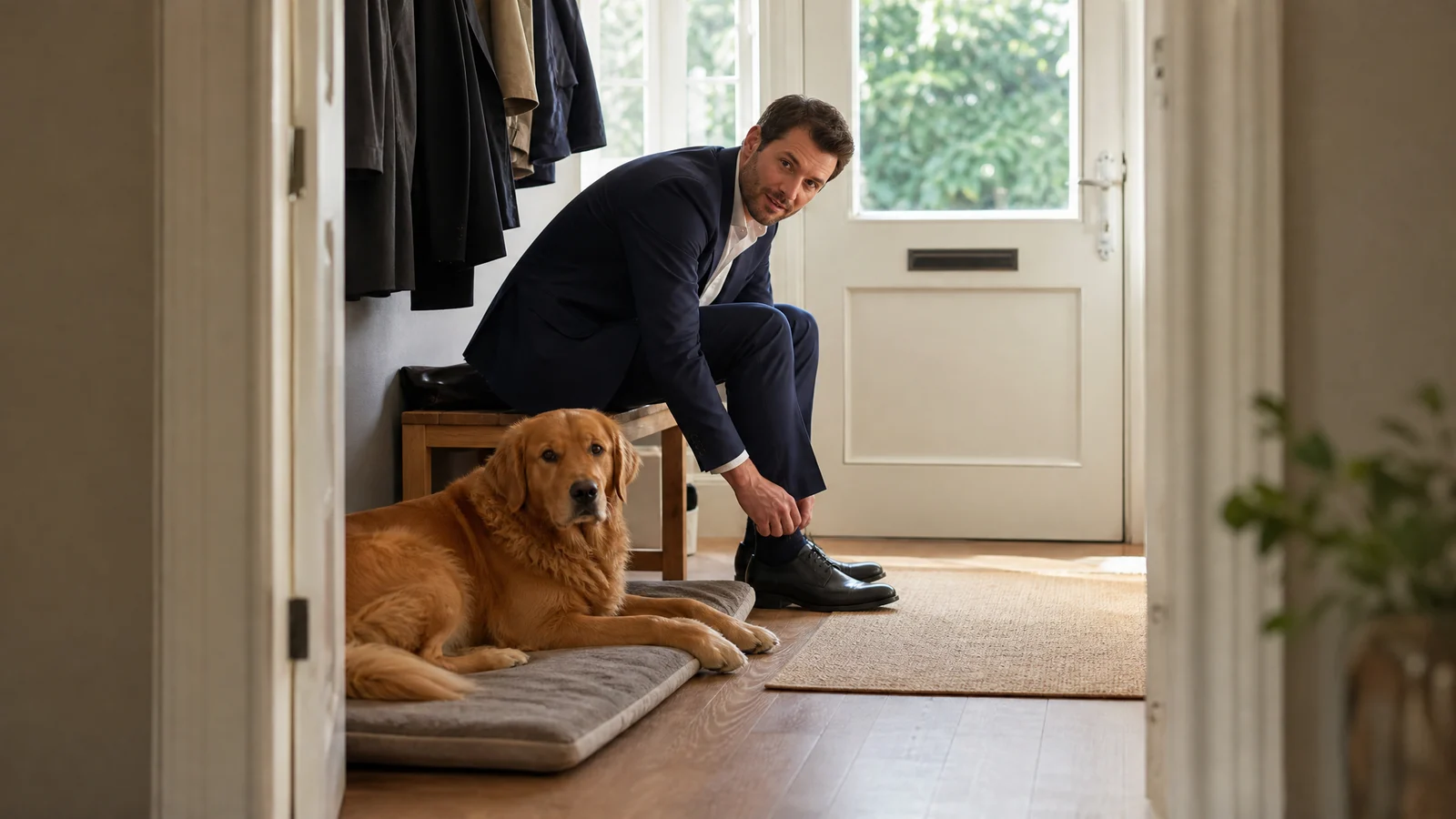
If you're out all day, the surprise is how many Goldens simply sleep. Many owners describe an off switch tied to the household. These dogs are active when their person is around, sleep most of the day when left alone (cameras show some of them hibernating), and switch on when the favorite person walks in.
Sleepers and Strugglers
Others cope well alone, napping on the couch or in the crate until you return. Dogs vary here, so watch yours on a camera for the first few workdays and build up the time gradually.
Stored-up energy is the catch. A dog who slept all day greets you at full volume, and owners often describe a nightly wild spell. Daycare helps some, with dogs coming home exhausted, but several owners say even that is barely enough. Goldens want to be where their people are and do not do well parked in a yard or garage, so a yard doesn't solve the day.
An Evening Routine for Stored-Up Energy
Here is an evening routine that uses that energy well:
- Greet quietly and wait for a sit or a settled moment before the fuss starts.
- Go outside right away for a potty trip and a walk or a game of fetch, with you taking part.
- Do a few minutes of training after dinner, since some owners say a walk and play are needed then.
- Wind down with a chew, then a settle spot. Some owners say their dog is done by 8 to 9 p.m.
Make the morning before you leave count too: an outing, a frozen Kong or chew, and a midday break from a sitter or walker if the day is long. A minority of dogs ignore Kongs and puzzle toys, so test what yours values.
Calm Here Is Taught
Of the owners we reviewed who wrote about energy and calming down, 7% said settling was taught and managed rather than waited for. Down-and-settle trained from day one, a relax cue and a bedtime wind-down were common tools.
That shapes the calming ages you'll hear, too. Many owners report dogs that had not calmed at 2, 3 or later, and a dog who gets only a rushed evening may hold on to the wild phase longer than one whose day is balanced.
Field and Show Lines Change Golden Retriever Calm
Everything above shifts with the dog's background. Our field versus show comparison goes deeper on looks and training.
The Ceiling of Calm
Owners who asked a breeder for the calm or mellow pup say they got one. Against that, a show-line pedigree doesn't guarantee a quiet puppy, and same-age dogs from different breeders sometimes turn out opposite. Choose the litter by temperament, not just the label on the pedigree.
The ceiling of calm matters as much as the age. High-drive working dogs can still be sweet and sit at your feet, and drive isn't the same as an inability to settle. What changes is how much work you need to supply first.
For a working-line dog in the apartment or the toddler house, add structure: tricks, scent work, rally, agility or obedience. Breeders point to activities like these for the skyrocketing needs of the 6–18 month stretch, and they double as training.
Ask the Breeder Before You Choose
Before you choose a puppy, ask the breeder:
- How do the parents behave at home in the evening, and not just when working?
- Which puppy in the litter is the calmest, and can you have that one?
- How long did earlier puppies take to settle in homes like yours?
One more thing the line won't change is surgery. Most owners who commented report that neutering or spaying didn't lower energy. It stopped humping, marking or roaming, or made a male nicer, but not calmer. A few credit it with calming. Don't plan your timeline around it.
Reading Your Golden Retriever's Calm Progress Honestly
Calm rarely arrives on a date. Breeders say the rebellious phase eases somewhere between 18 months and two years, and many owners hit their stride around 2 to 3. We specialize in Golden behavior and training, and the pattern we see is steady progress with bumps rather than a switch. Keep up regular vet visits throughout, since sudden changes in energy can sometimes be physical.
Signs Your Golden Is Settling on Schedule
- They drop into a nap after meals and after an outing, without you engineering it.
- They relax on a settle cue, and the time it takes to calm is getting shorter week by week.
- The evening burst is shorter, and bedtime comes without a fight.
- Zoomies still happen but fade quickly, and greetings with guests and dogs get a little less frantic.
- They tolerate a quiet stretch with a chew while the household buzzes.
Signs to Call a Trainer or Vet
- Destructive or anxious behavior, such as chewing walls, pacing or frantic distress when alone, that isn't easing even though exercise, mental work and rest are in place.
- Energy or stamina that fades over weeks, or a dog who is suddenly very sleepy, since low thyroid has turned up in dogs that owners thought were just lazy.
- A dog who abruptly loses interest in fetch or the toys they used to carry around, which can signal jaw pain.
- Fainting or collapse during excitement or exercise, which needs a vet right away.
- Biting, fear or hostility that is not easing with age, because shyness and hostility are out of character for the breed.
This is general information, not a diagnosis. Check with your veterinarian about any change in energy, any medical or surgical question, and before starting jogging, biking or other high-impact exercise.
Calm Is Built by Routine
If most of your list falls in the first group, keep going. Goldens mature slowly, and their first two years are one long adolescence, so a playful, silly three-year-old is not a failure. Calm is built by routine, with an early outing, a job for the brain, a settle spot and a quiet evening, repeated until it sticks. Birthdays help, but the routine does the work.
 BehaviorTeaching a Golden Retriever to Greet Guests With Four Paws Down
 BehaviorGolden Retriever Puppy Chewing Everything? Teach Leave It
 BehaviorLeaving a Golden Retriever Home Alone (and Separation Anxiety)