 Golden Retriever
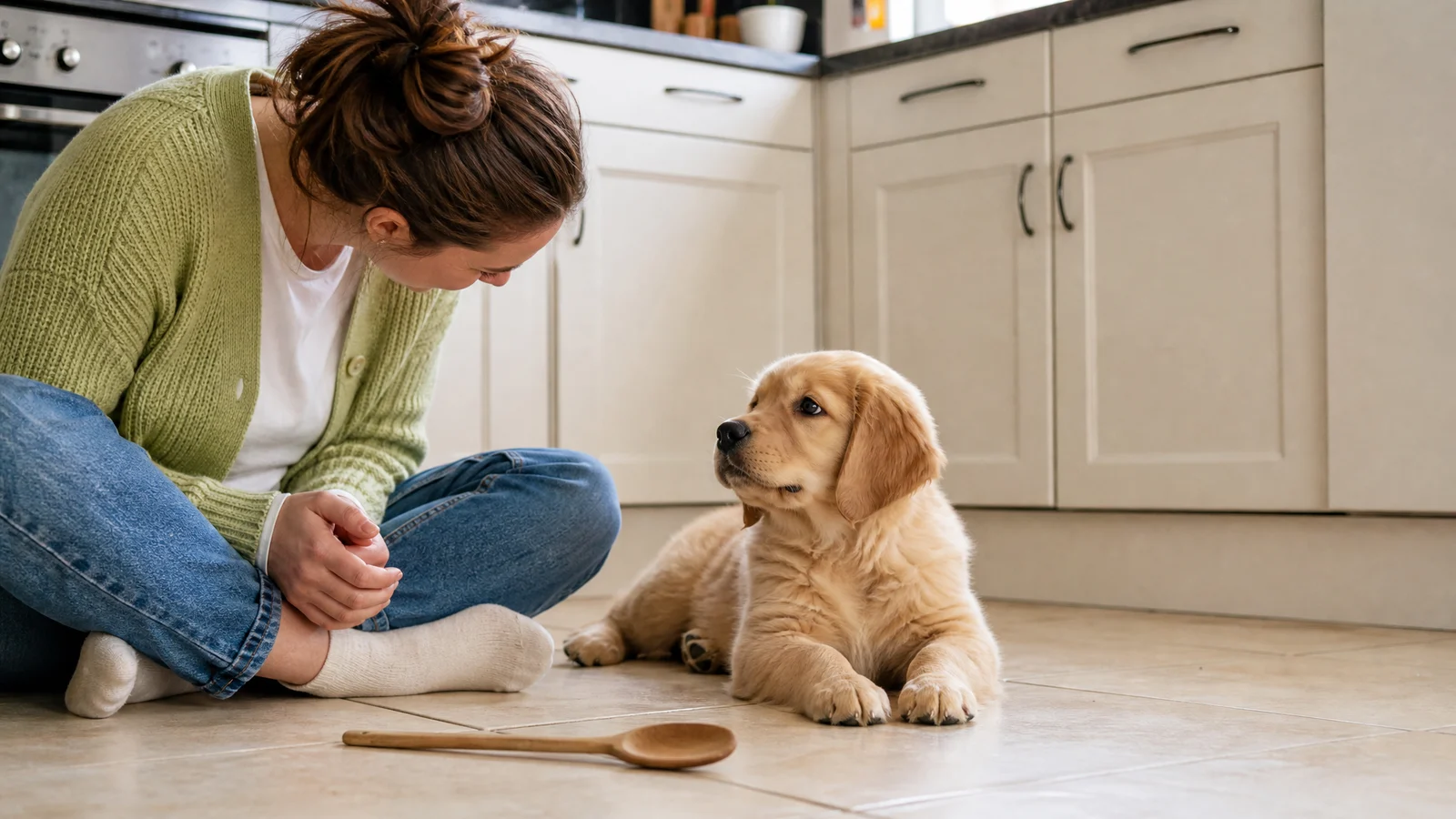
A sock on the floor and a sock already in a Golden Retriever puppy's mouth are different training situations. Once the sock has been swallowed, neither “leave it” nor “drop it” is the next job. Knowing which situation you are in helps you respond promptly without turning every discovery into a contest over an object.
Both cues are worth teaching, alongside careful household management and suitable chewing opportunities. They give a puppy useful information, but they cannot make an accessible hazard safe or guarantee that an exciting object will always be ignored.
This guide starts with the urgent decision, then separates prevention from release. We will build each skill with harmless practice materials and carry it into ordinary rooms. The aim is a puppy who can turn away or let go voluntarily while adults remain responsible for what is within reach.
When Leave It Is Already Too Late
If your puppy may have swallowed an unsafe object, contact your veterinarian immediately. Explain what the object was, when it happened and what you have observed. Do not wait for signs to appear, and do not try to make the dog vomit unless a veterinarian specifically directs treatment.
PDSA's advice on swallowed objects and blockages makes clear that prompt veterinary assessment matters. A missing part of a toy or damaged fabric can be relevant even when the puppy appears comfortable. Keep the remaining material or packaging available to describe what may be missing.
| Where the object is | Your immediate priority |
|---|---|
| On the floor, not yet taken | Prevent access and use a practiced leave-it cue if the puppy can respond. |
| Held in the mouth | Arrange a safe voluntary release without chasing or forcing a struggle. |
| Possibly swallowed | Contact your veterinarian promptly for advice about that specific object. |
This article gives general training information, not veterinary diagnosis or treatment. Suspected swallowing of an unsafe item needs prompt veterinary advice, even before symptoms develop. Keep regular veterinary visits and discuss repeated eating of nonfood objects with your veterinarian.
Make the area safe for everyone else while you seek help. Another adult can secure remaining objects, keep children away and gather useful information. An incident is not the time to test a new cue or prove that the puppy understands a rule.
Leave It Before a Golden Retriever Puppy Takes an Object
“Leave it” asks the puppy to disengage from something they have not taken. Teach it with an object you can control and a separate reward. The important lesson is that moving attention away can produce something worthwhile from you.
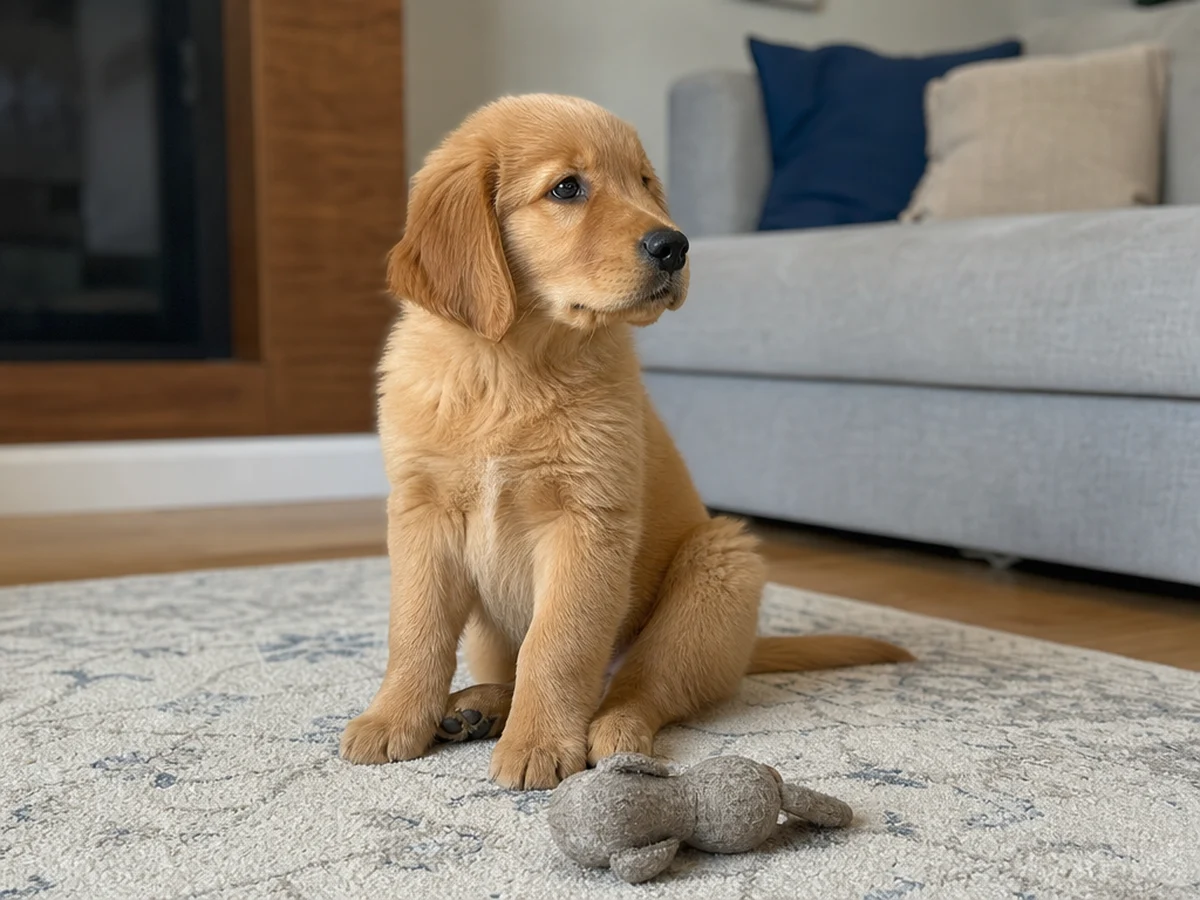
A Protected Practice Item
Begin in a quiet space with a low-interest, safe item beyond the puppy's reach. You might place it behind a suitable barrier while the puppy remains comfortably beside you. Use enough distance that they can notice the item without becoming frustrated about access.
Wait for a small voluntary look away or turn toward you, mark it and reward from your other hand. Keep the practice item unavailable throughout. If the puppy remains fixed on it, choose something less interesting or increase distance rather than repeating the cue.
The RSPCA recommends reward-based training methods. Here, the practical application is to make disengaging easy enough to reinforce, instead of letting the puppy repeatedly reach an object and then trying to interrupt the grab.
Position yourself so the reward leads the puppy toward clear floor rather than another interesting object. A puppy who turns away from the practice item and immediately reaches a shoe has received a confusing lesson. Preparing the surrounding space lets the whole movement end in a safe, rewarding place where you can pause before the next repetition.
A Cue With a Predictable Meaning
Once the puppy readily turns away in that arrangement, say “leave it” just before the expected movement. Mark the turn and deliver the reward away from the item. Repeat in short sessions, stopping while the puppy can still participate comfortably.
Do not use the cue as background speech while the puppy keeps investigating. If they do not respond, management prevents access while you make the next repetition easier. A word gains clarity through successful practice, not through being repeated over growing frustration.
Changing the Item or the Room
Introduce one modest change at a time. A different safe object in the familiar room may be enough of a challenge. Changing the object, floor surface, distance and surrounding activity together makes it hard to know what the puppy has learned.
- Practice a comfortable turn away from one protected, low-interest item.
- Add the cue when that turn is predictable and continue rewarding away from the item.
- Repeat with another safe item while keeping the room and distance familiar.
- Move an easy version to a different room with access still controlled.
Keep dangerous objects out of the lesson entirely. Batteries, medication, sharp objects and anything the puppy could swallow are household hazards to secure, not advanced training props.
A Golden Retriever Release Cue for Something Already Held
Once an object is in the mouth, teach a separate release cue with a familiar, suitable toy. The puppy should be able to let go voluntarily and receive something valuable. Begin well before you need this skill for an accidental theft.
An Easy Toy Exchange
Choose a toy the puppy enjoys without gripping it intensely. Offer a worthwhile food reward or another suitable toy and allow the puppy to release the first one. Avoid reaching into the mouth or pulling at the object while asking for a trade.
Battersea's drop-it teaching guide describes building voluntary exchanges with food or toys. Follow the puppy's response rather than assuming every object has equal value. A toy they readily exchange today is a better starting point than their most treasured possession.
When the puppy releases, mark the action and give the promised reward. Pick up the toy only when you can do so comfortably and safely. Often, return it for more play so approaching you does not always predict the permanent loss of something enjoyable.
Practice the exchange away from other dogs. Competition changes the situation and can make an otherwise easy release more difficult.
End a successful exchange with an ordinary pause. You do not need to request the same toy repeatedly until the puppy loses interest in sharing it.
The Word Before the Release
As the exchange becomes predictable, introduce “drop it” just before the puppy lets go. Continue rewarding the release. Later, give the cue before showing the reward, while keeping the reward available and the toy easy enough for success.
If the puppy holds on, reduce difficulty and use a generous exchange rather than escalating pressure. Freezing, stiffening or moving away with the object deserves attention. Stop trying to take the item and seek qualified help if possession becomes tense or difficult to manage.
The Golden puppy biting guide addresses mouth contact during play. Releasing an object is its own skill, so a puppy who is becoming gentler with hands may still need separate, patient practice giving up toys.
Leave It Through a Golden Retriever Household
Daily life provides many opportunities to prevent mistakes without setting deliberate traps. Use the cues when the puppy has a reasonable chance of responding, and change access when they do not. Adults still decide what remains on the floor and which rooms are available.
Laundry and Soft Objects
Use closed laundry storage and keep towels, socks and children's belongings out of reach. A puppy cannot distinguish “old towel offered for play” from “towel needed after a shower” by the household's intention. Consistent access makes the environment easier to understand.
If a soft object is already held, consider the release skill rather than calling “leave it” repeatedly. Keep your movements calm and use an established exchange if safe. Suspected ingestion moves the situation back to veterinary advice, regardless of how well the puppy usually releases.
Food Preparation and Dropped Items
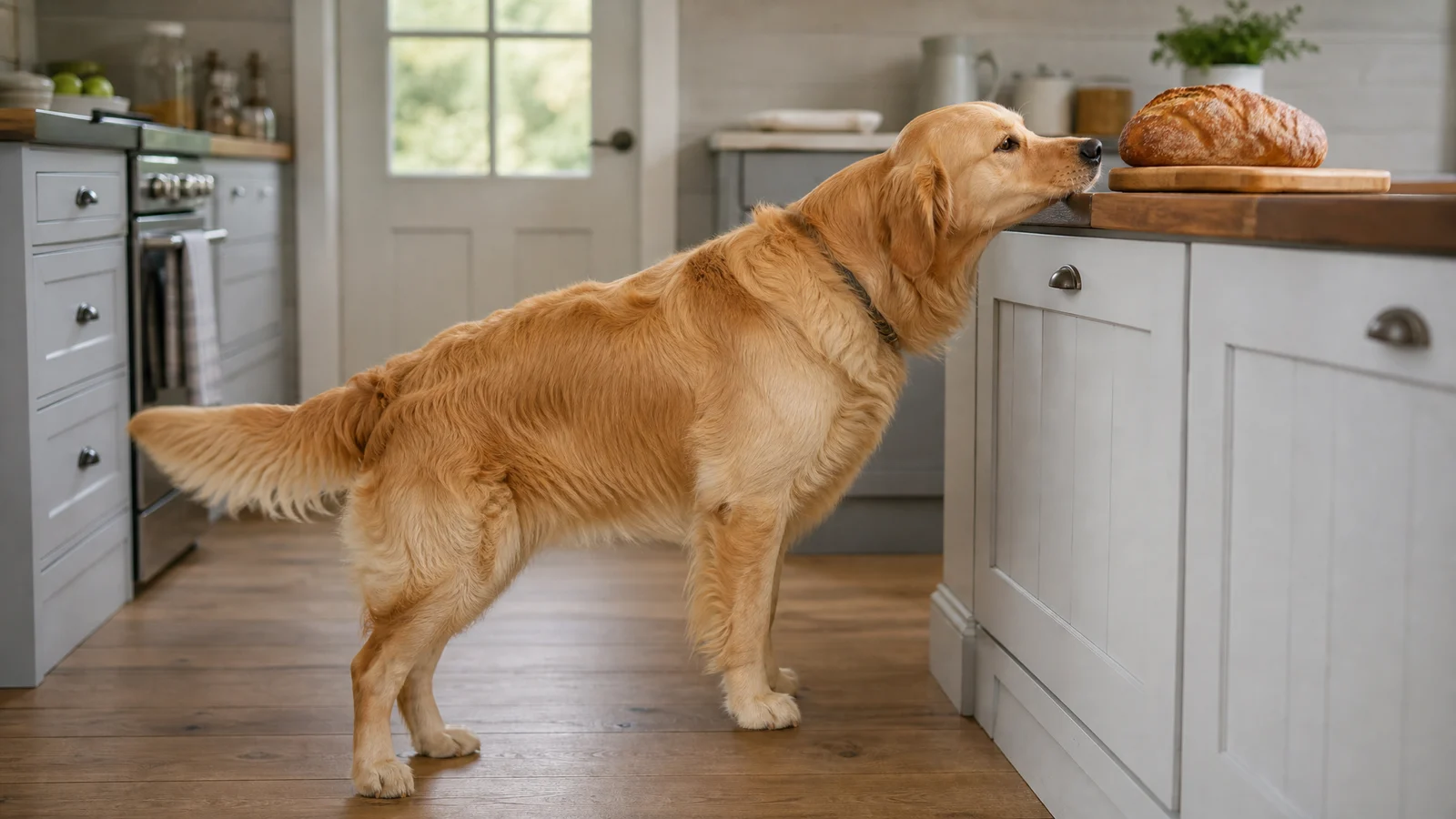
Keep the puppy away from the food preparation area during tasks that could drop hazards. Practice leave it beside a clear surface at another time. Our Golden Retriever counter manners guide explains how to build a waiting destination while protecting kitchen access.
Do not depend on an adult noticing every fallen item. A comfortable barrier arrangement gives you time to clean up before the puppy investigates. The cue adds a useful response when needed, while the room setup prevents constant emergency requests.
- Close bags and storage containers before allowing access to the room.
- Check the floor after children finish activities involving small objects.
- Remove damaged toys promptly and account for missing pieces.
- Give the puppy suitable objects to investigate under appropriate supervision.
Share the cue meanings with visitors who may supervise the puppy. Ask them to secure belongings before interacting and to call an adult when an object is missing. A clear household response is more useful than several people using different words while following a puppy through the room.
Chewing Opportunities That Remain Available
A household made entirely of forbidden objects leaves the puppy with little useful to do. Provide appropriate toys that match their size and chewing style, and watch how they use them. Replace anything that breaks down or becomes small enough to swallow.
Humane World for Animals recommends managing destructive chewing through suitable access and alternatives. Make those alternatives available before the puppy begins searching among your belongings. Reward appropriate use without repeatedly interrupting a dog who is already choosing well.
Note when object seeking increases. The puppy may need a toilet break, rest, company or a different supervised activity. Those observations help you adjust the day, but repeated consumption of nonfood material should be discussed with your veterinarian rather than explained away as a breed habit.
Leave It and Release Stay in Practice
Rehearse leave it and release separately with easy materials, even after the household becomes calmer. Useful practice includes a reward, a clear end and another ordinary activity. Avoid turning every object the puppy notices into a test of obedience.
Use the distinction consistently across the family. Leave it applies before possession, release applies to something held and suspected swallowing needs veterinary advice. A Golden who understands those first two skills has valuable options, while secure storage and attentive adults continue doing the work that training cannot replace.
 BehaviorLeaving a Golden Retriever Home Alone (and Separation Anxiety)
 CareGrooming a Golden Retriever: Brushing, Baths, Ears and Handling
 BehaviorKeeping a Golden Retriever's Nose Off the Kitchen Counter