 Golden Retriever
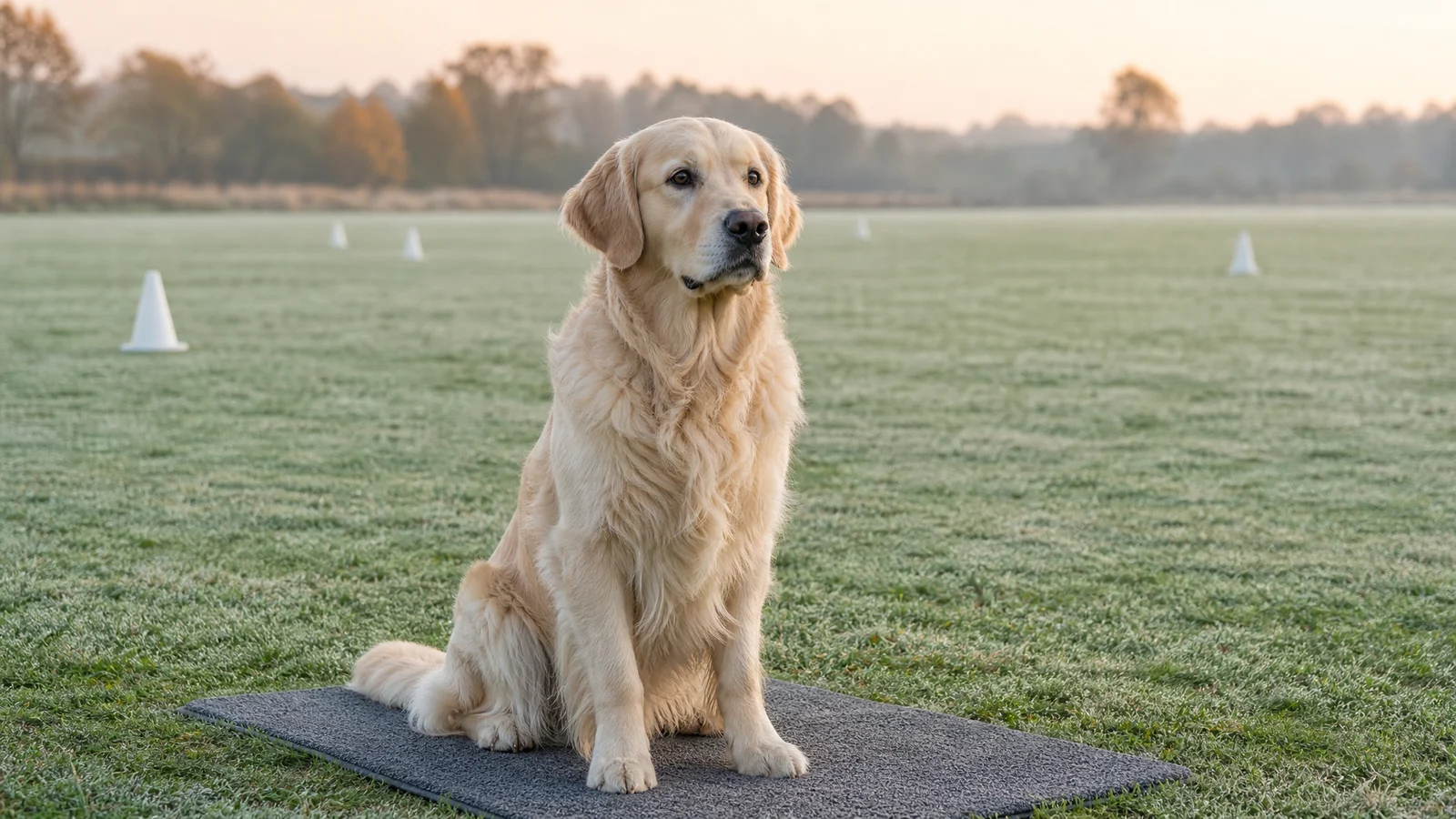
A Golden Retriever trainer should fit the kind of help your dog needs, because teaching a household skill is not the same service as assessing fear, distress or dangerous behavior. Start by describing what happens, where it happens and what you want daily life to look like. Then ask which professional role owns that work.
The strongest choice is not the person with the broadest promise. It is the professional who explains their scope, shows how rewards will be used, teaches the household and names the point at which they would involve a veterinarian or another qualified professional.
On this page, we keep the decision on evidence you can request before committing to sessions. The goal is a defensible match between need and professional role, not a provider ranking or an assumption that one format suits every Golden Retriever.
What Help Does Your Golden Retriever Need?
Begin with the decision, not a title. A class may fit planned skill practice, individual support may fit a context-specific obstacle, and a veterinarian may need to evaluate a change linked with discomfort, intense distress or safety risk. Keep regular veterinary care so the household has a place to raise new concerns.
| Need You Can Describe | Role to Discuss | Evidence to Request |
|---|---|---|
| Skills practiced around other dogs and people | Reward-based class instructor | Class setup, coaching approach and response to a dog who needs more space |
| A skill or routine that breaks down in a specific setting | Individual reward-based trainer | Observation plan, household responsibilities and follow-up process |
| Sudden change, intense fear, dangerous behavior or possible discomfort | Veterinarian, with veterinary behavior referral when appropriate | Scope of evaluation, coordination with training and immediate safety boundaries |
Note the setting, what happens before the behavior, what the dog does and how the situation ends. These details help the professional explain whether they can observe the issue, teach a related skill or need another role involved, without treating a household label as a conclusion.
A role is a starting point, not a verdict about the dog. Describe the concern without testing it or trying to produce a difficult response for a consultation. A careful professional can tell you what information is useful and what should remain under management while the right help is identified.
Keep topic ownership clear as you compare help. If the concern centers on departures or absences, the practical owner guidance belongs on Golden Retriever alone time. A trainer-selection conversation should stay focused on scope, qualifications, communication and coordination rather than retelling that plan.
Credentials Are a Starting Check
A credential can show that a person met a defined standard, but the letters alone do not explain how they will work with your dog. The Certification Council for Professional Dog Trainers notes that dog training is an unregulated industry without licensing requirements or regulatory oversight. That makes verification and method questions part of the household's decision.
Verify the Claim
Ask for the full credential name, the organization that issued it and a public way to confirm its current meaning. Check what the credential covers instead of treating every use of trainer, consultant or behaviorist as equivalent. A clear answer lets you compare the claimed preparation with the work you are seeking.
Titles deserve special care at the veterinary boundary. The DACVB guidance explains that veterinarians may use the behaviorist title only after ACVB board certification, while non-veterinarians face no equivalent restriction on that word. This distinction does not qualify or disqualify an individual trainer, but it does tell you to ask what stands behind the title.
Ask About Relevant Cases
Relevant experience is more useful when the professional can explain its limits. Ask what kinds of goals they regularly teach, what settings they work in and when they refer out. Do not ask for private details about another client. Look for a description of process, scope and coordination that can be checked against your own need.
A good answer should stay specific without turning one prior case into a prediction. The professional can explain how they gather information, adapt the setting and coach people, while acknowledging that your Golden Retriever still needs an individual plan. Confidence is not a substitute for those details.
Verification should continue after the credential check. Compare the professional's explanation of rewards, observation and referral with the scope attached to the claim. If the title sounds broad but the described work is narrow, use the described work for the decision and ask who owns anything outside it.
Questions to Ask a Golden Retriever Trainer
A consultation should produce concrete information you can compare later. Ask the same core questions of each professional so a polished introduction does not outweigh method disclosure, owner teaching or referral boundaries.
Best Friends guidance recommends asking about the specific techniques a trainer uses and moving on when the answer is evasive. For this page, that means requiring a reward-based explanation in ordinary language rather than accepting a label without examples.
- What will you reward, and how will you decide whether the dog is comfortable enough to learn?
- What will happen if this Golden Retriever hesitates, disengages or cannot continue in the current setup?
- How will you teach the people in the household to practice the same plan?
- What information will you record, and how will you explain an adjustment?
- Which concerns are outside your scope, and when would you contact or refer back to a veterinarian?
- What can the household review in writing before deciding whether the arrangement fits?
Listen for connected answers rather than isolated reassuring phrases. The response to hesitation should match the stated reward-based method, and the household coaching should match the work expected between meetings. A professional who names a limit is giving you useful selection evidence, not admitting failure.
Do not request a demonstration that puts the dog into distress or creates risk. A consultation can use records, ordinary observation and discussion of the current setup. If the concern cannot be reviewed safely within that boundary, the next step is a different professional role, not a more forceful test.
Watch How the Trainer Handles a Difficult Moment
Method descriptions matter, but a difficult moment shows whether those descriptions guide real decisions. Watch for the trainer to notice early hesitation, pause the task, reduce difficulty and make room for the dog to re-engage. They should explain what changed and coach the handler without blaming the dog or the person.
A young or inexperienced Golden may be unsure in an unfamiliar setting. The GRCA study guide allows for that uncertainty while saying persistent fearfulness, hostility and uncontrolled excitability are not the breed ideal. This evidence does not identify a cause, predict safety or dictate a fixed response for an individual dog.
Observe what happens after the pause. The professional should be able to choose an easier version, change the environment or stop and recommend a more appropriate assessment. Continuing only to defend the original plan tells you less about the dog than it does about the trainer's decision process.
Owner coaching belongs in this observation too. The trainer should describe the body language or context that led to the change, then give the household a clear action that stays inside the agreed scope. That explanation is evidence the plan can be carried beyond a single session.
Also notice whether the explanation changes when new information appears. A professional may revise an initial idea after seeing the environment or the dog's response. The useful evidence is not perfect certainty at the start. It is a transparent reason for simplifying, stopping or changing the professional route.
Compare the Actual Training Arrangement

Format affects what the professional can observe and what the household must carry out. Compare the setting, participation rules, communication and review process rather than assuming that a class or individual appointment is automatically more thorough.
Ask how the answers will become a written scope. The document should identify the goal, the setting the professional expects to observe, the household's responsibilities and the referral boundary. It need not predict a result. Its value is that later explanations can be compared with what was actually agreed.
Class Fit
A class can provide planned practice around other teams, but the setup still needs room for humane adjustment. Ask how instructors manage spacing, what happens when a dog cannot participate in an exercise and how feedback reaches the handler. The answer should preserve learning without making remaining in the group the goal at any cost.
Check the human side of the arrangement as well. Find out who may attend, how missed information is shared and what the instructor expects the household to practice. A class fits only when the people responsible for the plan can understand and maintain it.
Individual Support
Individual work can focus on a particular environment or household routine, but it still needs a defined scope. Ask what the trainer expects to observe, who should be present and how changes to the plan will be explained. Private access to a trainer is not by itself evidence of suitable qualifications or methods.
Compare follow-up by the decisions it supports. Useful follow-up should clarify what the household tried, what the dog did in that context and whether the professional is maintaining, simplifying or referring the plan. It should not turn an uncertain response into a guaranteed forecast.
Before choosing either arrangement, write down who will practice, who will communicate with the professional and who can pause the plan when the dog appears uncomfortable. A workable service makes those responsibilities visible instead of leaving each household member to interpret the session differently.
Review access to information before deciding. Ask whether the household receives a summary, how questions are handled and how the professional records a change in scope. The answer should make continuity possible without implying constant availability or a guaranteed response from a provider.
Golden Retriever Trainer-Selection Questions
These conditional questions cover decisions not resolved by the role, credential and arrangement checks above. They do not replace verification of the individual professional or the need for veterinary input when a new concern may involve discomfort, distress or safety.
- If a trainer has not worked with many Golden Retrievers, should you rule them out?
- No. Ask how they will assess this individual dog, choose rewards, adjust the setting and stay within their scope. Breed familiarity can be discussed, but concrete method disclosure and appropriate referral boundaries are stronger evidence than a breed-only claim.
- Can you verify a trainer before they meet your Golden Retriever?
- Before committing, check a claimed public credential, ask for a concrete description of the trainer's reward-based method and confirm their referral boundary. These checks cannot produce an individualized plan. That still requires observation of your Golden Retriever and the relevant setting.
- If remote coaching is offered, what evidence should you request?
- Ask what the professional can observe remotely, what the household must record and which concerns require in-person or veterinary assessment. Choose remote support only when those limits are clear and the professional can explain how they will review the household's information without promising an outcome.
Choose Trainer Evidence Over a Guarantee
A defensible choice connects the need, professional role, verified claim, disclosed reward-based method and practical arrangement. You should be able to explain what the professional will observe, what the household will do and what would cause the plan to pause or move to a different role.
Promises about a result cannot replace that chain of evidence. Choose the professional who makes their scope and decisions understandable, acknowledges uncertainty and gives you a clear way to review whether the arrangement still fits your Golden Retriever.
Keep the decision open to new evidence. If the need changes, the plan no longer matches what was described or the professional cannot explain a limit, return to the role and scope questions before continuing. A careful selection remains accountable because it can be reviewed, not because it claims certainty.
 Exercise and jobsIndoor Activities and Brain Games for a Golden Retriever
 Puppy trainingGolden Retriever Puppy: What to Expect and How to Start Training
 Puppy trainingGolden Retriever Puppy at 3 to 4 Months: Teething and Mouthing