 Golden Retriever
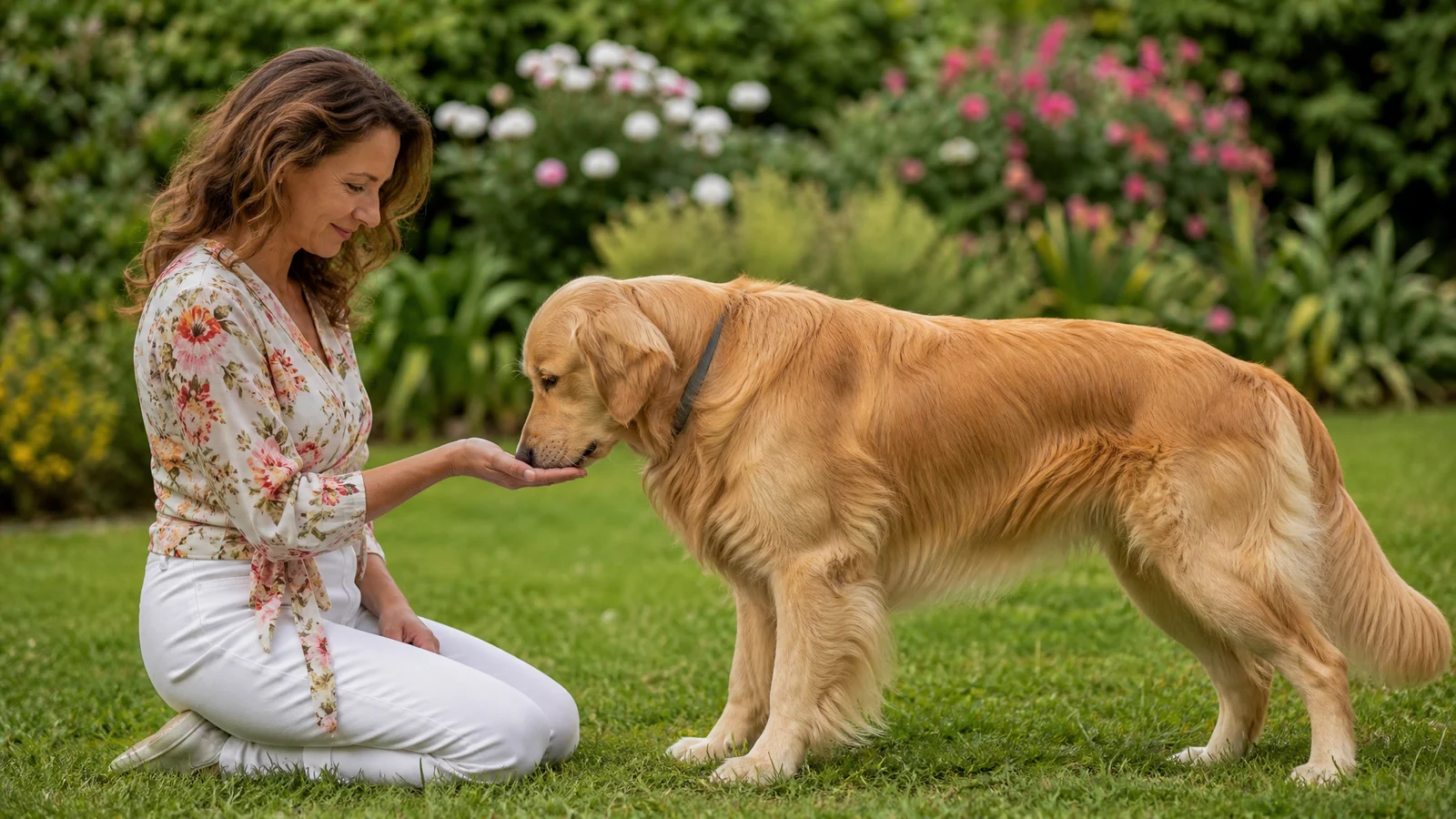
Owners often describe the same scene. A Golden Retriever puppy sits flawlessly in the kitchen for a treat, then trots into the park and acts as if they have never heard the word. The owner starts to wonder whether the breed's easy reputation was oversold.
What is going on has more to do with context and maturity than with stubbornness. Dogs learn a cue in the place where they practiced, and a young Golden is also coping with people, dogs and smells the kitchen never offered. We reviewed 1,739 Golden Retriever owners' first-hand accounts, and this gap between home and the real world was one of the most common themes.
This matters for the breed because a large, friendly dog who ignores cues becomes the one who jumps on every guest and drags you down the street. Read on for what eager to please really guarantees, how repetition and food help and mislead, what the puppy and teenage months look like, whether gentle dogs need firm rules, and the signs your training is on track.
Eager Golden Retrievers Make Training Effortless
The first half of this belief is well supported. The American Kennel Club gives the breed 5 out of 5 for trainability, the "Eager to Please" end of the scale, and one breed standard credits a high level of trainability as a reason the Golden is so popular in the United States. Many owners agree and describe a dog who picked up a cue, a trick or a household routine in a single session.
Not every dog fits the pattern. A minority of owners have a Golden who needs weeks per trick, and owners with several Goldens often see a wide spread in learning speed between their own dogs. Dogs vary, so treat the rating as a tendency.
The second half of the belief does not follow. That rating measures how much a dog wants to cooperate, not how reliably they will do so with a crowd, a ball or a new smell nearby. Experienced breeders name the idea that Goldens almost train themselves as the public's biggest misconception, usually paired with the hope for a calm dog who loves every person and everything.
The reason is that dogs are situational, a point Cleveland makes in her writing about how dogs learn: knowing an exercise in one place does not mean knowing it in another. That explains the Golden who is perfect at home and loses focus in class, and the class graduate whose neat sit does nothing to stop jumping on visitors.
Owners who do best practice in the kitchen, the yard, the street and the busy park, and treat visitors and town walks as lessons, paying for the sit right at the door. So the belief is half right. Willingness makes each lesson smaller, but you still have to build every cue in every setting. For more on how the breed's mind works, read how smart Golden Retrievers really are.
Repetition Drills Never Bore Golden Retrievers in Training
A breed comparison says Goldens love repetition where Labradors do not, and adds that Goldens tend to think a task through and work out their own way of doing it. Both points are true, and they pull in slightly different directions. A dog who enjoys repetition will happily run a sit many times, which makes structured sessions easy to build.
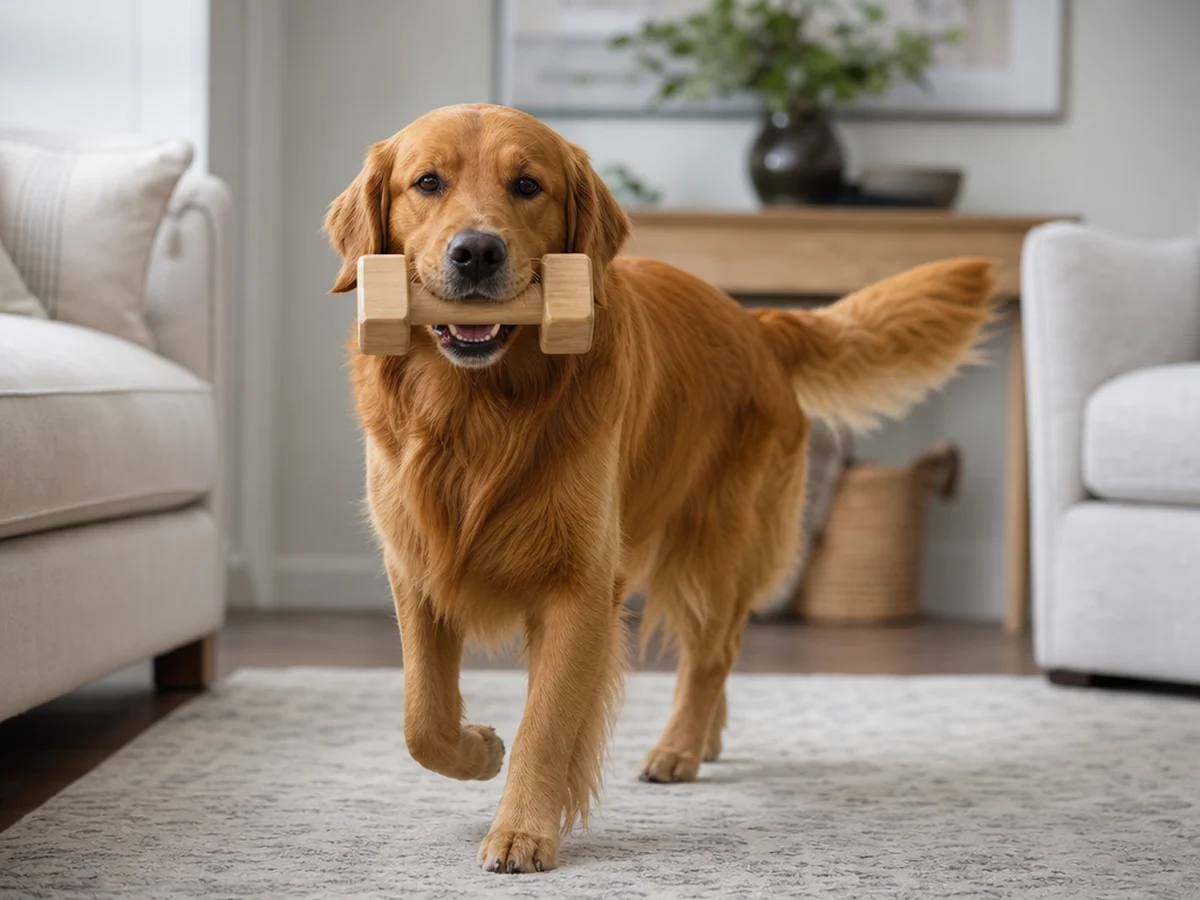
A dog who thinks, though, may begin to anticipate or invent a shortcut once a drill becomes predictable. Cleveland's suggestion fits this well: present each exercise as a problem for the dog to solve, then help them discover the right answer. That keeps a thinking dog engaged and turns mistakes into useful information.
Puppies need even more variety. Breeders describe short attention spans in the early months and a need for a mix of activities to burn off energy. The breed's mental stimulation need rates 4 out of 5, and purpose-bred dogs without enough brain work tend to invent projects the owner will not enjoy.
The verdict is that Goldens tolerate drills better than most, but tolerating is not thriving. Keep sessions short, change the location and the reward, and stop while the dog still wants more. Daily scent games, fetch and trick practice cover the mental need better than another round of the same drill. Praise the dull exercises too, such as a straight sit, because a dog quietly stops offering behavior that nothing pays for.
A Golden Retriever Puppy Learns Fast and Stays Calm
Puppies do learn fast, and owners have plenty of proof: tricks at 10 weeks, sitting and house-training at 12 weeks, a smart little student who delights first-time owners. Many other owners describe the opposite, with hard biting, chewing anything despite a pile of toys, and house-training that was far from a snap. Some who had raised other breeds call the Golden puppy the hardest yet, while others find the breed easier than they feared.
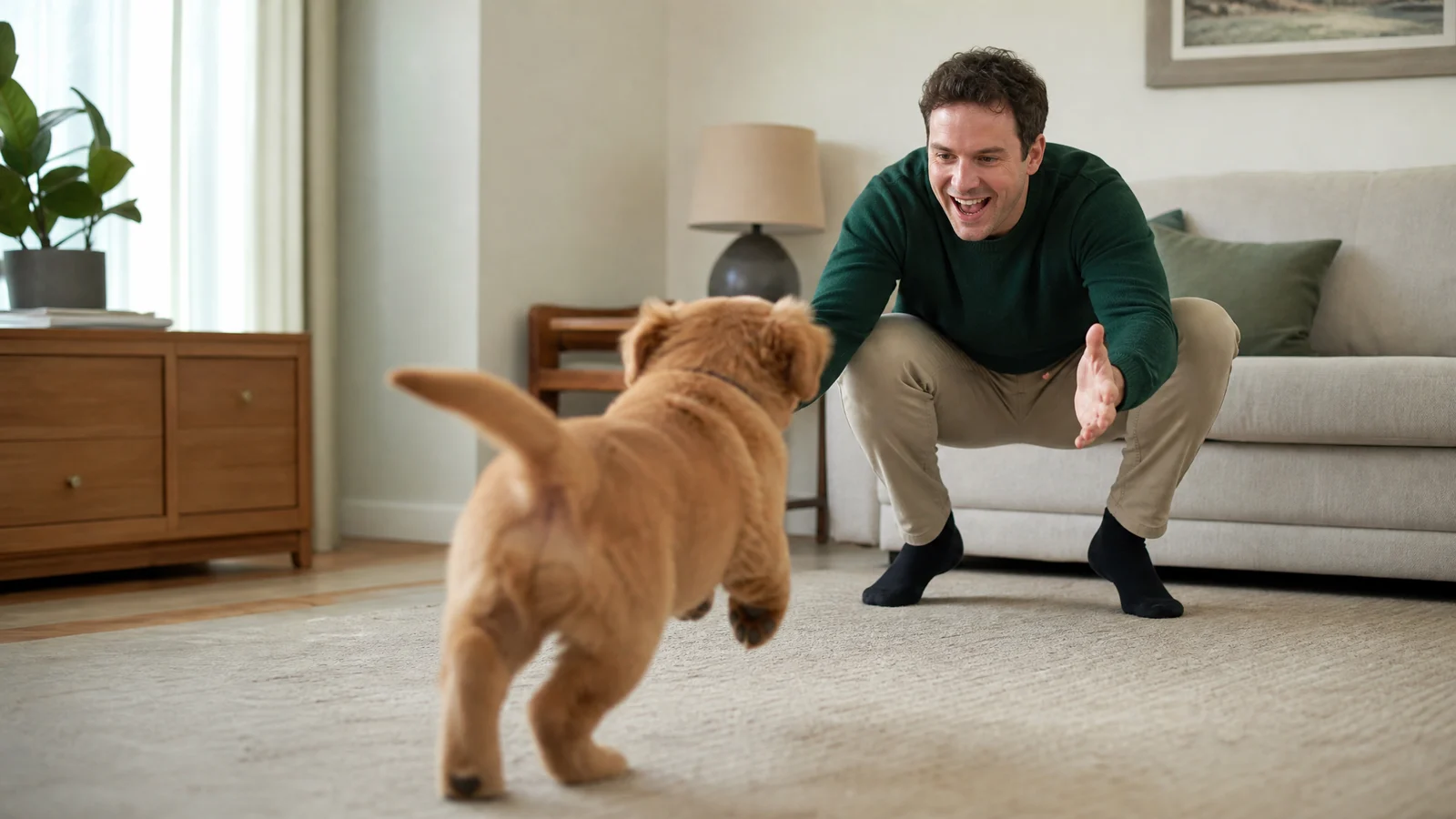
The cause is a mismatch between size and self-control. Cleveland points out that Golden puppies of three to five months are big enough to knock you down and chew up things you care about, but not old enough to understand they should not. The mouth is part of the breed's design too, since Goldens were developed in Scotland and England in the mid-19th century to carry things, so expect a puppy who wants something in their mouth much of the time.
That is why management carries as much weight as training at this stage. Use a leash, a gate or a crate to prevent the mistakes you cannot yet train away, and keep working on leash walking, recall and stay while accepting plenty of errors. Our guide to the first week with an 8-week-old Golden shows how to set up that routine from the start.
Calm is something you earn rather than something the breed hands you. The quiet Golden on the couch at night is built by meeting the puppy's mental, physical and social needs every day, and a physically tired puppy is a well-behaved puppy. Breeders also call the early months the time to establish a working relationship, because that becomes the foundation for the teenage challenges ahead.
Teenage Months Should Not Undo Early Golden Retriever Training
Owners describe an A student in class who starts rolling around and ignoring cues, a star pupil who seemed to forget everything at four or five months, and a teenager who still knows sit and down but skips them around people. Others see a dog who is polished in a quiet place and looks like any other puppy in a crowd.
Adolescence arrives at around 8 to 12 months, with larger breeds tending to mature more slowly, so a big Golden may be in this stage longer than you expect.
This regression is common and has a cause you can work with. Unrewarded behavior fades, so if the greeting jump earns attention and the sit earns little, the jump quietly wins even though the dog still knows what you asked. Excitement around people also competes with every reward you can carry in a pocket.
The fix is to raise the value of the right choice where it is hardest. Ask visitors to wait until the dog sits, pay generously and often at doors, and practice in new places so the cue is not tied to your living room. Breeders say the stretch from about 6 to 18 months is when the well-mannered Golden everyone adores gets cemented, so training stays critical even when it feels like a step backward.
Mouthiness often outlasts teething in this breed, so keep teaching leave it, drop it, give and fetch as a set. Exercise needs also climb, and activities such as tricks, scent work or agility give a restless teenager an outlet. Owners put the end of the hardest stretch at about two years, with some seeing relief earlier and others later.
Food Motivation Makes a Golden Retriever Easy to Train
There is a lot of truth in this one. Owners say a food-loving Golden works hard, offers behaviors for treats and often earns much of their dinner in training. Cleveland notes that the dog defines what counts as a reward, so find out whether food, a game of fetch or time with you pays best for yours.
Food is especially useful for recall, the cue owners most often say lags behind the rest. Top-value treats, or a stream of them on a long leash, pay the dog for turning away from something exciting. Call as you move away, kneel down to welcome the dog in, and add distance and distractions gradually.
The risks come from the same drive. Some owners have a Golden who answers a cue with a sassy look and walks off when no treat is visible, and a smaller group have dogs unmoved by praise, play or ordinary biscuits. A dog who works only when food is showing has learned to read your hands, not your words.
Use food to teach, then spread out the payment. Hide the treats, mix in a toy or a game, and save praise words for real performance so they keep their value. Count training treats as part of the day's food so the habit does not become extra weight, and keep up regular vet visits to check how your dog is doing.
This is general information, not medical advice. Ask your veterinarian about your dog's ideal weight, daily food amounts and any sudden change in appetite, energy or willingness to work.
Gentle Golden Retrievers Do Not Need Firm Training Rules
A soft temperament can tempt a family into thinking structure is optional. It is not, and the cause is plain: a friendly dog who is allowed to jump, mouth and grab will keep doing those things because they work. Good manners take time, dedication and a united front from every family member, and they do not just happen on their own.
Owners add a pattern worth knowing. One person usually does most of the training, often the woman of the house, while a partner is the fun one. The dog listens to whoever trains them, and a partner who skips training or lets things slide tends to get a less obedient dog. Even a well-trained Golden may still prefer the untrained partner and run to that person first, simply because that has paid off.
The remedy is a shared set of cues and house rules from day one, with the fun partner running games using the same words and paying for the same behaviors. If children share the house, our guide to Goldens and kids covers what everyone should practice together. For the full method, our complete Golden Retriever training guide walks through the steps in order.
Firm here means predictable, never harsh. Owners of soft or anxious Goldens report that regimented classes made fear worse, while very positive training at home eased the anxiety. Calm structure such as a gate, a short time-out or ending a game when the mouth gets rough gives clear answers, and rewards for the right choice do the rest.
Is Your Golden Retriever Training Actually on Track?
Progress with this breed is rarely a straight line, so judge it by trends over weeks, not by one bad day at the park. These are the signs your plan is working:
- Recall gets quicker, and the dog comes back even after you have walked toward them in a distracting spot.
- The dog settles on cue, on a mat or in a crate, and stays settled longer each week.
- Lapses get shorter, so a cue that fell apart at the door now recovers after one repeat.
- Cues hold in more places, including the street, the yard and class.
- Greetings improve, with a sit offered before the jump.
Some signs call for a trainer or behavior professional who uses reward-based methods. A private or in-home trainer often suits a dog who is too wild for a group:
- Guarding of food, toys or space, including stiffening or growling when you approach.
- Fear that grows instead of fading, such as hiding, shaking or panic in ordinary situations.
- No progress after several weeks of consistent work from everyone in the home.
- A sudden drop in energy or willingness, which should start with a visit to your veterinarian, since an underactive thyroid is one cause trainers have noticed.
The main takeaway is that a Golden's willingness is a superb starting point that still needs structure and daily work to become reliable behavior. Teach each cue in many places, pay well where it is hardest, keep everyone in the family on the same page, and meet the breed's exercise and mental needs every day. A dog whose body and mind are busy has far less reason to invent their own projects.
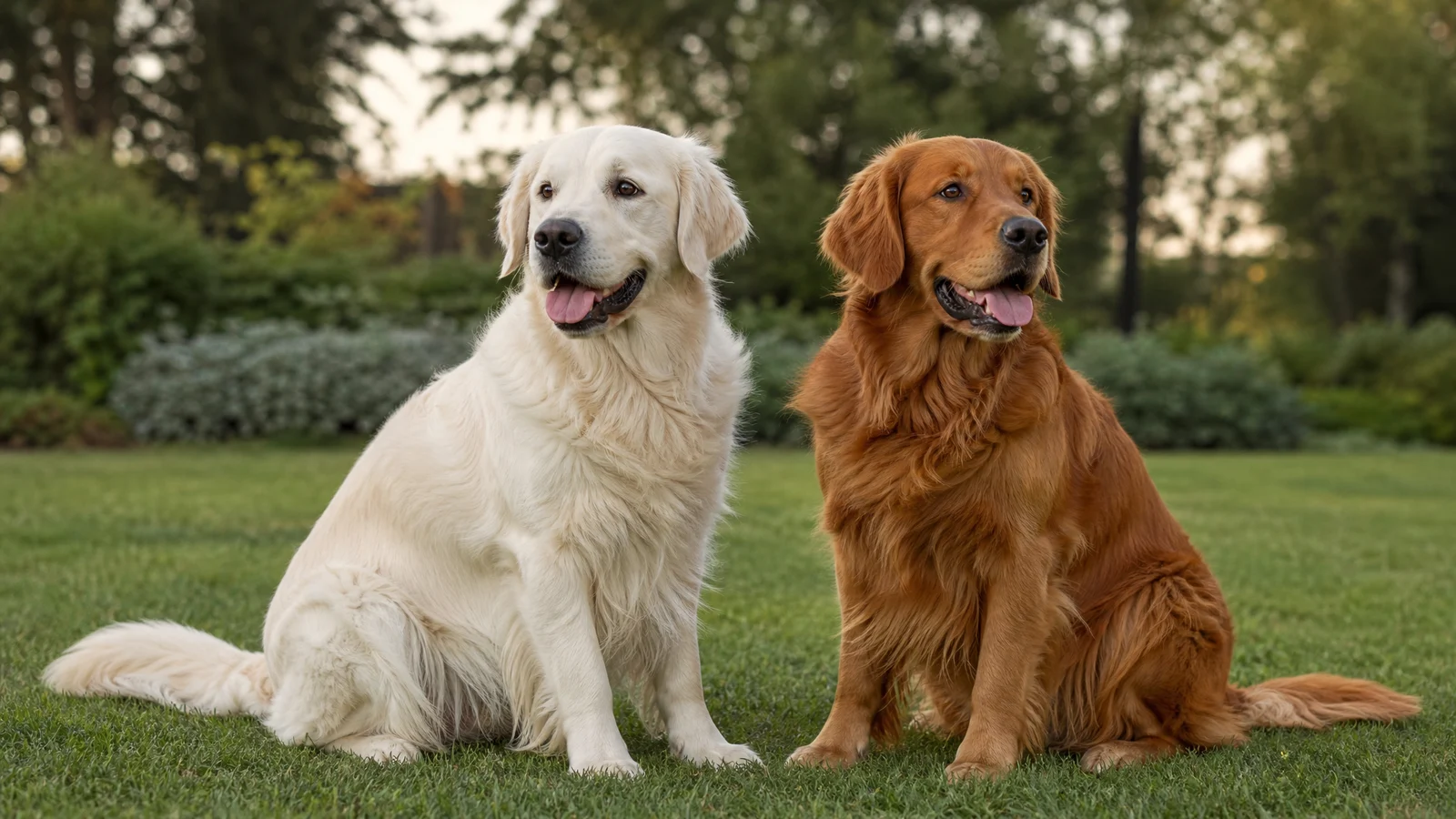 Training basicsRed, Dark and Light Golden Retrievers: The Color Range Explained
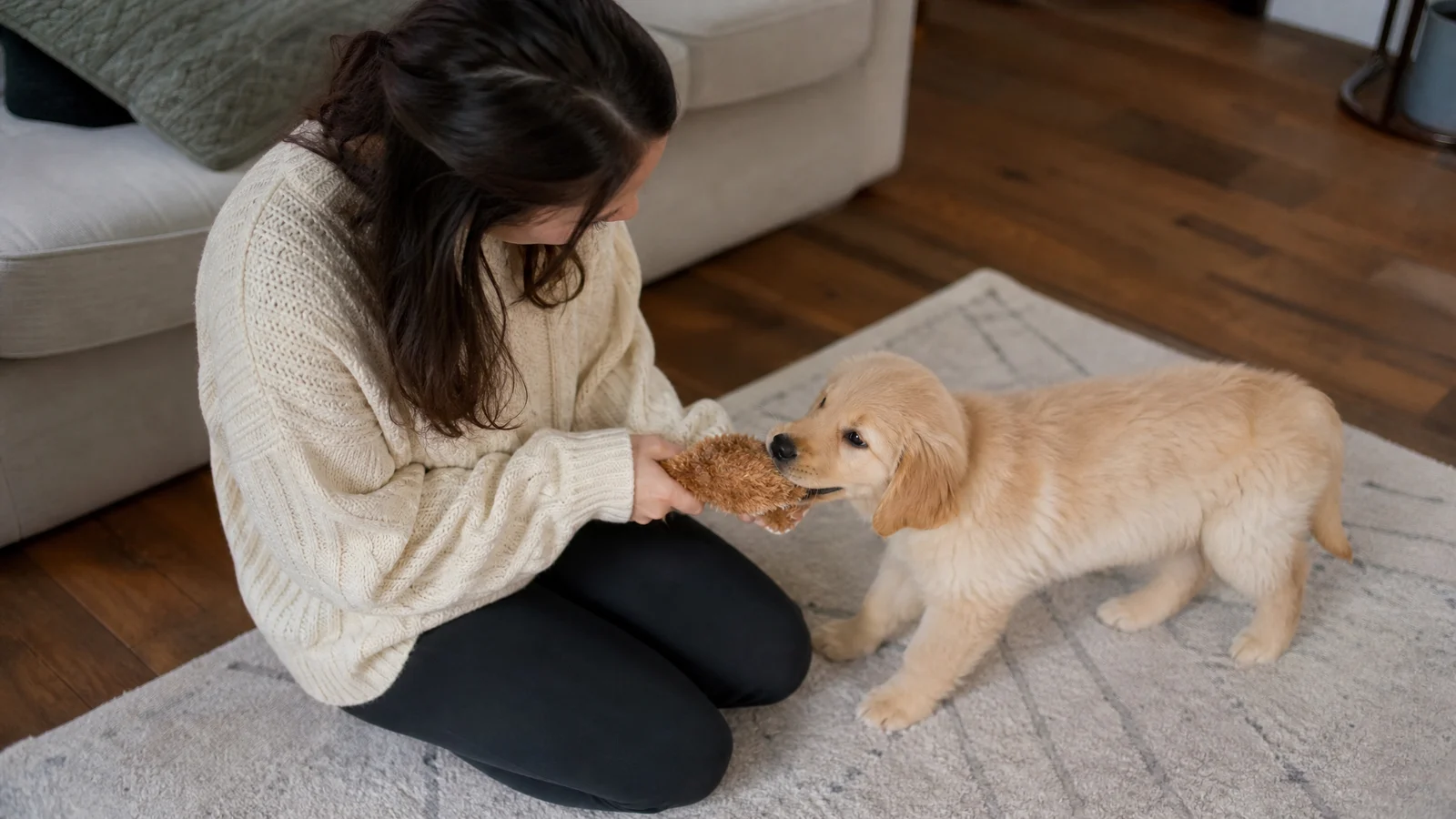 Puppy trainingGolden Retriever Puppy Biting: Why It Lasts and What Helps
 Puppy trainingGolden Retriever Puppy Training Timeline: 8 Weeks to 2 Years