 Golden Retriever
12 Golden Retriever training topics
Every common Golden Retriever challenge, with first steps and guides to read.
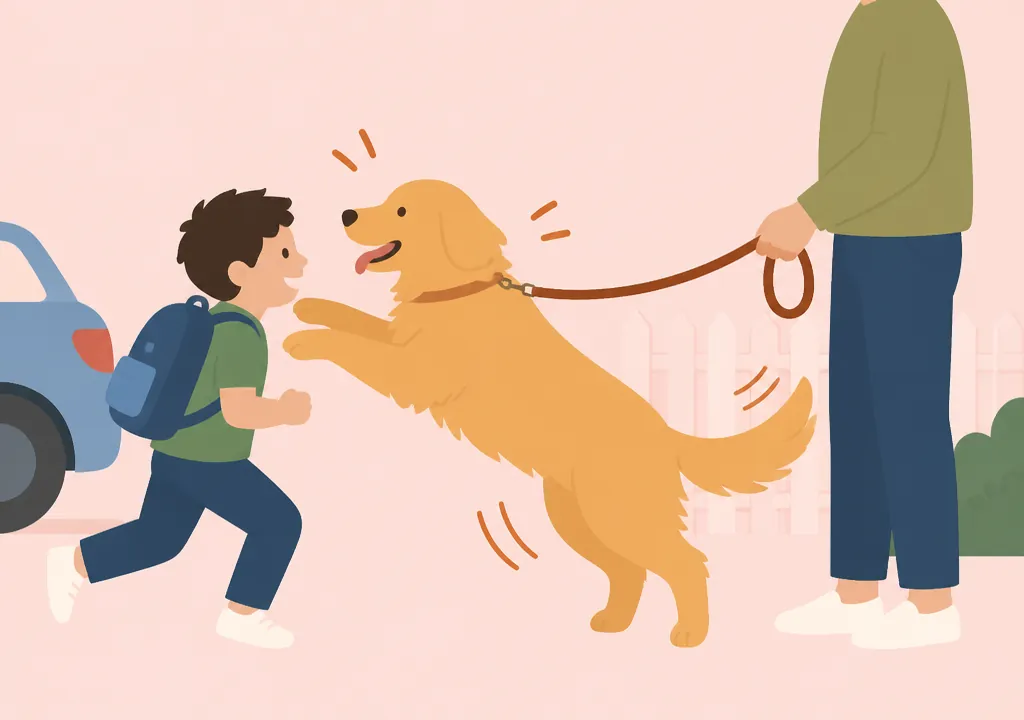
Overexcited greetings
Calm hellos for a dog who loves everyone.
The first hello can go beautifully and the next one can undo the moment. A Golden Retriever stands with every paw down, accepts a brief stroke and then launches toward the second person reaching over. They have practiced one greeting, but the gathering keeps offering another before they have had time to change pace or move away.
We can make those social moments clearer by giving each hello a beginning and an ending. This guide follows a quiet rehearsal, a real break and the decision about whether another greeting belongs in the visit. It also explains how family arrivals and public encounters change the arrangement. Friendly interest is welcome, but neither the dog nor the person needs to keep greeting for the whole visit.
Read the full guide: Teaching a Golden Retriever to Greet Guests With Four Paws Down
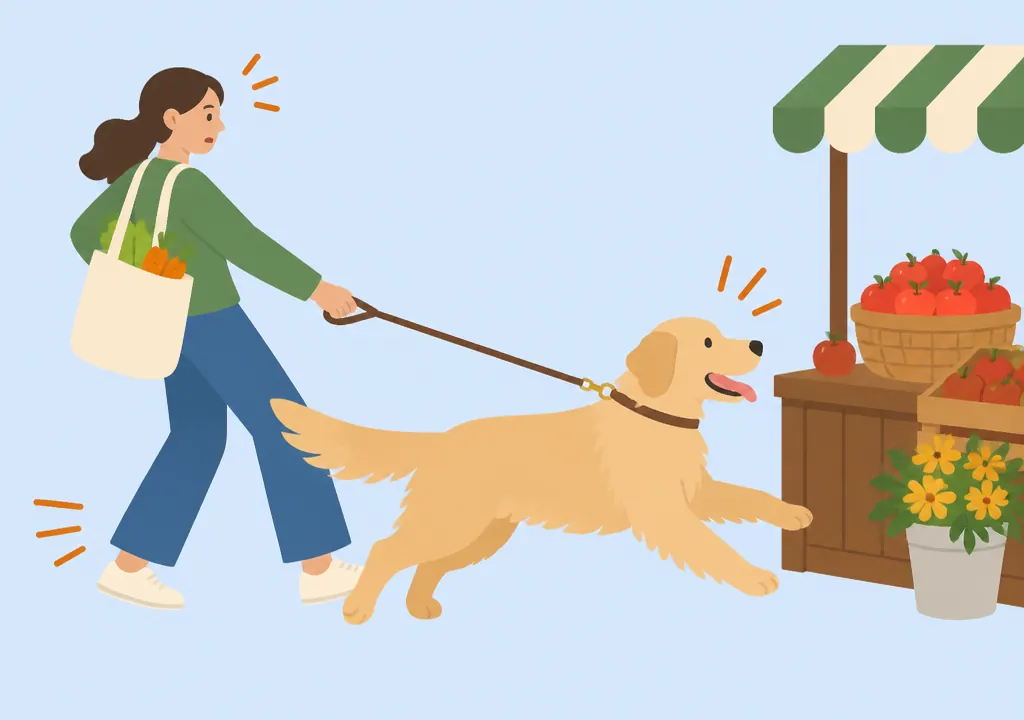
Pulling on walks
A loose leash for a strong, happy retriever.
Start leash work and aim for a loose leash before the teenage months, because a Golden stays mentally young while the body heads toward 70 pounds. Pulling switches on at a scent, a stranger or another dog.
The full guide builds the work around those triggers, from first weeks to real walks.
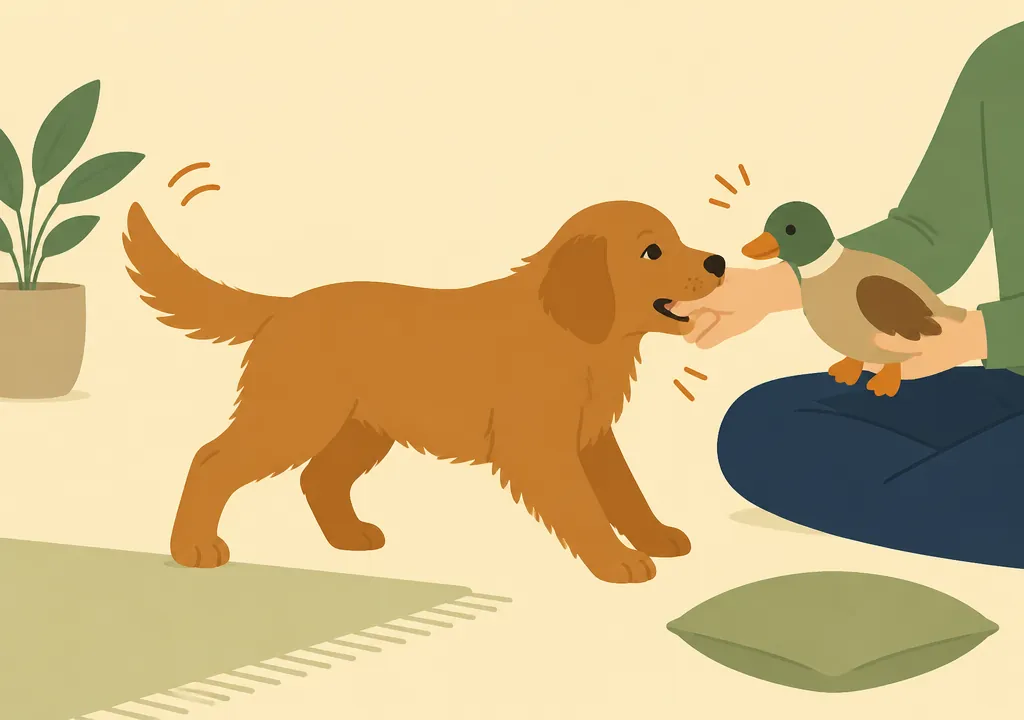
Mouthy puppy
Give a retriever mouth something soft to carry.
Ordinary advice treats puppy biting as teething that ends with adult teeth. For a Golden Retriever that fails, because the mouth is the breed's working tool and the need to hold something outlasts the baby teeth by many months.
The full guide explains why the biting lasts and the redirection that works.
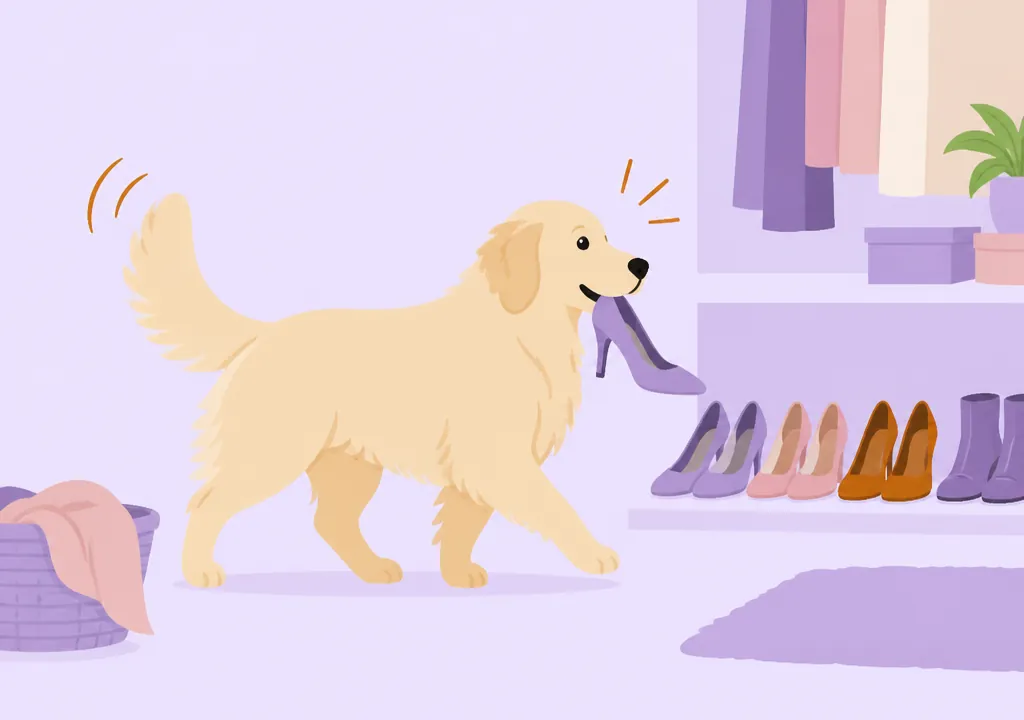
Stealing socks and shoes
Swap stolen treasures for a toy.
A sock on the floor and a sock already in a Golden Retriever puppy's mouth are different training situations. Once the sock has been swallowed, neither “leave it” nor “drop it” is the next job. Knowing which situation you are in helps you respond promptly without turning every discovery into a contest over an object.
Both cues are worth teaching, alongside careful household management and suitable chewing opportunities. They give a puppy useful information, but they cannot make an accessible hazard safe or guarantee that an exciting object will always be ignored.
Read the full guide: Golden Retriever Puppy Chewing Everything? Teach Leave It
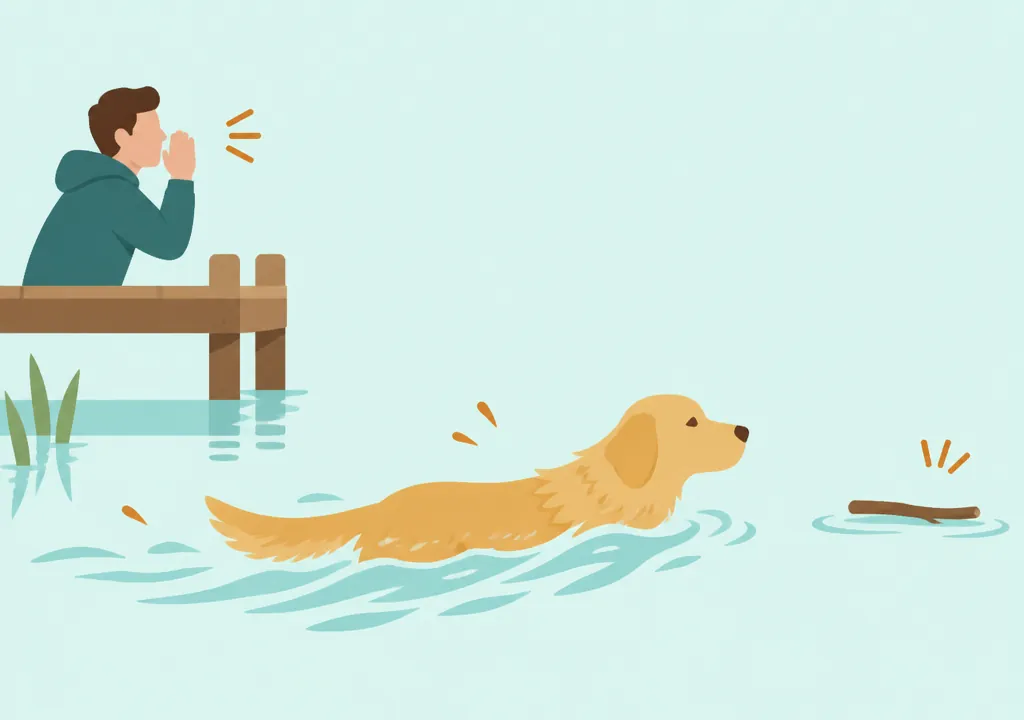
Coming when called
Beat ducks, ponds and friends at the park.
Owners sometimes hope a pale coat means a mellow dog who stays close. With Goldens, that link does not exist. Red, gold and cream dogs get the same training, and color predicts none of their energy.
The full guide covers Golden colors rather than recall, and why every shade trains alike.
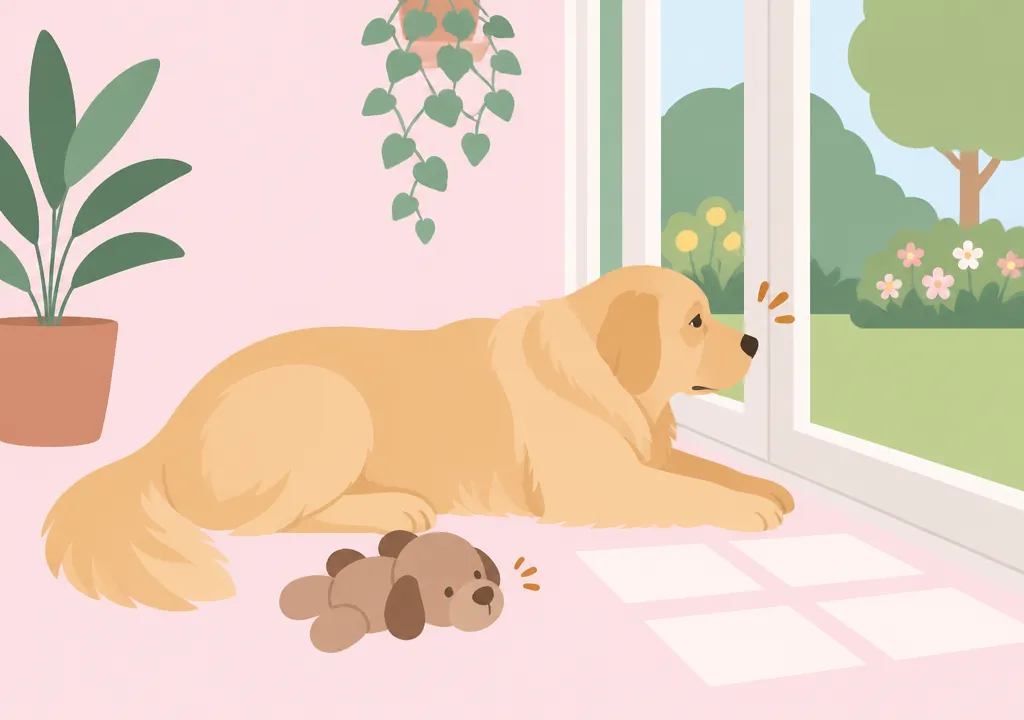
Time alone
Calm alone time for a family shadow.
A quiet house when you return cannot tell you what happened after you left. Your Golden Retriever might have slept, watched the door, paced between rooms or reacted to a delivery before settling. Even an undamaged room leaves those possibilities open, so a useful alone-time plan starts with observation rather than a breed reputation or a single snapshot.
Below, we follow the sequence of a departure recording and explain what each part can help you decide. The guide separates preparation, the first response, later changes and the practical arrangements that fit the evidence. A recording cannot diagnose separation anxiety by itself, but it can help you recognize concern earlier and give your veterinarian or behavior professional a much clearer account of what your dog experiences.
Read the full guide: Leaving a Golden Retriever Home Alone (and Separation Anxiety)
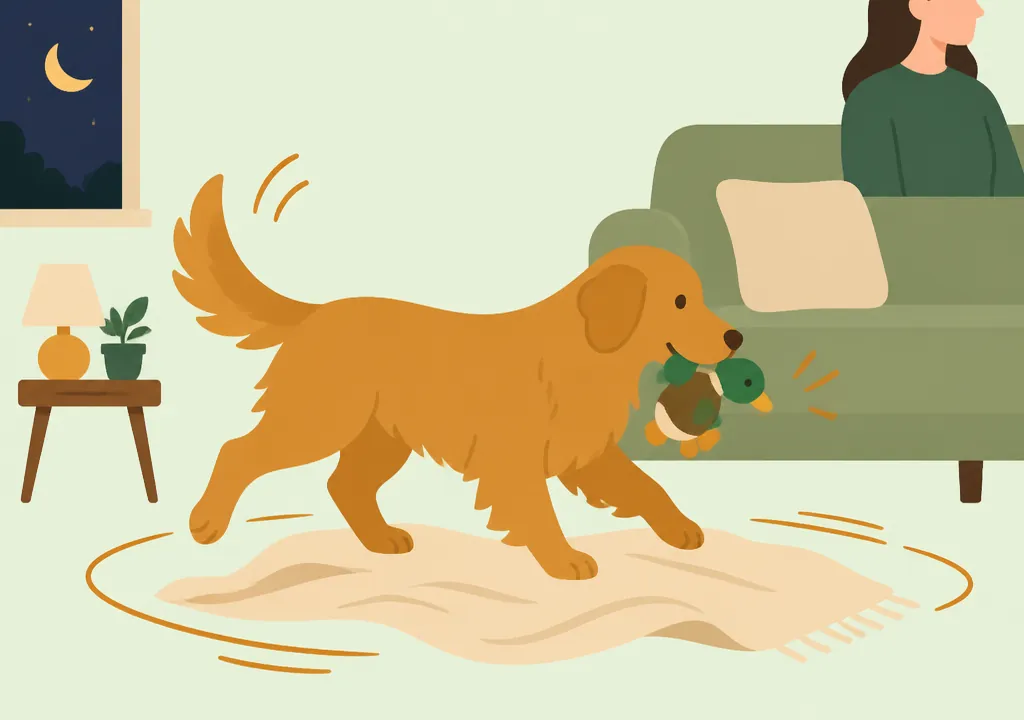
Learning to settle
An off switch for a busy young golden.
Of the 218 Golden Retriever owners we reviewed on energy and calming down, 14% called their young Golden very high energy. Calm-downs ran from a few months to past 10 years, clustering around 2 to 3.
The full guide walks through four households and how field and show breeding move the timeline.
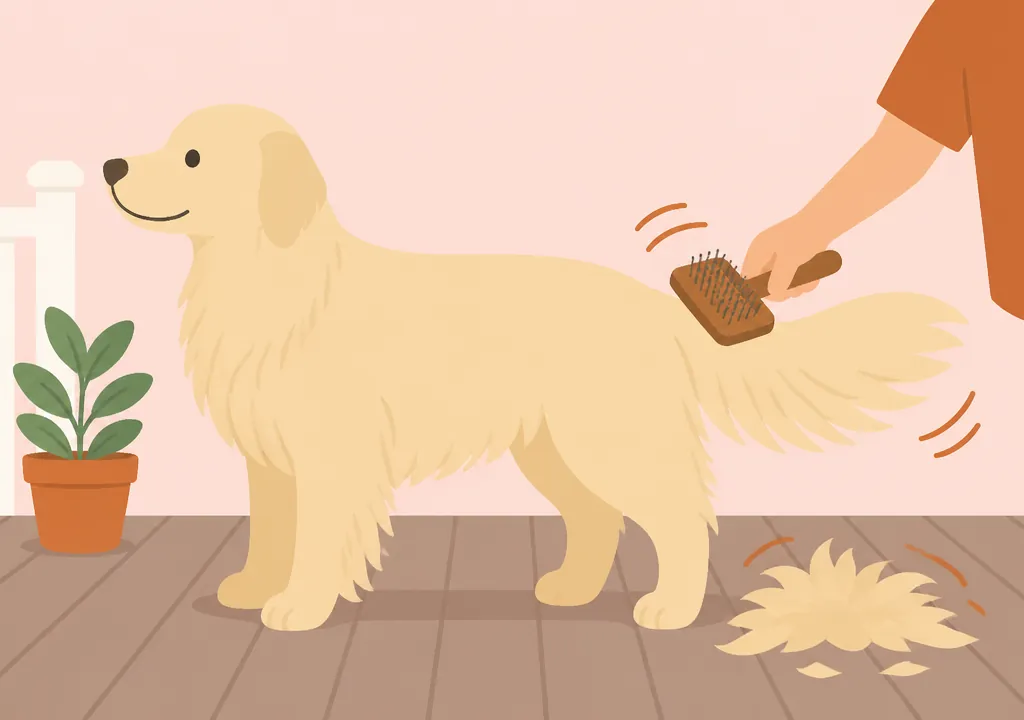
Brushing and feathers
Make coat care calm and easy.
The coat after a quiet dry day needs different attention from feathers carrying water and debris after an outing. A Golden Retriever can be comfortable with a brush and still dislike the towel, bath surface or hand near an ear. Treating grooming as one long task can hide which part needs care and which part needs a smaller training lesson.
Choose the work from the coat and the day your dog has had. Then make each action comfortable enough that ordinary care does not depend on holding the dog through an increasingly difficult session.
Read the full guide: Grooming a Golden Retriever: Brushing, Baths, Ears and Handling
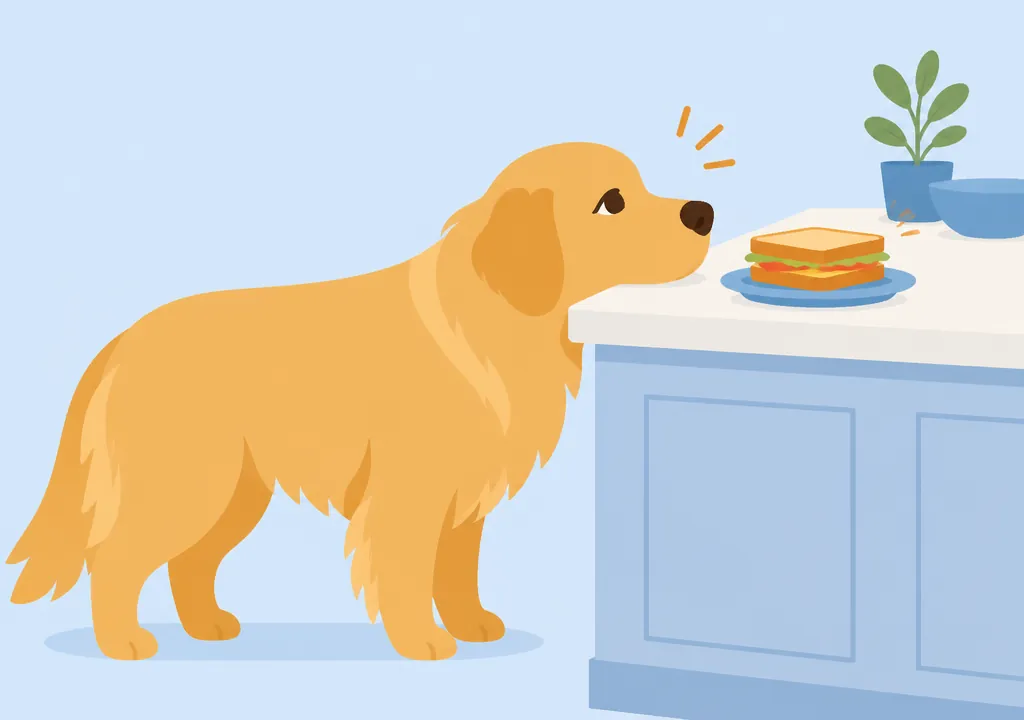
Counter surfing
Keep a food-loving nose off the counter.
A Golden Retriever can keep checking the counter even when nobody deliberately feeds them there. Sometimes a stolen crumb pays, and sometimes the person calls them down, reaches for food and starts an engaging interaction. The counter has become a place that makes something happen, so simply teaching a response after paws rise may leave the earlier part of the pattern intact.
We will trace where the reward arrives and which action comes just before it. This guide builds a useful destination away from the counter, then adds kitchen movement without making jumping the start of every lesson. It also separates a leave-it cue from a waiting routine and explains how to respond to setbacks. Secure food storage remains part of the arrangement while the new choices develop.
Read the full guide: Keeping a Golden Retriever's Nose Off the Kitchen Counter
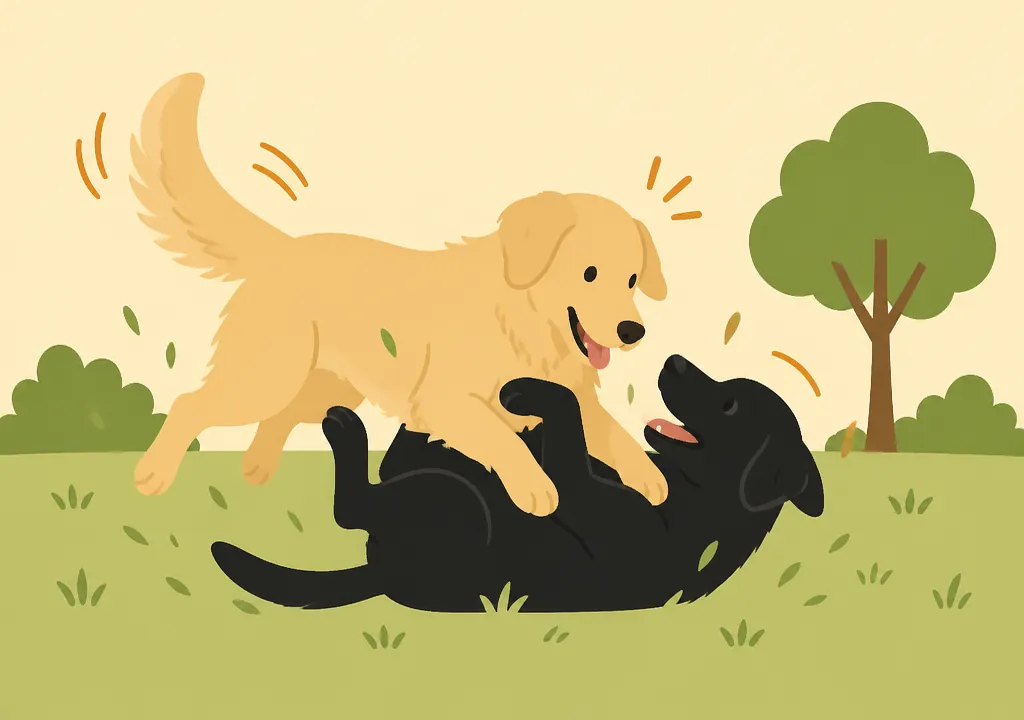
Rough play with dogs
Polite play at the park.
Your Golden Retriever's enthusiasm answers only half of the question about a play session. The other dog may welcome another chase, prefer a slower interaction or be trying to leave. A game stays useful when both participants can influence what happens, rather than one dog's energy deciding the pace for everyone.
Watch the quieter dog as closely as the bouncy one. Movement away, a pause or a choice to investigate something else may tell you more than the amount of noise in the game.
Read the full guide: Teaching Golden Retrievers Polite Play With Other Dogs
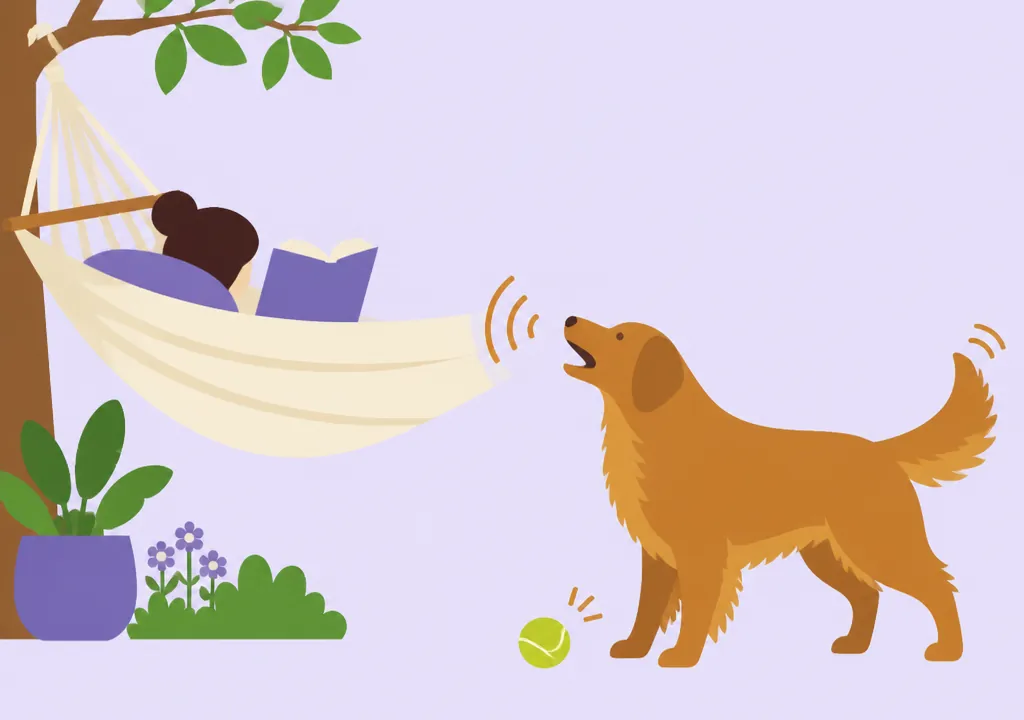
Barking for attention
Quiet ways to ask for play.
A puppy who sits flawlessly in the kitchen and acts deaf at the park is coping with context, not being stubborn. Dogs learn a cue where they practiced it, and barking for attention follows the same rule.
The full guide answers whether Goldens are easy to train, drawing on 1,739 owners' accounts.
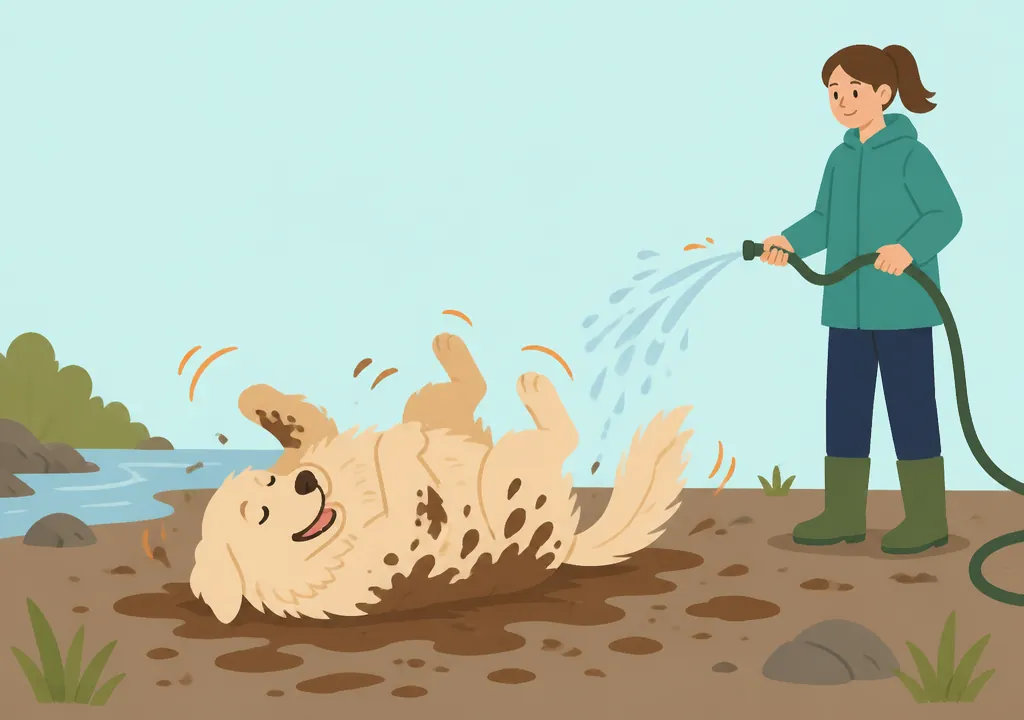
The teenage months
Stay patient through the wobbly year.
Golden breeders observe that owners over-prepare for the baby months and under-prepare for the teenage ones, which last far longer. Done badly, these months give you a teenager heavy enough to pull you over.
The full guide is a calendar from 8 weeks to 2 years, the time it takes to mature.